
Ricardo Castro’s Love Affair With Flamenco & Photography | By Paul Gallant | Publisher Pinktickettravel

Ricardo Castro’s Love Affair With Flamenco & Photography / Written by Paul Gallant / Publisher Pinktickettravel
Editing Press Releases https://wmwnewsglobal.com

To Witness These Miracles Click Here https://www.pinktickettravel.com/
Best known as a flamenco dancer and choreographer, Ricardo Castro has exhibited his homoerotic photographs all over the world
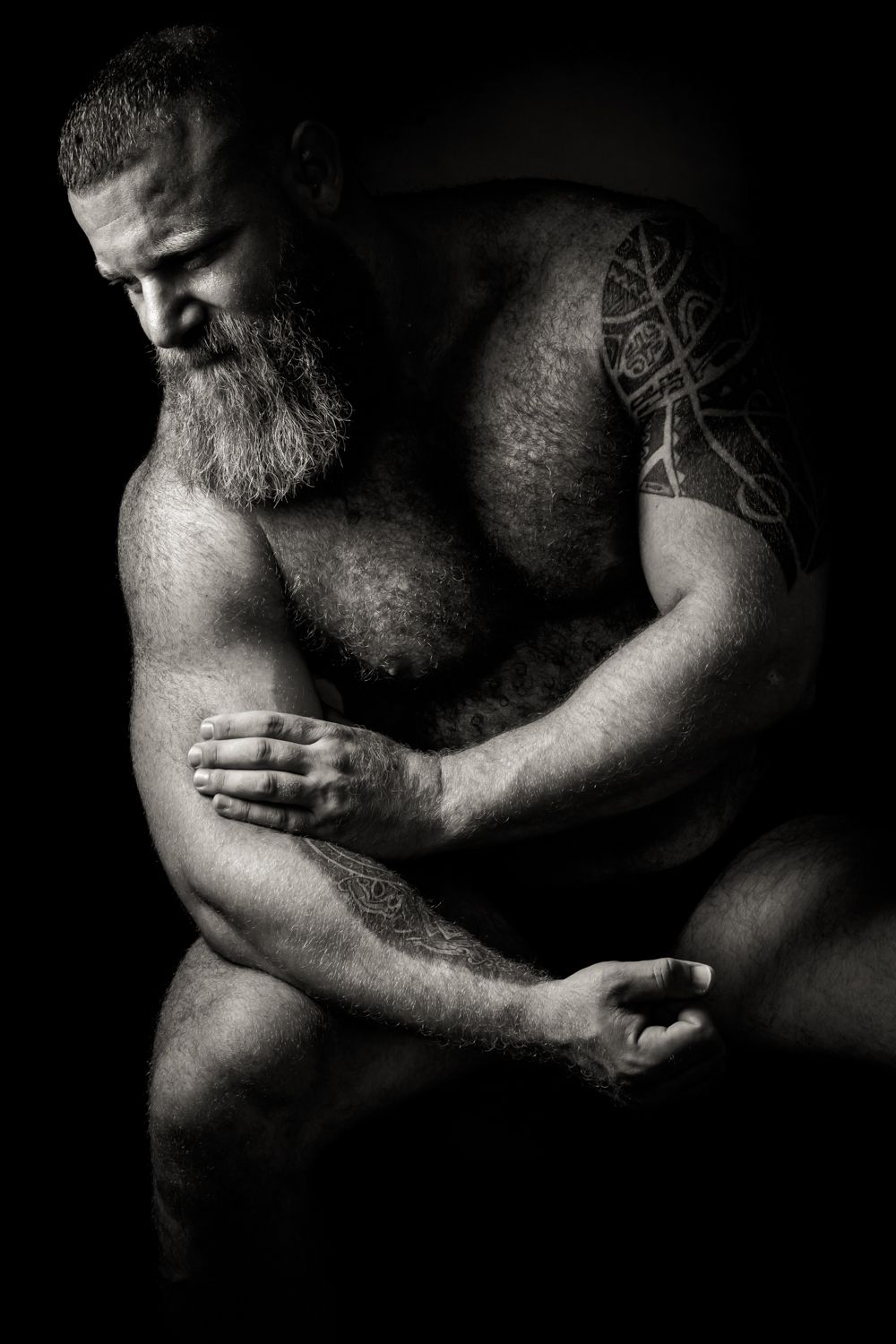
Bradley and Troy from the ‘Connected’ series. Credit: Ricardo Castro
Ricardo Castro was born in Granada, in the south of Spain, but has lived in Madrid since he was 16. At 58, he’s essentially a Madrileño but is still very connected to his Andalucian roots, particularly as a flamenco dancer and choreographer. Along with his sister, Rosario Castro Romero, and his brother, José Castro Romero, he’s among Spain’s best known flamenco artists.
Though his mother was a dancer and his father a guitarist, their parents didn’t want their children to become artists “because they considered it was a very difficult life, just for prostitutes, drug addicts and homosexuals. I started watching my mother’s dance classes, and then I hid in a closet and practised there,” Castro tells Wander+Lust.
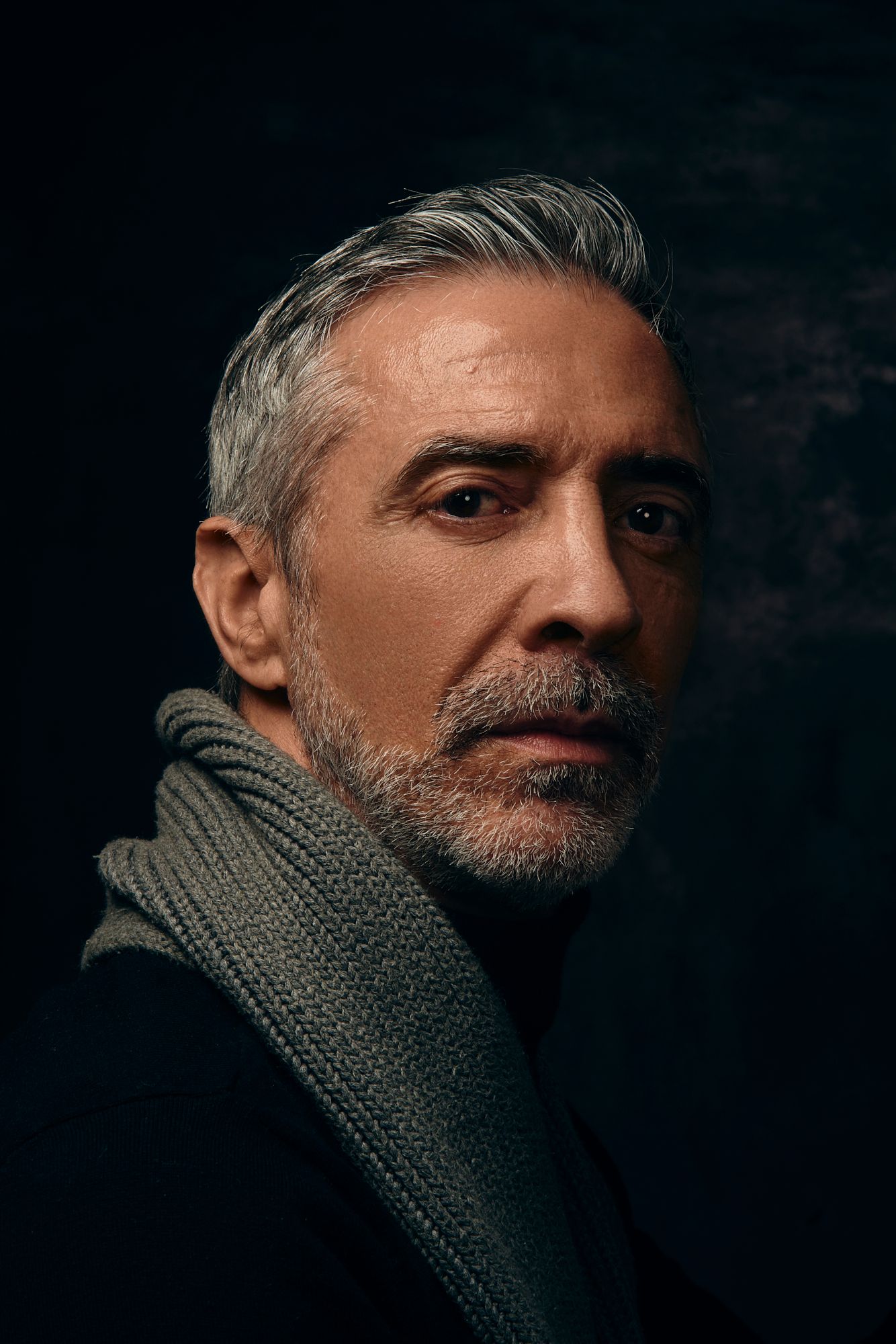
His photography came later. He went through an era where he exhibited his work in various group shows, then he stopped. He restarted last year and has since had shows in Madrid, Toronto, Athens and Buenos Aires.
“I started taking photos in the style I do most now, this dramatic style in the studio with chiaroscuro. This gallerist told me, ‘I need your work in my gallery,’ and haven’t stopped since.”
Wander+Lust asked Castro about his art and his favourite places to go in Madrid.
You’ve taken photos on and off throughout your career. How did you come to shoot such homoerotic work?
Because of Instagram, to be honest. I was shooting more dance. But a guy who now is a very good friend contacted me and said, “Oh my God, I would like to have some photos taken by you. Do you do naked photos or homoerotic photos?” I told him no, but that we could try.
I started taking photos only of him, and then I started taking photos of couples, of models he brought to my studio. My first exhibition focused on mature men being intimate with each other, connecting, being tender, sexual, erotic, sensual. I started like that with this friend.
What are some of the challenges of doing that kind of work?
Sometimes people feel very shy at the beginning. I mostly photograph bears. They’re supposed to be big strong guys. If they are muscle bears, they want to show off the strong, masculine part of themselves.
There’s a kind of fear to appearing vulnerable or tender. I start little by little, introducing classical music to make them softer, to help them be more tender. I’m asking people for the part of them that connects with another person, that’s vulnerable. Of course, sometimes the connection is real and they become excited.
I find it beautiful—it’s not that they are posing and pretending to be excited, they are really excited. My mission is to capture that and to do nothing to interfere with that. It’s beautiful.
You’ve been in Madrid for a long time. What do you love about living there?
Madrid is a stunning city with beautiful architecture. I live in Chueca, which is a huge gay area. It’s the only European capital founded by Arabs, so there’s a real contrast between streets that are very small, narrow and crooked, and the more European-style streets with big avenues. So, you have this very big city and small areas in it that feel like villages. There are so many things happening all the time culturally, socially, politically.
And the theatres! The National Ballet of Spain (P.º de la Chopera 4, Arganzuela, Madrid), is there, the National Dance Company (P.º de la Chopera 4, Arganzuela, Madrid)—the best companies come here.
I never think, “I hate this about Madrid.” When I had a car in Madrid, I hated the traffic. But now I walk or bicycle everywhere, so I don’t hate the traffic anymore…
How has the city changed in the last decade or so?
It’s becoming a more beautiful city. They are taking better care of the streets.
What are your top gay spots in Madrid?
One that I like is Hot (C. de las Infantas 9, Chueca, Madrid), which is a well known bear bar. It’s for more mature people, and I feel more attracted to mature people. It’s not a dance club but a place where people gather and talk, even though the music is so loud. Guys meet there and go on to other places. Across from Hot is El 12 Club (C. de las Infantas 12, Chueca, Madrid), where there is more space for dancing. It’s also more mixed: mature, young, all kinds of people. The other one I like very much is Fraggel Pop (C. de Regueros 5, Centro, Madrid), because they play music videos from the 1980s and ’90s. It’s very fun. People dance there.
And your top spots for art?
My favourite is Museo del Prado (Retiro, Madrid). It’s so big and the art is so good. One of my favourite painters is José de Ribera, and they have a lot of his paintings. Also, Rubens, Caravaggio. They have great classical paintings.
My number two is Museo Nacional Thyssen-Bornemisza (P.º del Prado, 8, Centro, Madrid). It has classical work, but also expressionist, impressionist and modern. It goes from José de Ribera or Caravaggio to Rembrandt to Kandinsky, Degas and Van Gogh. El Greco, but also has Rothko and Lichtenstein. The variety is amazing.
Apart from the many galleries and foundations that I love, my next pick would be Museo Nacional Centro de Arte Reina Sofía (C. de Sta. Isabel 52, Centro, Madrid). Their collection covers Picasso’s Guernica—who doesn’t want to see that amazing painting?—to contemporary art. A lot from Salvador Dalí, too.
So I’ve checked out the bars, seen the museums, Puerta del Sol, Plaza Mayor, all the usual suspects. What next?
Being a flamenco dancer, I recommend the experience of seeing a tablao flamenco. People cannot imagine how powerful it is to see flamenco in a small place. Flamenco in a theatre is something, but when you’re in a small space, you can see every detail of the dance, the sweat, the sound and vibration of the zapateado [rhythmic tapping of the heels and shoes].
My favourite place—partly because I performed there for 10 years—is El Corral de la Morería (Calle de la Morería 17, Centro, Madrid). It’s the most traditional and oldest tablao flamenco.
The artists are very good—the best artists want to dance there. And the food is amazing—it’s the only tablao flamenco with one Michelin star. When I was dancing there, every night I introduced whichever famous person had come. I met Bono and the Edge from U2, Mikhail Baryshnikov, Demi Moore, Richard Gere, Julia Roberts. My number two is Tablao Flamenco 1911 (Pl. de Sta. Ana 15, Centro, Madrid). The décor is not so traditional, but it’s a very good place to see flamenco.
The other thing I recommend is a chocolatería that serves hot chocolate with churros.
The place I recommend is Chocolatería San Ginés (Pasadizo de San Ginés 5, Centro, Madrid). It’s open 24 hours and has become so famous they have several locations in the same area of Madrid, because they didn’t have space for all the people coming in.
What’s your favourite destination?
I love to travel. With the dance company, we have been travelling a lot in Africa: Cameroon, Angola, Ivory Coast, Tanzania, Kenya, Morocco. For a long time we were doing a lot of Asia—Japan, Malaysia, Indonesia.
My most recent trip was Toronto, performing and having a photography exhibition and teaching flamenco. But my favourite is New York City. I have so many good friends there, artists.
I don’t think you’re a beach-and-forests kind of guy.
No, I like cities and all kinds of cultural activities.
What trip made you see the world in a different way?
On my first trip to London, I went to see some musicals in the West End. I thought, oh wow, I didn’t know it was possible to put so much onstage. That changed my way of seeing theatre.
Aside from your camera, what do you always have to pack for a trip?
I travel with my flashes, so I can take portraits of people in a studio. Also my dancing stuff. I take my flamenco shoes and something I have fabricated myself—a small wooden platform with cork insulation and carpet, so I can practice zapateado wherever I go. That’s the first thing I pack every time.
This interview has been edited for length and clarity.
This news has been rearranged and published with the https://www.pinktickettravel.com/
press release subscription.
DEAR MANAGEMENT / PRESS & PR TEAM
Kind Regards,