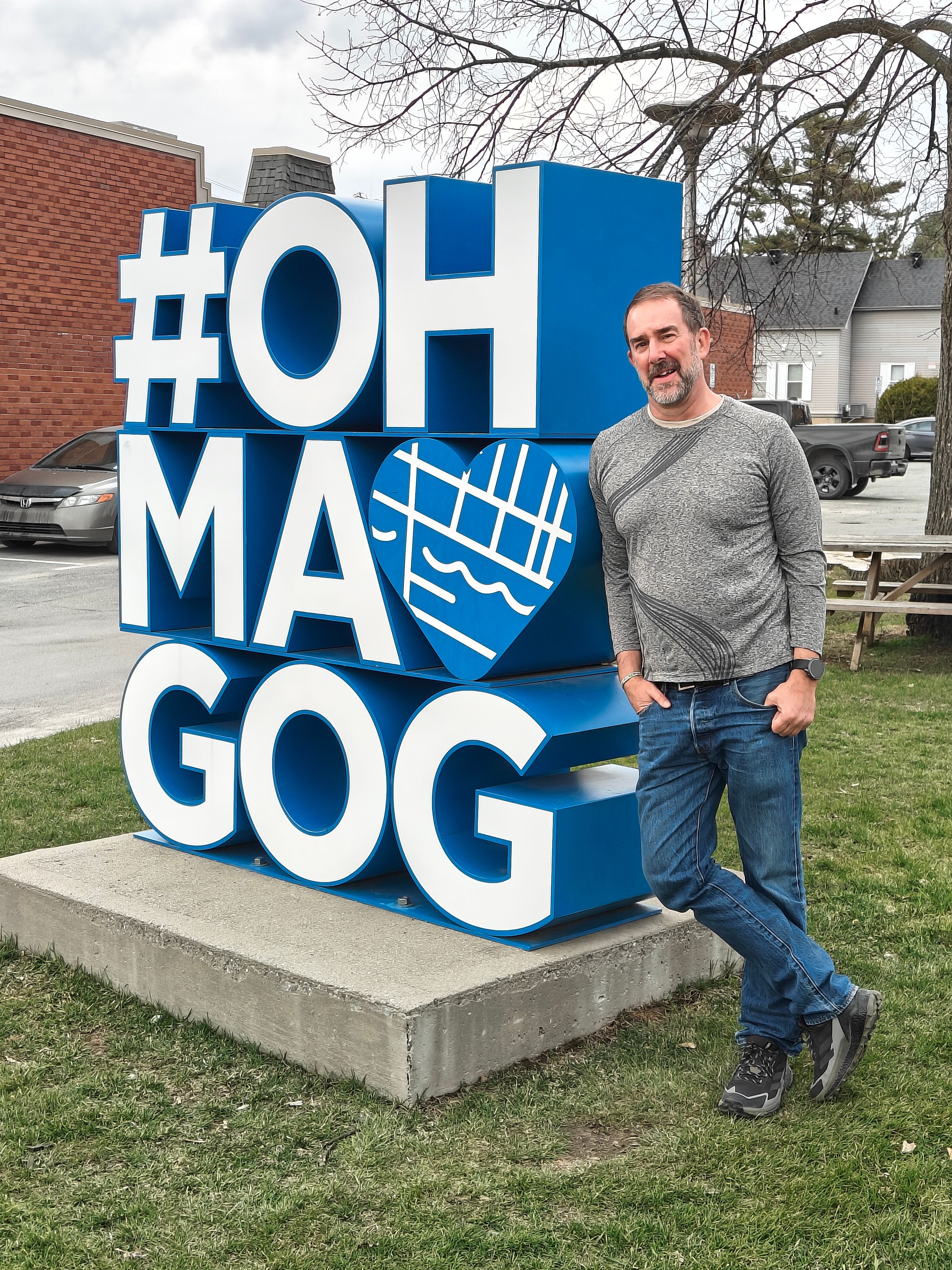











On an otherwise quiet Wednesday night in downtown Sherbrooke, Quebec, Boquébière Microbrasserie (50 Rue Wellington N., Sherbrooke) is packed. Both the cabaret seating and the high-top tables are fully occupied, and the lineup at the bar is annoyingly long.
Known affectionately as Le Boq, the pub hosts everything from drag shows to karaoke and electronic music dance parties. But tonight it’s jazz. Some local legends are jamming with up-and-comers in the basement lounge.
Le Boq’s two washrooms are labelled “Toilettes” and “Toilettes avec urinoirs,” which is clear even to a non-French speaker. My gaydar spots quite a few queer music fans mixed among the straights, though there are enough bohemians here that my gaydar is not working perfectly.
The couple dressed like 1940s swing dancers? The guy who has the long, frizzy hair of a 1970s rock or porn star? Whatever the breakdown, I feel like there’s no cooler place to be on a chilly Wednesday, in Sherbrooke or maybe anywhere.
(Since my visit, a fire has caused Le Boq to temporarily close. Watch their socials for a reopening date.)
Sherbrooke has a metro population of about 250,000, but it’s the commercial and cultural hub for the Eastern Townships, a region of about 530,000 residents between Montreal and the U.S. border.
Home to several universities and colleges, Sherbrooke attracts 45,000 students annually, a huge percentage of the population, which means the city exceeds expectations when it comes to restaurants, bars, shops, cultural institutions and plain ol’ liveliness. Sherbrooke, and many of the surrounding towns, is artier, cooler and more diverse than a first-time visitor would expect.
That open-mindedness comes not just from the influx of students. The Eastern Townships also have a uniquely countercultural history, starting with the American Loyalists who fled here in the 1790s, in the aftermath of the American Revolution.
Their imprint created a hybrid culture that feels like a cross between rural New England and traditional French Canada. The geography, too, defined by the gently rolling mountains of the Appalachian foothills, looks more like New England than the rocky Canadian Shield found farther north and west.
During the 1970s, the Eastern Townships were a destination in the “back-to-the-land” movement, when thousands of young artists, hippies, draft dodgers and queer activists abandoned Montreal and the U.S. to buy cheap, abandoned farms in the hills. They established communes, organic farms and artisan cooperatives.
Though most of those communes and cooperatives are gone, and Anglo residents currently make up just a small portion of the population, that past created a template that makes the Eastern Townships a special place to visit, especially for LGBTQ2S+ travellers. The live-and-let-live attitude is baked in.
The hospitality and quality of the food and drink here are far beyond what one would expect in a mostly rural area, especially when Montreal is so close. This is a place to lean into “la douceur de vivre,” the sweetness of living, where the pleasure of things done with style and passion is part of everyday life, not an indulgence.