








Fantastic October 2026 Suggestions With ANN DOUGLAS LOTT/ All You Need To Know About Train Travel in Vietnam / By James Clark

Fantastic October 2026 Suggestions With ANN DOUGLAS LOTT/ All You Need To Know About Train Travel in Vietnam / By James Clark / Publisher https://www.lonelyplanet.com/
Editing Press Releases wmwnewsglobal.com

To Witness These Miracles Click Here https://www.lonelyplanet.com/
All You Need to Know About Train Travel in Vietnam
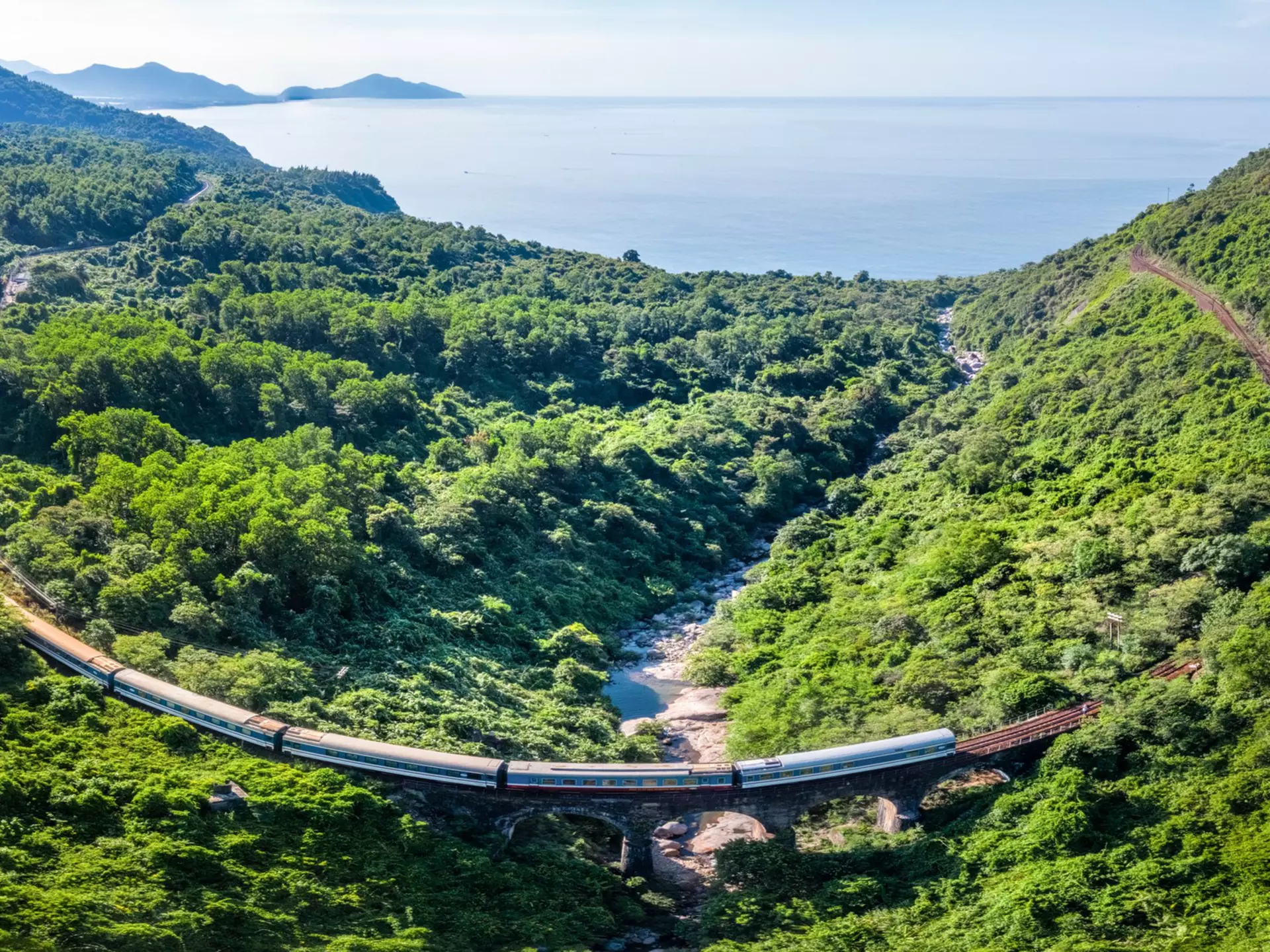
A train runs through the lush countryside in Vietnam. Nguyen Quang Ngoc Tonkin/Shutterstock
Lonely Planet may earn a commission from affiliate links on our site. All recommendations and reviews reflect our own independent opinions.
Traveling by train is the best way to experience overland travel in Vietnam. The most popular destinations can be reached by train, with seats and beds that are more comfortable than on a bus, and views better than from the road.
The main line is the famous North-South railway, which is regularly featured on lists of the world’s best train journeys. The 1726-km railway (1072 miles) connects Hanoi to Ho Chi Minh City, and Vietnam’s long and narrow shape means that most of the largest cities are in the path of the railway.
The railway was built during the French colonial era, and it was completed in 1936. The line was repaired after the war and became known as the Reunification Express.
The train system is slow compared to modern railways, with some trains taking up to 38 hours. The long travel time at least allows you to experience overnight train travel.
There are plans to build a high-speed railway with a top speed of 350 km per hour. This will reduce the journey time from 38 hours to about 5 hours and 30 minutes. The estimated completion date is by 2035, so now is the time to plan a trip on this historic old railway before it’s gone.
The Basics of Train Travel in Vietnam
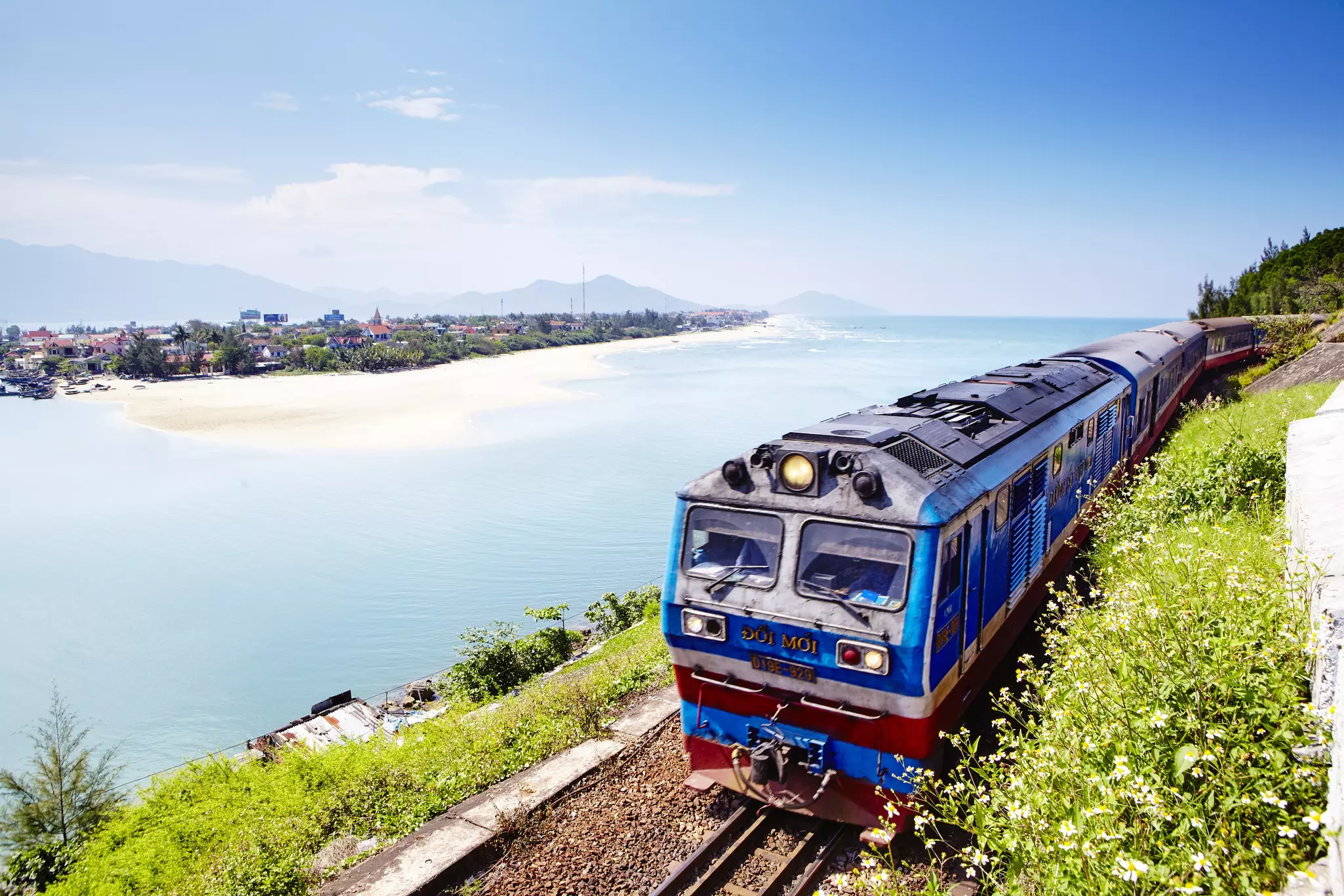
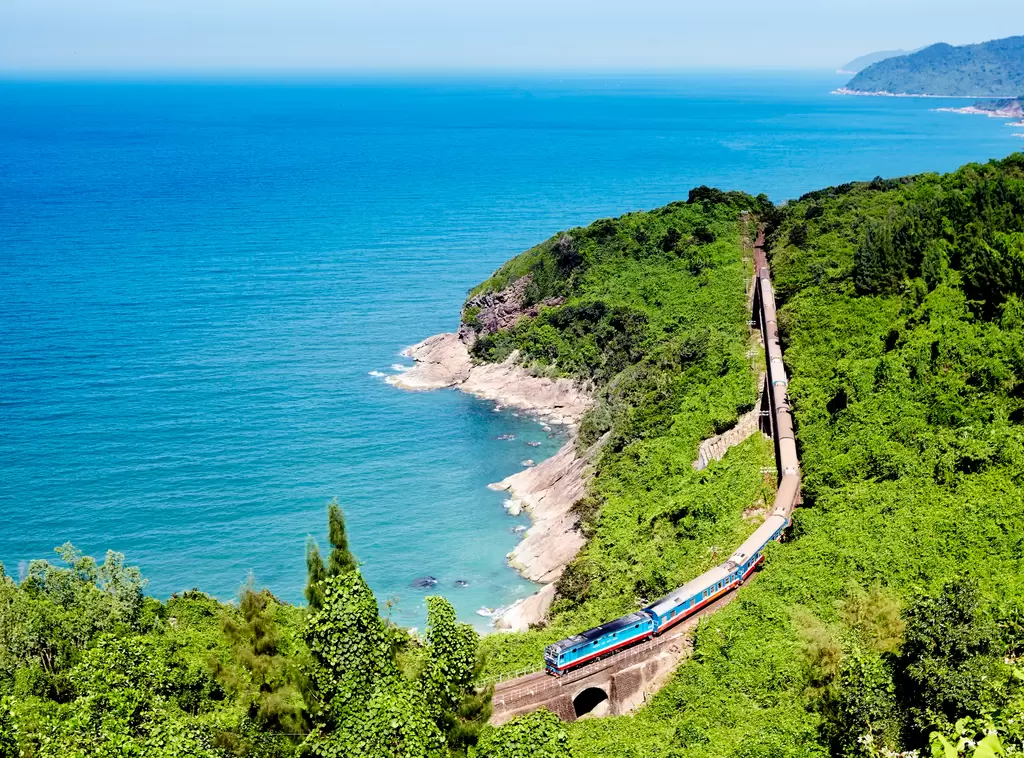
The Reunification Express passes the coast in Vietnam. Matt Munro for Lonely Planet
The three passenger lines operating in Vietnam are the Hanoi-Ho Chi Minh City (North-South railway), the Hanoi-Hai Phong, and Hanoi-Lao Cai.
The North-South railway is most useful for visitors, with stops at popular places to visit including in Hanoi, Hue, Danang, and Ho Chi Minh City.
The train carriages in Vietnam have not been modernized like trains in Malaysia and Thailand. That said, the seating and beds are comfortable, and the carriages are air-conditioned.
The railways of Vietnam operate on a single track. Trains in either direction share the same track, so trains are timed to pass each other at designated sections. If one train is late, then the oncoming train must wait for the late train to pass.
Because the trains run on a single track, trains aren’t scheduled at regular intervals (for example, every hour on the hour). Also due to the long travel time, what might be a good departure time could be an inconvenient arrival time (no one wants to arrive in a new city at 3 am).
There are currently no international rail services from Vietnam.
Prices and Booking
Train tickets in Vietnam are sold at a set price, and there are no discounts for booking in advance. Tickets sell out, so book tickets in advance.
The main seat types are:
- Soft seat: Economy class with seats in 2×2 configuration. These seats recline and have generous legroom.
- Sleeper six-berth: Cabins with bunk beds laying crossways with three beds on either side. A thin mattress, pillow, sheet and blanket are provided. The cheapest beds are the top beds, and you’ll need to be agile to get up and down from the upper bunks.
- Sleeper four-berth: Cabins with bunk beds laying crossways with two beds on either side. The four-bed cabins have more head space, and the lower beds are more expensive. You can book all of the beds to have a private cabin with your partner or group.
When booking, you can choose your seat or bed location. If you have mobility issues or you don’t want to climb a bunk, book a lower bed. The top bed of the six-bed cabin has a narrow space between the bed and the ceiling. In the lower bed of the four-bed cabin, you can easily sit up on the bed.
The beds are permanent (unlike in Thailand where the beds are folded away during the day). The cabins have power outlets and a small table by the window. The bed option is a relaxing way to travel if you like lying in bed all day and reading a book.
The official booking site is dsvn. vn.
The local independent booking site Baolau is a more user-friendly booking system.
Train Occupancy and Route Types
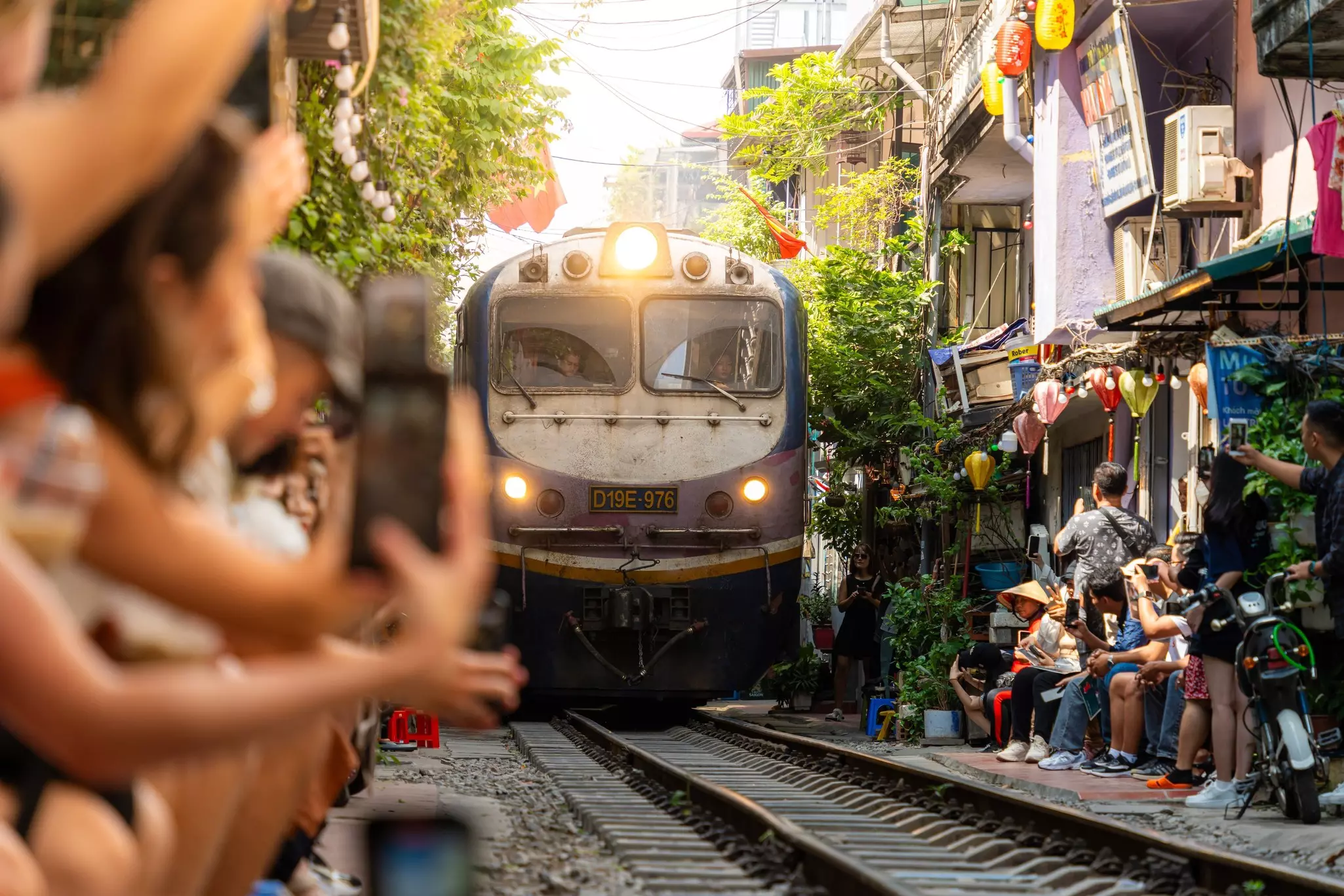
Consider one of the trains that travels to Hanoi. CravenA/Shutterstock
Although most passengers aren’t going the entire distance, the train remains full for most of the way, as passengers get on and off throughout the journey.
All tickets have allocated seat or bed numbers, so you won’t need to worry about being stuck without a seat.
Connectivity and Comparisons
The railway isn’t integrated with buses or metro systems. Train stations are centrally located in most of the cities, so the easiest option is to get a taxi to the city areas.
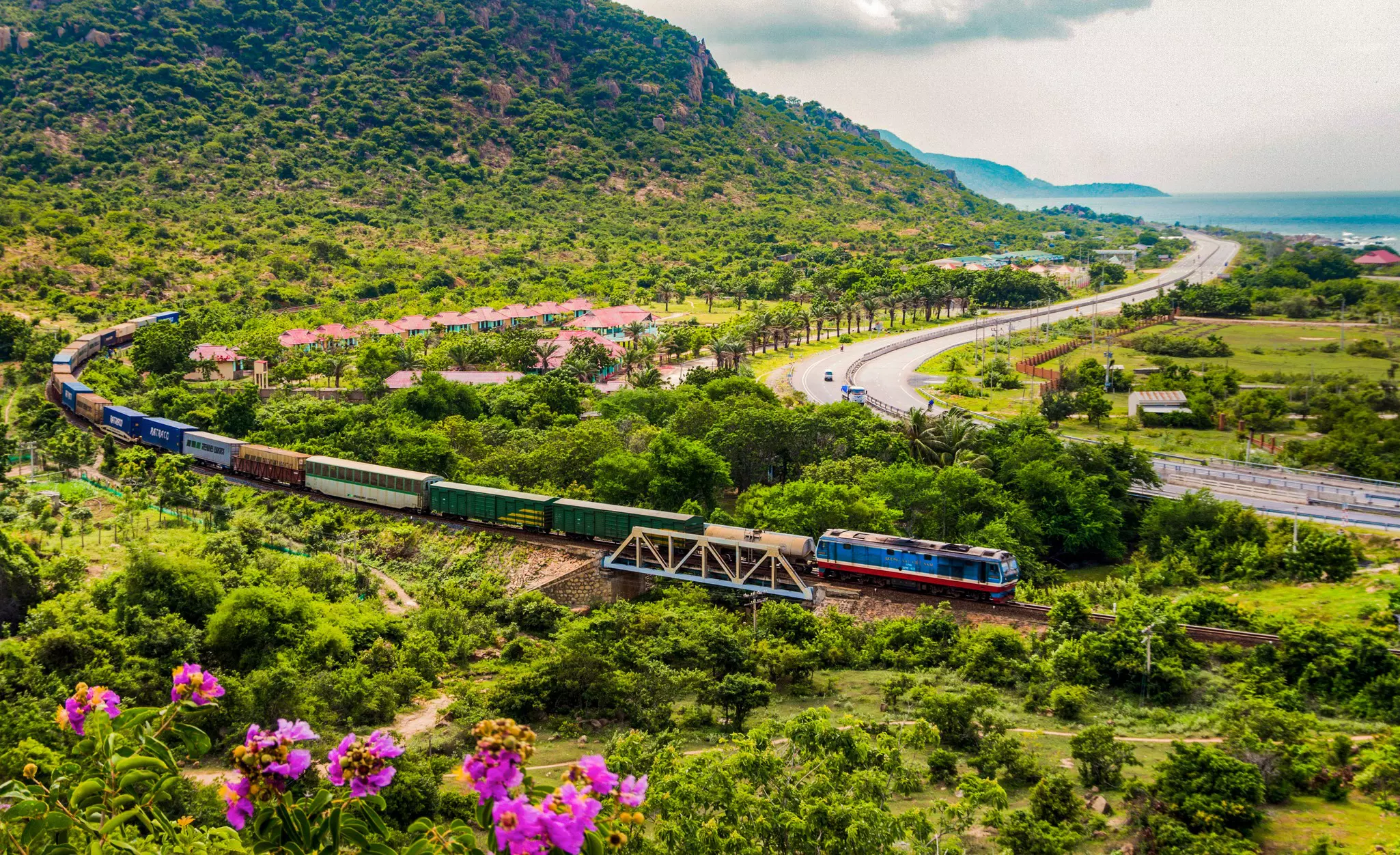
A train on the North-South Railway on the coast of Vietnam. Scenic Vietnam/Shutterstock
Dining and Other Amenities
There are no dining carriages, so meals are provided by a trolley service. A drink and snack cart goes up and down the train throughout the day, and a hot meal trolley goes through at the main meal times.
The meals are limited to rice, meat (usually pork), a vegetable and a small soup (usually in the range of 50,000 Vietnamese dong, or 50,000 VND). If you have dietary restrictions, bring your own food.
There are toilets onboard all trains. Bring toilet paper (just in case they run out) and hand sanitizer.
There is no wi-fi onboard, so get a SIM card before you travel if you want to stay connected. There are power outlets next to the window seats.
Vietnam’s Best Train Routes
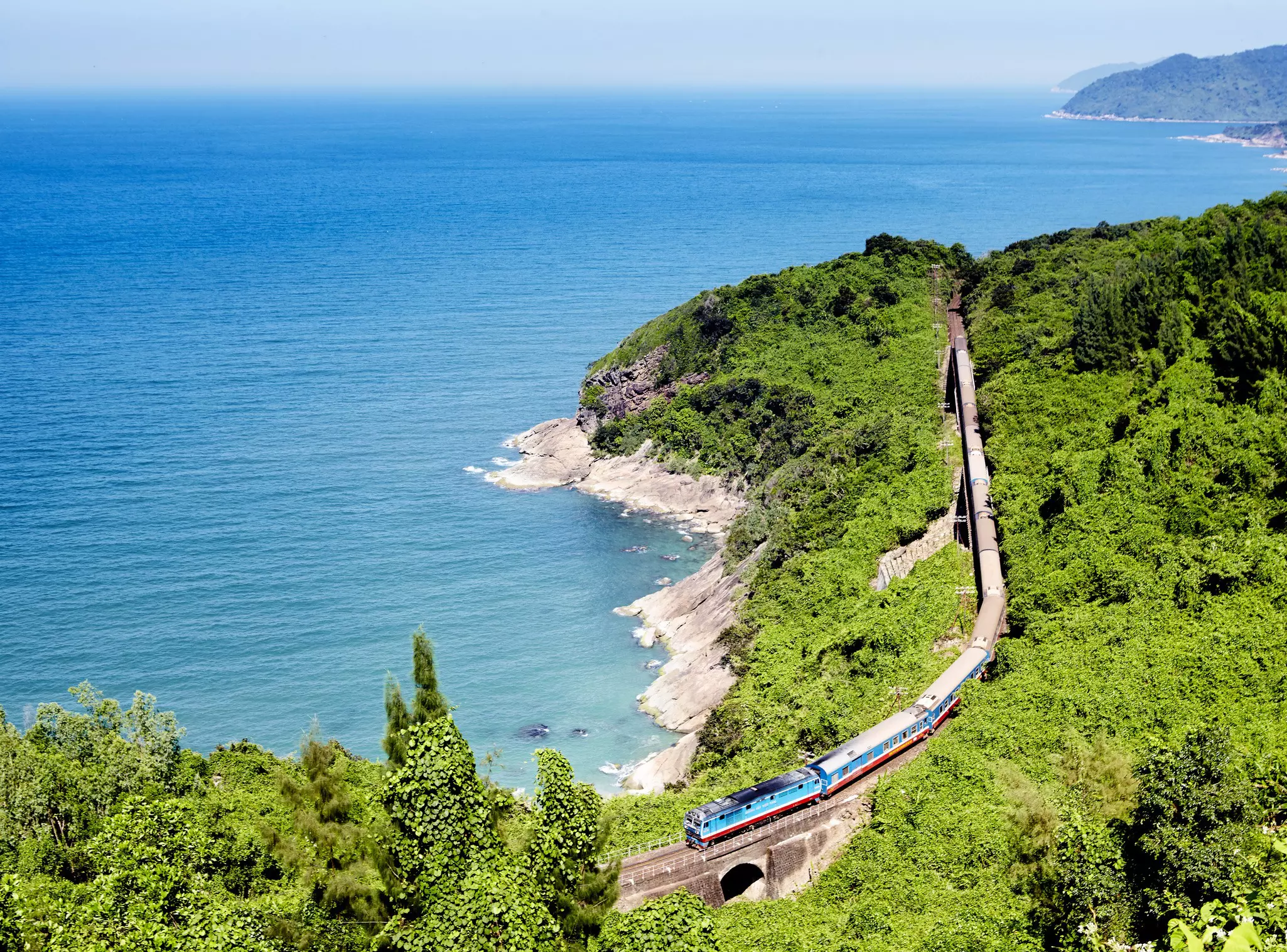
North of the Hai Van Pass, between Hue and Hoi An. Matt Munro/Lonely Planet
If you plan to take the entire journey by train, mix and match your itinerary with some short trips and an overnight section. If you are only planning to take a few short trips, consider these options.
Danang to Hue
If you take just one train trip in Vietnam, take the section between Danang and Hue to experience the Hai Van Pass, which is the most scenic section of the North-South railway. Expect spectacular views of the East Sea as the train weaves its way along the coast.
The trip between the two cities takes about three hours, and the mountain section takes one hour. Hoi An (near Danang) and Hue are essential stops in Central Vietnam, so the train trip makes for a more memorable experience than going by bus.
When booking seats, pick a seat that faces the sea for the best view. For trains going north, select seats on the right, and select seats on the left for trains going south.
Hanoi to Ninh Binh
Hanoi to Ninh Binh is the best short train trip from Hanoi. The travel time is about two to three hours, and from there you can visit the Trang An Scenic Landscape Complex.
Ninh Binh Station is 6km (4 miles) by taxi to Tam Coc, which is the village that offers easy access to the sights.
Ho Chi Minh City to Phan Thiet
Phan Thiet is the closest beach city to Ho Chi Minh City by train, and this is the shortest train trip from Ho Chi Minh City. There is a daily direct service that takes four hours. The Phan Thiet service runs on the North-South line, and there is a 10km (6 mile) branch line that reaches Phan Thiet.
Phan Thiet is best known for windsurfing and the dunes of Mui Ne.
Hanoi to Lao Cai
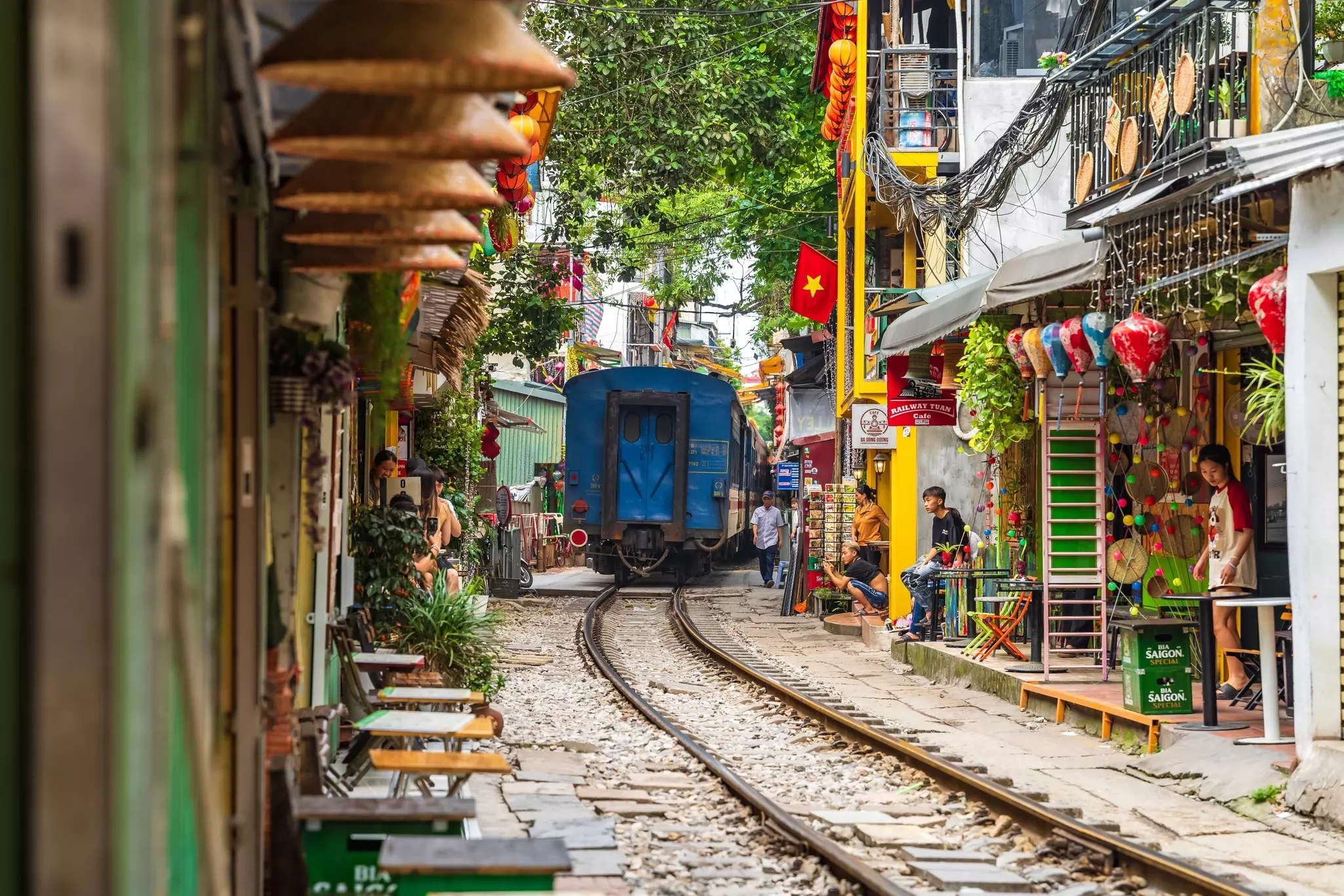
A train passes through a narrow street in Hanoi’s Old Quarter. Scout901/Shutterstock
The overnight train from Hanoi and Lao Cai is a popular way to get to Sapa in the mountainous northwestern region. Vietnam Railways provides sleeper cabins similar to the North-South line, and there are also private carriages attached to the train that offer premium cabins.
At Lao Cai Station, some buses and vans provide transfer services for the one-hour drive to Sapa.
Hanoi to Hai Phong
The Hanoi to Hai Phong line connects the two largest cities of Northern Vietnam. The historic port city of Hai Phong has a great collection of crumbling colonial-era buildings, yet few tourists visit.
Hai Phong is also the gateway to Cat Ba Island and an alternative place to begin Halong Bay tours.
Accessibility of trains in Vietnam
This is an old railway that was not built with accessibility in mind. Most of the platforms are at ground level, so there is a high step to get onto the trains, making it too steep to provide a ramp from the ground. There is unfortunately no workaround.
For more on travel to Vietnam, consider Lonely Planet’s Vietnam guidebook.


Guide Best in Travel 2026
This news has been rearranged and published with the https://www.lonelyplanet.com/
press release subscription.
We Told You That We Will Make You Dream Great Dreams With Our Media Group.
We Set Out For The Best İn The World And Have Been Offering You A Journey Beyond Dreams For Exactly 20 Years.
Thanks With To LONELY PLANET
DEAR MANAGEMENT / PRESS & PR TEAM
Kind Regards,