







Fantastic October 2026 Suggestions With ANN DOUGLAS LOTT / Best Places To Visit in Japan in 2026: 15 Destinations For Every Type Of Traveler / By Rebecca Milner

Fantastic October 2026 Suggestions With ANN DOUGLAS LOTT / Best Places To Visit in Japan in 2026: 15 Destinations For Every Type Of Traveler / By Rebecca Milner / Publisher https://www.lonelyplanet.com/
Editing Press Releases wmwnewsglobal.com

To Witness These Miracles Click Here https://www.lonelyplanet.com/
Lonely Planet may earn a commission from affiliate links on our site. All recommendations and reviews reflect our own independent opinions.
The eight regions of Japan are a feast for visitors. Mountainviews of Fuji, beach-lined islands like Okinawa and buzzing megacities like Tokyo should all be on the menu. There is so much choice that you could spend a lifetime sampling the country’s delights.
Overtourism is an increasingly pressing issue for the Golden Route and other popular parts of Japan, with tourist behaviour becoming a major talking point.
Consider taking a side street, a back road or a slow train to some place you’ve only just heard of. Odds are, you’ll be richly rewarded.
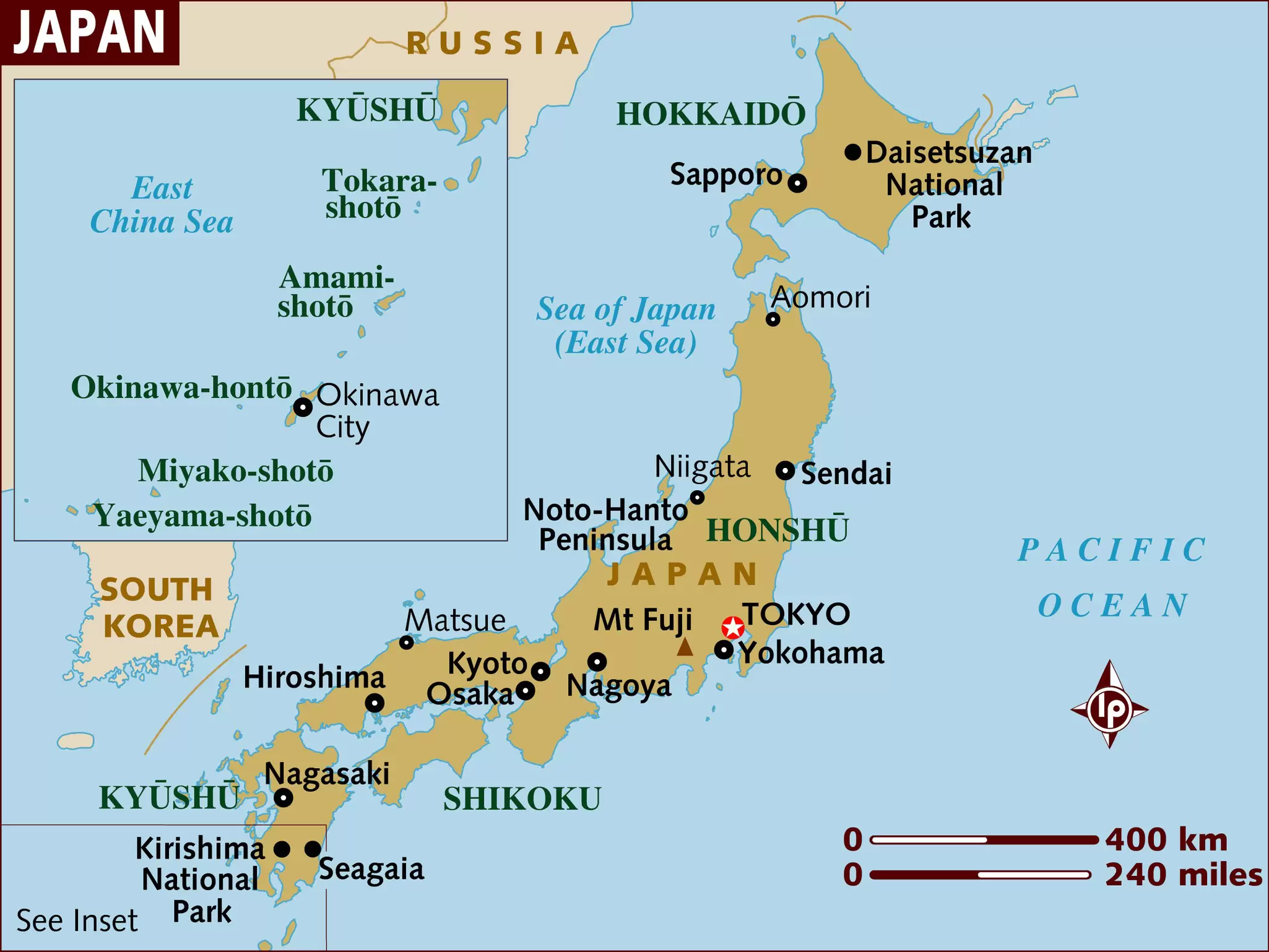
Map of Japan. Lonely Planet
There’s no bad time to visit – whether you’re visiting during cherry blossom season in spring, the vibrant autumn foliage or the festive winter illuminations, Japan offers year-round appeal.
These local insights, with expert tips from experienced Lonely Planet contributors, can help you plan your travels for an unforgettable adventure. Grouped by region from north to south, plan your route through Japan with our pick of the nation’s best places to visit.
To start planning your trip, download the Lonely Planet app or check out our Japan guidebooks for local tips, maps and more
Sapporo
Region: Hokkaidō
Best for: Festivals
How long to spend: 2 days minimum.
Best time to visit: Summer is the season for beer and food festivals, while 2 million visitors descend during the Sapporo Snow Festival in early February.
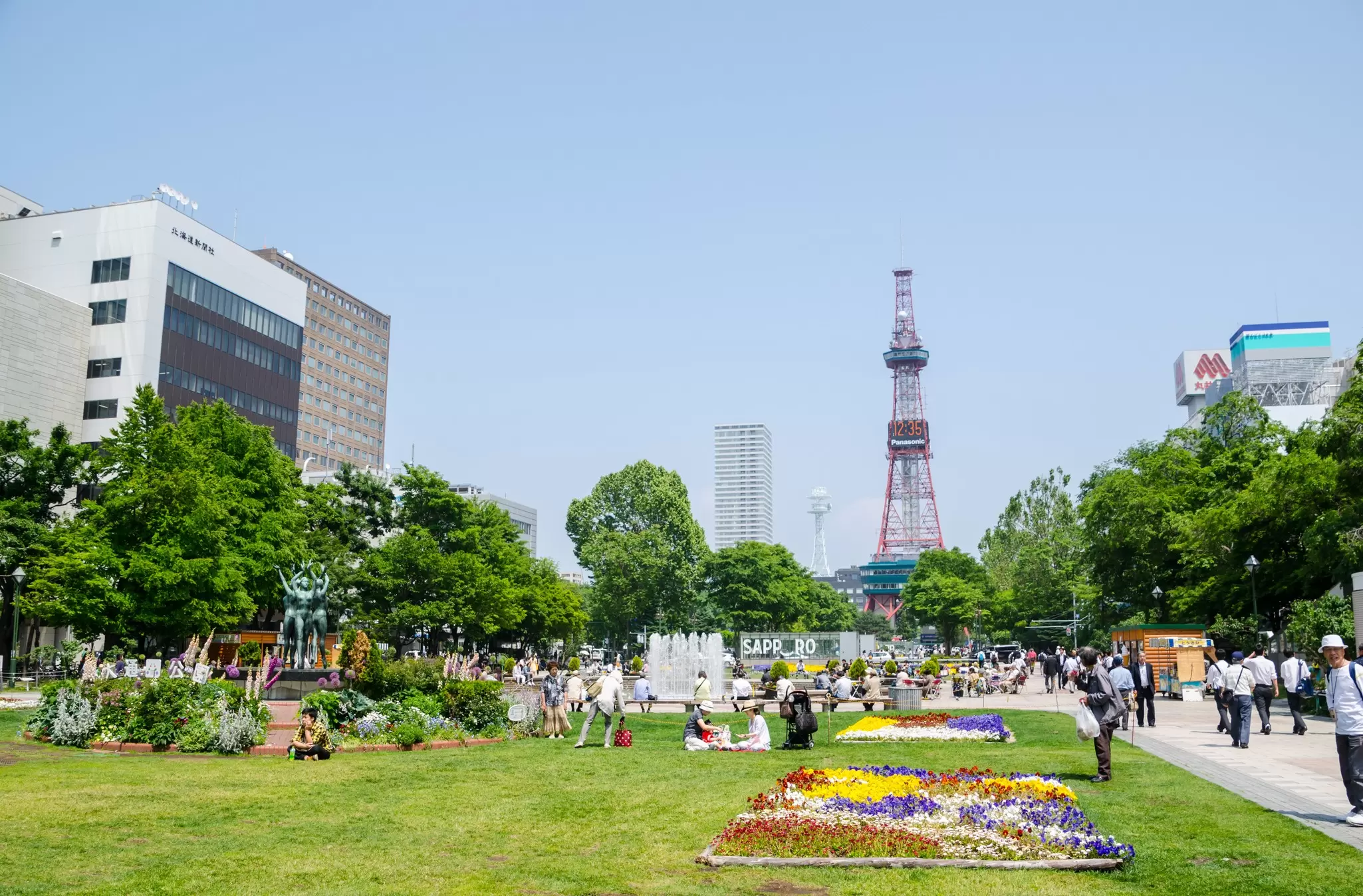
Ōdōri-kōen, Sapporo’s central park and festival site. Jedsada Kiatpornmongkol/Shutterstock
Hokkaidō’s prefectural capital and the fifth-largest city in Japan, Sapporo is a dynamic and cosmopolitan urban center that pulses with energy. It boasts a thriving food scene, stylish cafes, neon-lit nightlife and shopping galore, and provides visitors with a city fix before they head out into the wilds of the country’s largest prefecture.
Don’t miss:
- A taste of Sapporo Beer and the famous local take on ramen
- Hokkaidō Museum, the go-to place for everything on the fascinating nature, history and culture of the region
- The Sapporo Snow Festival in February, when snow sculptors compete to create huge snow and ice statues across three sites.
LP recommends: Finding reasonably priced accommodation in Sapporo during the Snow Festival can be extremely difficult; book as far in advance as possible.
Lonely Planet’s full destination guide to Hokkaidō
Tokyo
Region: Kantō
Best for: Contemporary culture
How long to spend: 3 days minimum, but it deserves longer.
Best time to visit: There’s no bad time. Spring and fall bring great weather for sightseeing.
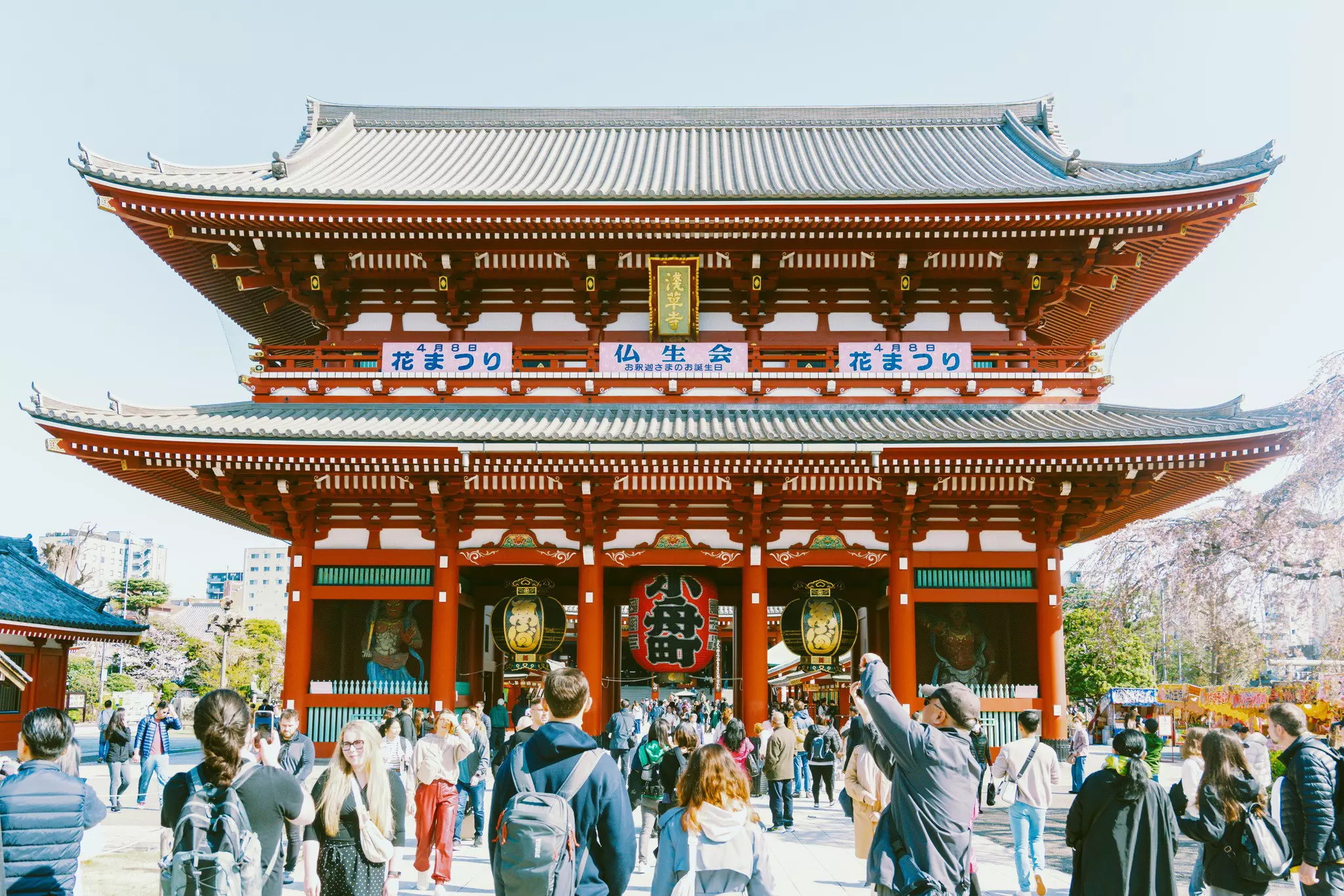
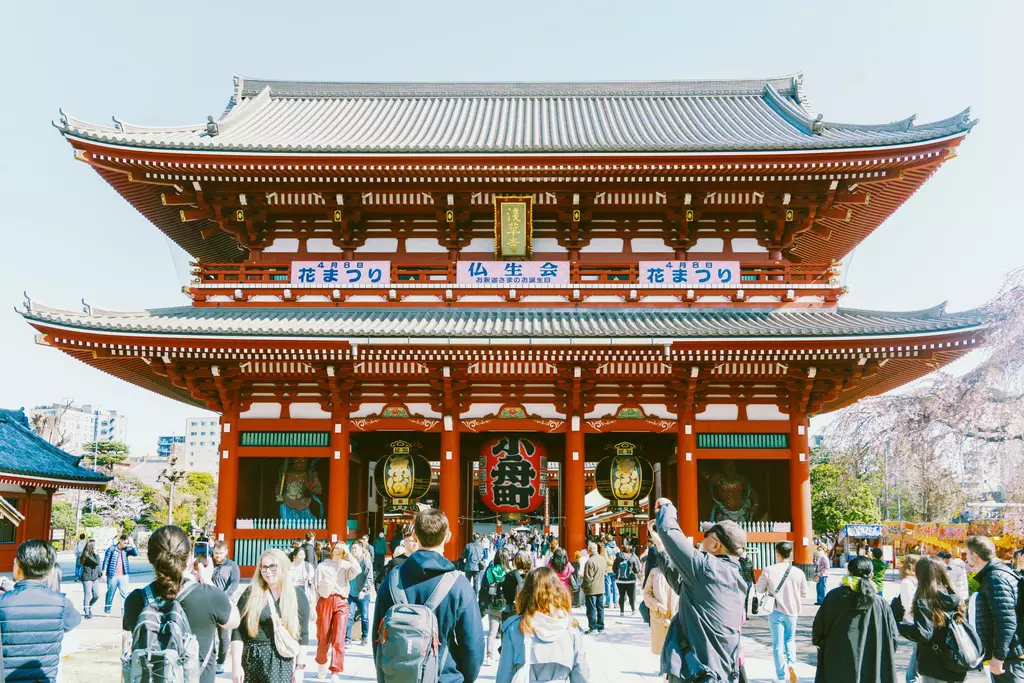
Crowds of people gathered at the Sensō-ji in Tokyo, Japan. Rintaro Kanemoto for Lonely Planet
Tokyo is a city forever reaching into the future, pushing the boundaries of what’s possible on densely populated, earthquake-prone land, and building ever taller, sleeker structures. It’s Japan’s top spot for contemporary art and architecture, pop culture, shopping, drinking and entertainment (and a tie with Kyoto for dining).
But more than in any other place, it’s the city itself that enchants visitors. Tokyo is a sprawling, organic thing, stretching as far as the eye can see. Constantly changing with a diverse collection of neighborhoods, no two experiences of Tokyo are ever the same.
Don’t miss:
- The Imperial Palace, the emperor’s home and once the largest fortress in the world
- Ghibli Museum for its enchanting museums and fairy-tale atmosphere
- Taking in views of Tokyo from above.
LP recommends: Some of our favorite things to do in Tokyo including going to sumo, kabuki theater or a Giants baseball game. Get tickets early. They usually go on sale 1 to 2 months in advance.
Lonely Planet’s full destination guide to Tokyo
Hakone
Region: Kantō
Best for: Hot springs and volcanic activity
How long to spend: Hakone is a popular day trip from Tokyo, but stay a night to cover all bases.
Best time to visit: Clearer views of Mt Fuji are more likely in autumn.
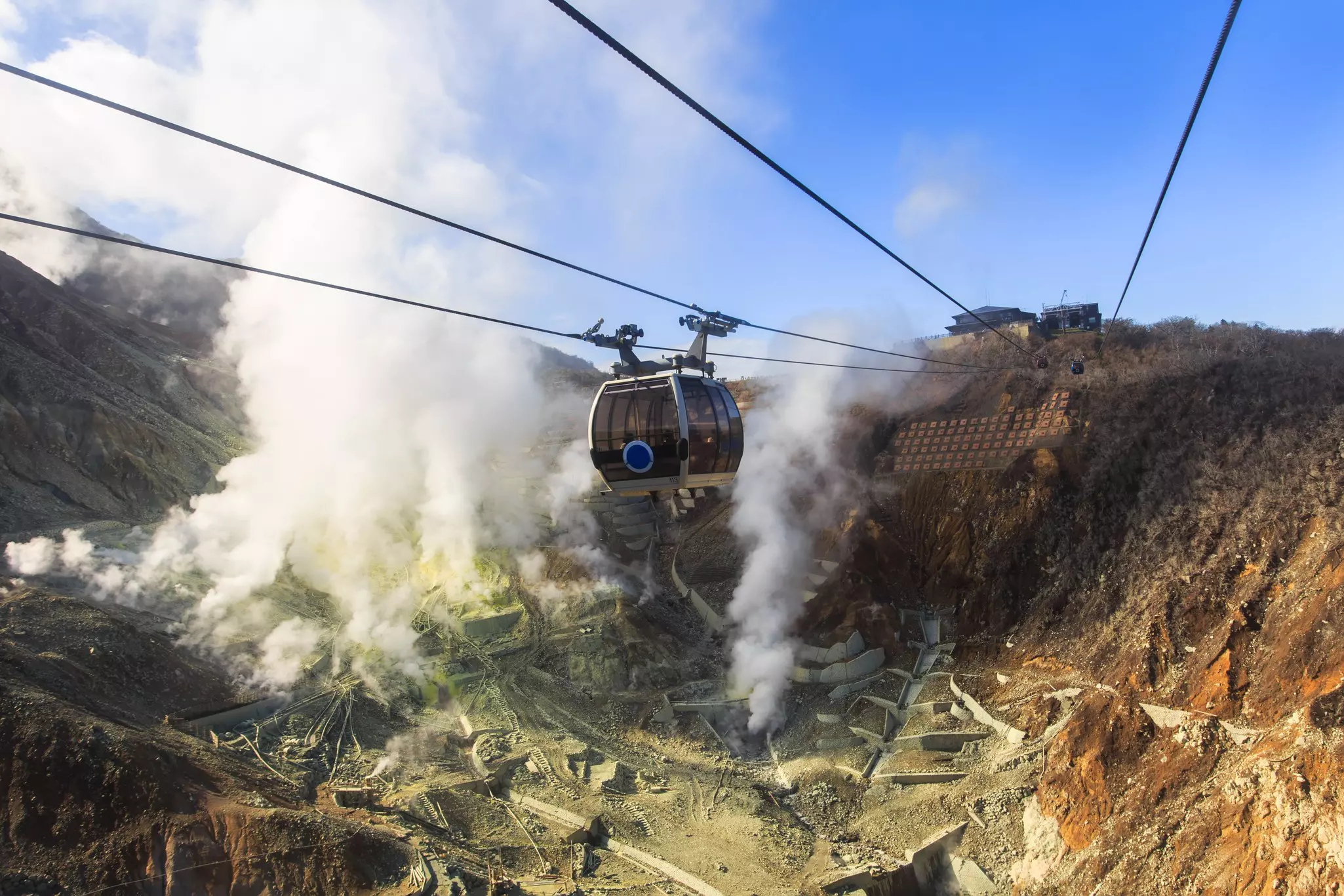
A cable car over the volcanic landscape of Ōwakudani, Hakone. Zen S Prarom/Shutterstock
Hakone has it all – awe-inspiring nature views, hot springs and beauty wherever you look. This is where you’ll see Mt Fuji peering over the mountains that frame Ashi-noko, a crater lake born of a volcano. When you’re done exploring the art and sculptures at the various museums, the many hot springs of Hakone-Yumoto await to wash away any fatigue.
Don’t miss:
- Floating over Ōwakudani’s barren landscape in a cable car and smelling the sulfur of the steaming volcanic landscape before sailing on the cobalt-blue crater lake of Ashi-no-ko
- Soaking in an onsen, such as Tenzan Tōji-kyō onsen village or luxurious Hakone Yuryō in the forest
- Touring the popular Hakone Open-Air Museum, where the hillside is dotted with towering sculptures.
LP recommends: If you plan to hit the ground running in Hakone, get the Hakone Free Pass. The 2-day ticket includes the regular train between Shinjuku and Hakone, plus all transport in Hakone, including the ropeway and sightseeing cruise.
Lonely Planet’s full destination guide to Hakone
Mt Fuji
Region: Chūbu
Best for: Views and pilgrimages
How long to spend: Mt Fuji can be visited as a day trip from Tokyo, but it’s worth staying longer.
Best time to visit: Autumn is particularly beautiful as the leaves change color.
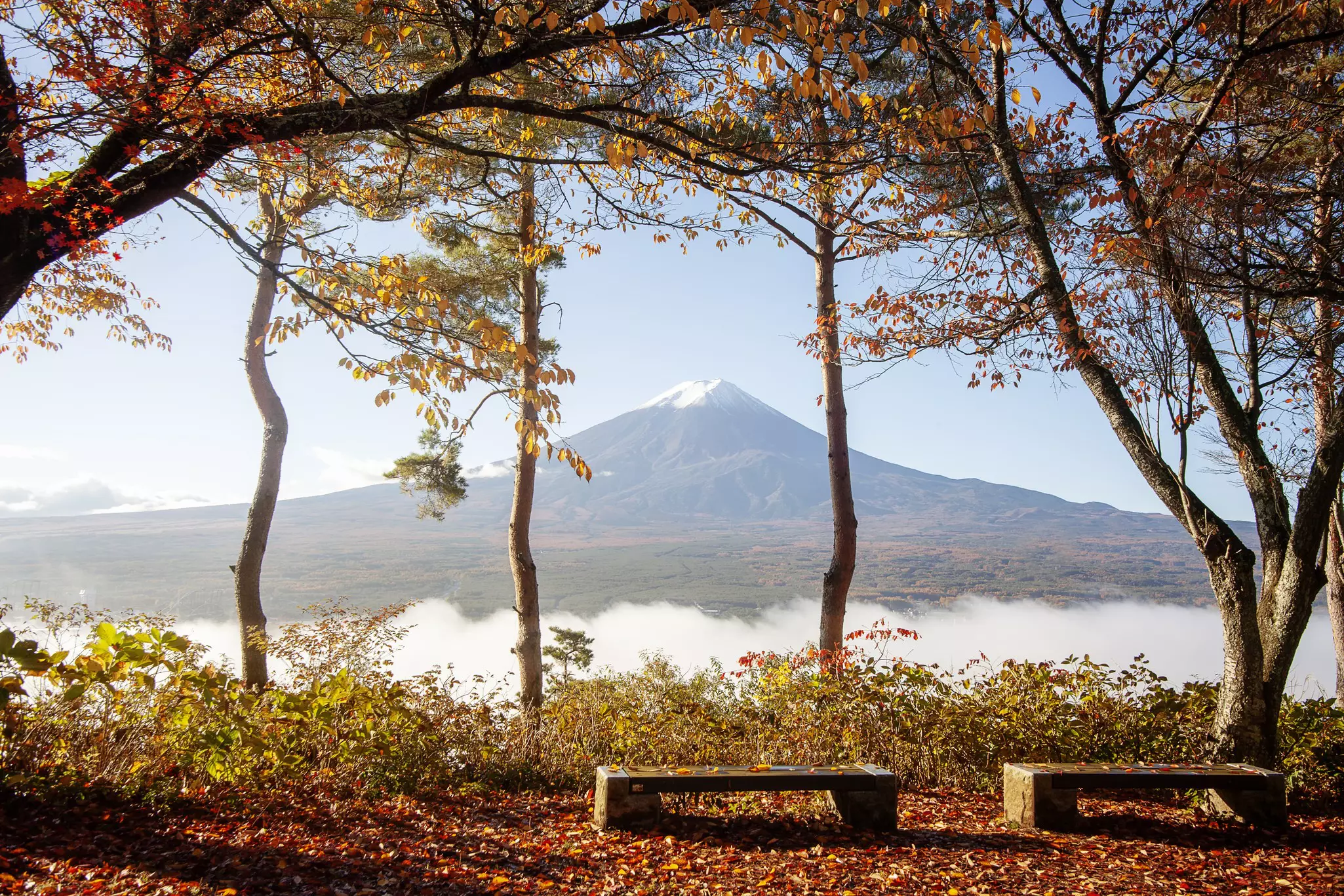
Lake Kawaguchiko and Mt Fuji. nicholashan/Getty Images
Even from a distance, Mt Fuji will take your breath away. Close up, the perfectly symmetrical cone of Japan’s highest peak is nothing short of incredible. Dawn from the summit? Pure magic.
Fuji-san is among Japan’s most revered and timeless attractions. Hundreds of thousands of people climb it every year, continuing a centuries-old tradition of pilgrimages up the sacred volcano. Those who’d rather search for picture-perfect views from the less-daunting peaks nearby will be following in the steps of Japan’s most famous painters and poets.
Don’t miss:
- The breathtaking view of Mt Fuji reflected off a pristine lake
- Hiking up the volcanic slopes
- A bike ride around the perimeter of Yamanaka-ko.
LP recommends: The best time to climb Mt Fuji is during its official season, from July 1 through mid-September, which avoids the rainy season and snowfall. Always check for typhoon warnings before hiking in Japan.
Lonely Planet’s full destination guide to Japan
Kamikōchi
Region: Chūbu
Best for: Mountain hikes
How long to spend: Can be a day trip from Matsumoto, but hikers will want tostay for a night or two.
Best time to visit: The official hiking season starts on the first Sunday in June. Kamikōchi is closed from November 15 to April 16.
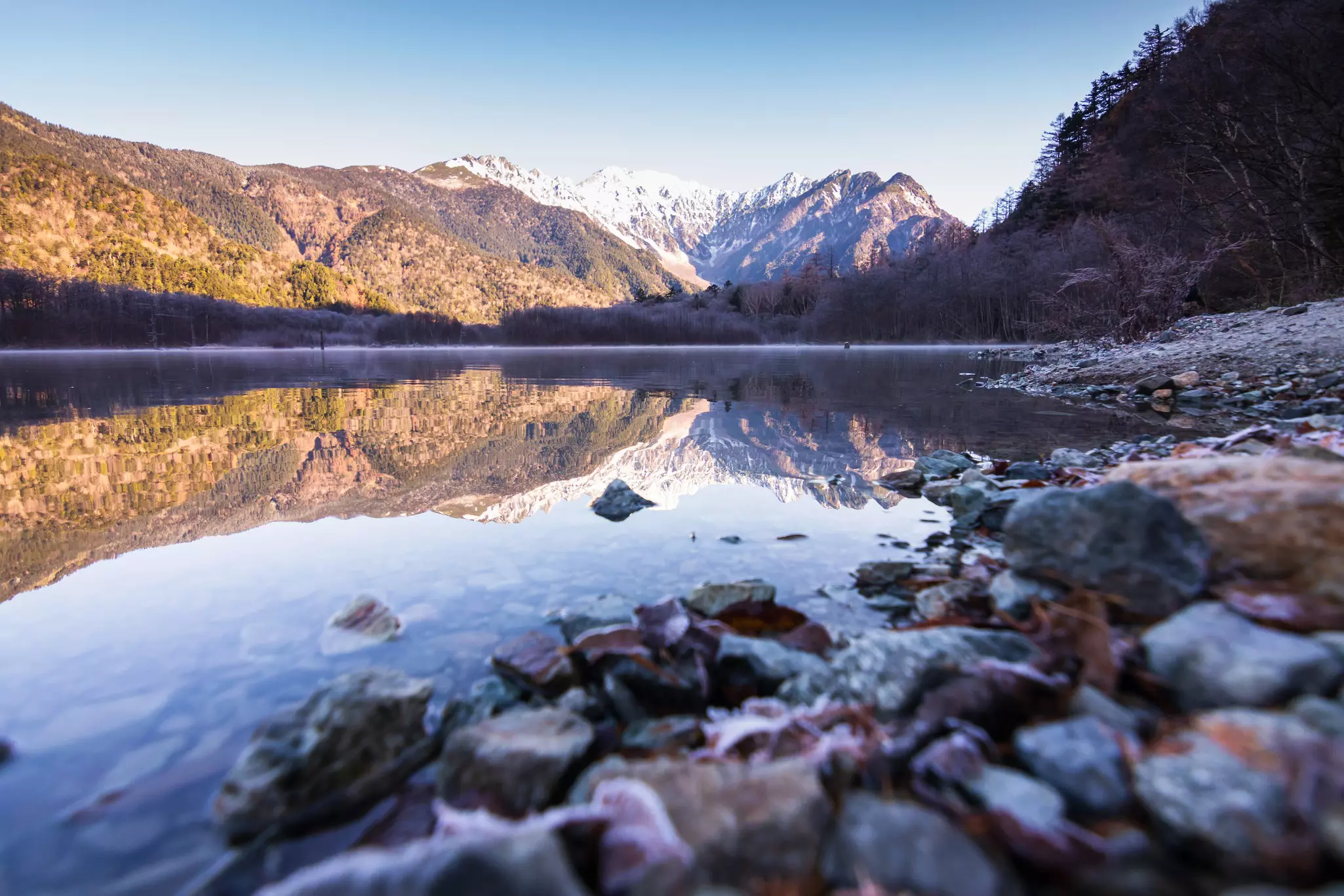
Kamikōchi in the Northern Japan Alps. PJjaruwan/Shutterstock
One of Japan’s most stunning natural vistas, Kamikōchi is a highland river valley enveloped by the soaring peaks of the Northern Japan Alps. The birthplace of Japanese alpinism, Kamikōchi is the gateway for challenging treks up some of the country’s tallest mountains, such as Yari-ga-take (3180m). Private cars are banned from Kamikōchi, which lessens the impact of the crowds.
Don’t miss:
Stay connected abroad with an eSIM
Holafly eSIM provides unlimited mobile data with no hidden fees, giving you peace of mind wherever you travel. Stay connected even after your plan ends with Always On. Use code LONELYPLANET for an exclusive discount.
Lonely Planet may earn a commission from affiliate links on our site. All recommendations and reviews reflect our own independent opinions.
- Kamikōchi Tourist Information Centre at the bus terminal, where English-speaking staff provide a wealth of information on everything from hiking and flora to bear sightings and weather conditions
- Views of the photogenic Kappa-bashi bridge
- Easy day hikes are possible along the Azusa-gawa, following the pristine river through tranquil forests of willow, larch and elm.
LP recommends: Avoid hiking early morning or late evening when bears are most active, and on rainy days. Carry bear bells or play music from your phone to alert them to your presence.
Lonely Planet’s full destination guide to Japan
Kyoto
Region: Kansai
Best for: Traditional Japanese experiences
How long to spend: Allow at least 3 days.
Best time to visit: Kyoto is a year-round city, but go in March to April for cherry blossoms.
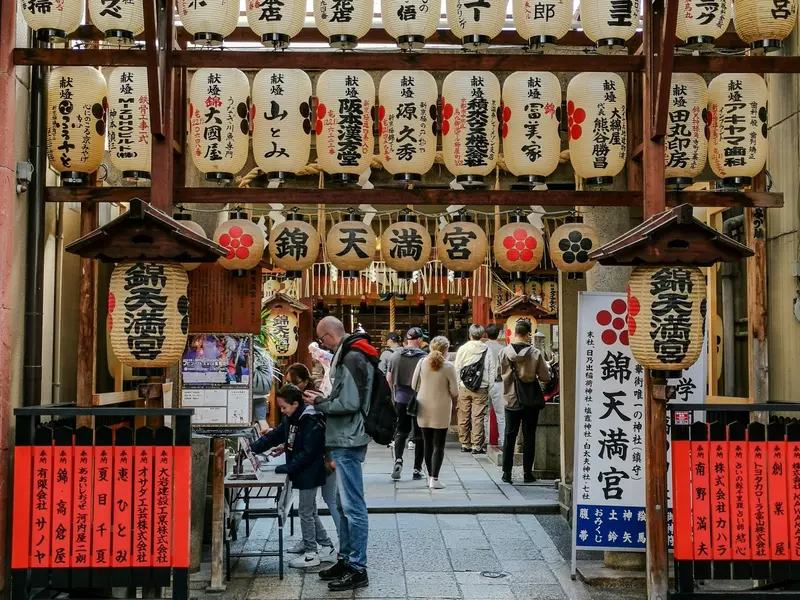
Left: Nishiki Market, Kyoto. Rintaro Kanemoto for Lonely Planet Right: Tourists visit Nishiki Tenmangu Shrine. Visited places/Shutterstock
Kyoto, Japan’s imperial capital for a thousand years, is home to more than a thousand temples. But temples are only the beginning. There’s the culture of tea here, which you can appreciate at one of the city’s many elegant teahouses; the art of the geisha (or geiko as they are called in Kyoto), those iconic performers of traditional music and dance; and also a rich food culture, including kaiseki (Japanese haute cuisine).
Don’t miss:
- The monumental Kinkaku-ji, an exquisite pavilion sheathed entirely in gold leaf
- The meditative Ryōan-ji with its stark Zen rock garden
- Geisha – or geiko as they’re called in Kyoto – are icons of the city. See them in the Gion district, and always be respectful.
LP recommends: Kyoto’s Maruyama-kōen (Maruyama Park) is famous for its cherry blossoms, so try to time your visit for hanami (cherry blossom) viewing season, but note, you’ll be sharing the experience with crowds of other people.
Lonely Planet’s full destination guide to Kyoto
Osaka
Region: Kansai
Best for: Street food and nightlife
How long to spend: 2 days minimum.
Best time to visit: Spring or fall. If you want off-season deals, consider visiting in winter.
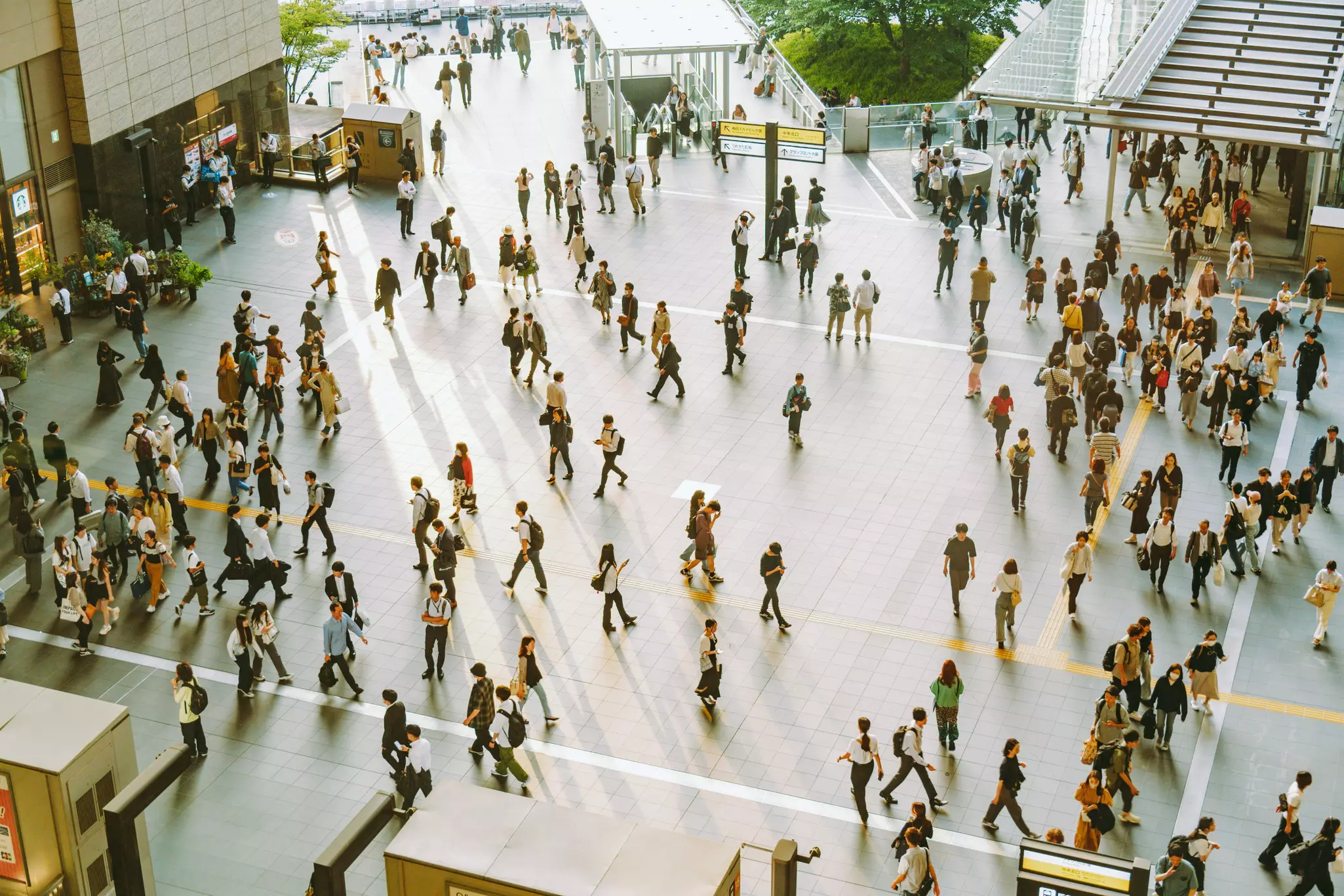
Umeda district, Osaka. Rintaro Kanemoto for Lonely Planet
Tokyo doesn’t nab all the superlatives when it comes to urban experiences. Osaka, Japan’s third-largest city, is tops for street food. It also has the most dramatic of nightscapes: a dazzling display of LED lights, animated signage and flashing video screens along the canalside strip Dōtombori. The city, Japan’s oldest merchant center, has a pace, spirit and zest for life all of its own; its unofficial slogan is kuidaore (eat until you drop).
Don’t miss:
- Trying Osaka‘s signature dish, tako-yaki (grilled octopus dumplings), among the bright lights of Dōtombori
- Osaka-jō, the impressive castle and one of the city’s most iconic sites
- The gloriously tacky 103m-high Tsūten-kaku (Tower Reaching Heaven), a retro-futuristic mass of silver steel with an observation deck that gives views over the entertainment district of Shin-Sekai.
LP recommends: The Osaka Amazing Pass grants you unlimited travel on city subways, buses and trains (excluding transfer from Kansai Airport), and free entry into more than 40 attractions.
Lonely Planet’s full destination guide to Osaka
Nara
Region: Kansai
Best for: Deer and ancient architecture
How long to spend: A day trip from Osaka or Kyoto, but stay overnight if you can.
Best time to visit: Spring for cherry blossoms, fall for foliage, but go in winter if you don’t mind the cold and want to avoid the crowds.
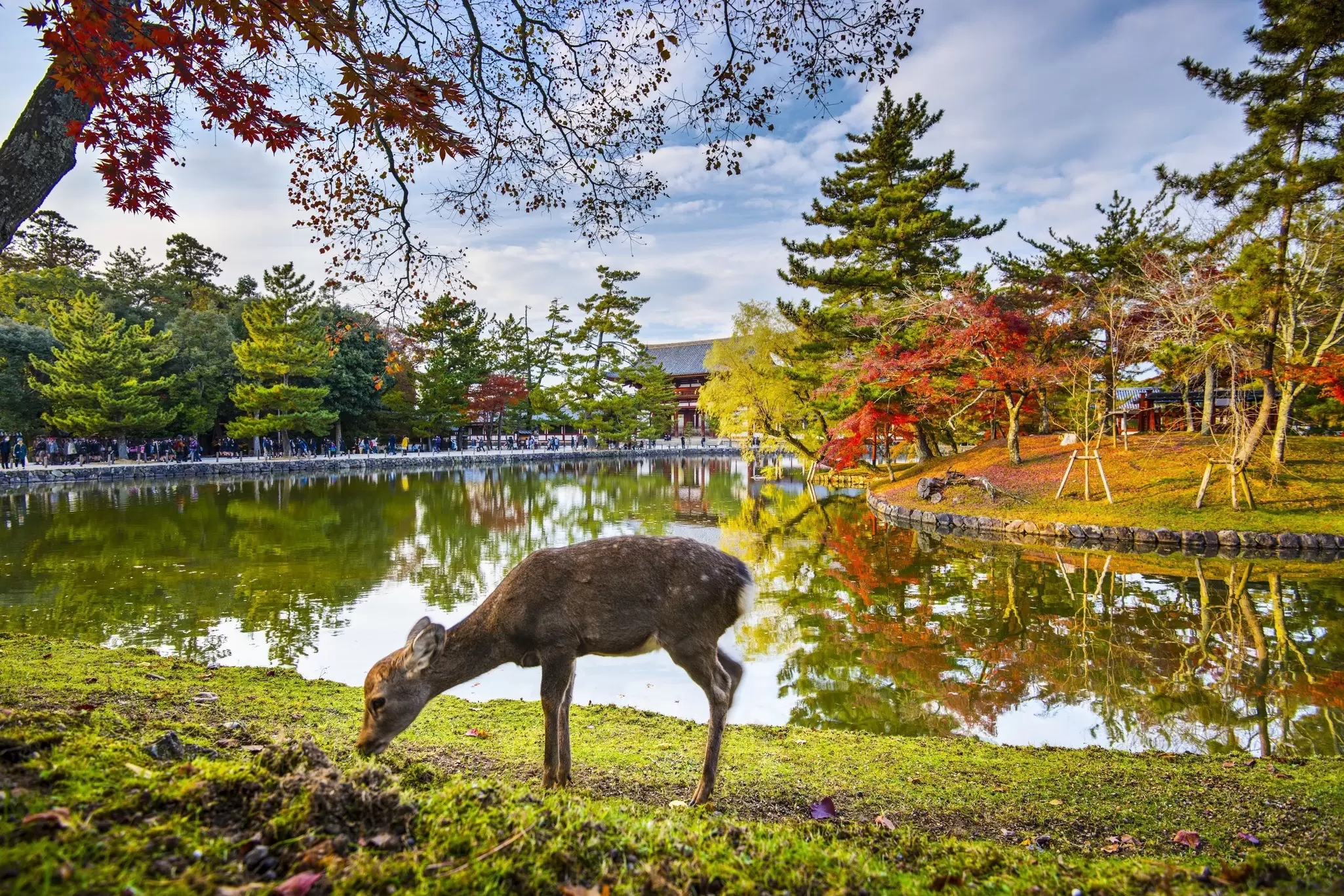
A deer grazes in Nara. Sean Pavone/Shutterstock
Before Kyoto, there was Nara, Japan’s first permanent capital and one of the country’s most rewarding destinations. Top billing goes to the awesome Daibutsu (Great Buddha), resplendent inside one of the world’s largest wooden halls, though for many it’s Nara’s free-roaming deer that leave the deepest impression.
Don’t miss:
- A stroll around Naramachi, Nara’s traditional merchant quarter, with well-preserved machiya (shophouses)
- Seeing Daibutsu, one of the largest bronze statues in the world at 16m high
- Feeding Nara’s 1200 or so sika deer who are unerringly tame.
LP recommends: Although Nara’s main sights are walkable, hiring a bike gives you
more time to explore the narrow streets of Naramachi.
Lonely Planet’s full destination guide to Nara
Kōya-san
Region: Kansai
Best for: Exploring temples
How long to spend: Stay overnight.
Best time to visit: In late October for fall foliage.
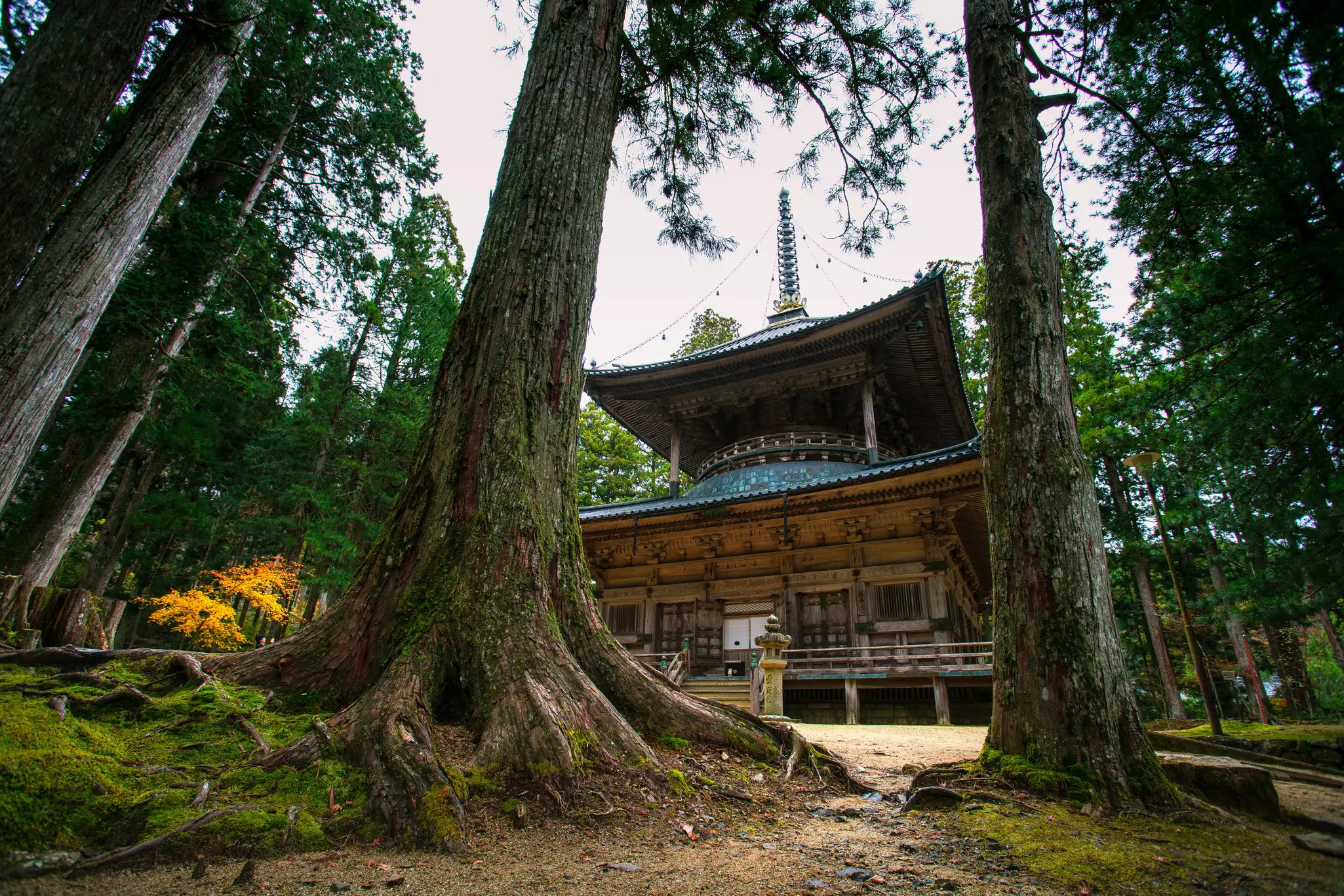
Temple complex at Kōya-san, Wakayama. b-hide the scene/Shutterstock
Riding the funicular up to the sacred Buddhist monastic complex of Kōya-san feels, appropriately, like ascending to another world. There are over a hundred temples here.
Don’t miss:
- Oku-no-in, where paths weave their way among towering cryptomeria trees and time-worn stone stupas covered in moss and lichen
- The sumptuous painted fusama (sliding panels) that depict Buddhist deities, sacred landscapes, animals and narrative scenes in Kongōbu-ji
- Spending the night in a temple, dining on traditional vegetarian Buddhist cuisine and waking up early for morning meditation with the resident monks.
LP recommends: Though Japanese temples and shrines do not have established dress codes, visitors are expected to stay relatively quiet in these sacred spaces.
Lonely Planet’s full destination guide to Japan
Hiroshima
Region: Chūgoku
Best for: Introspection
How long to spend: A couple of nights.
Best time to visit: Autumn has fabulous fall colors and fewer crowds than spring.
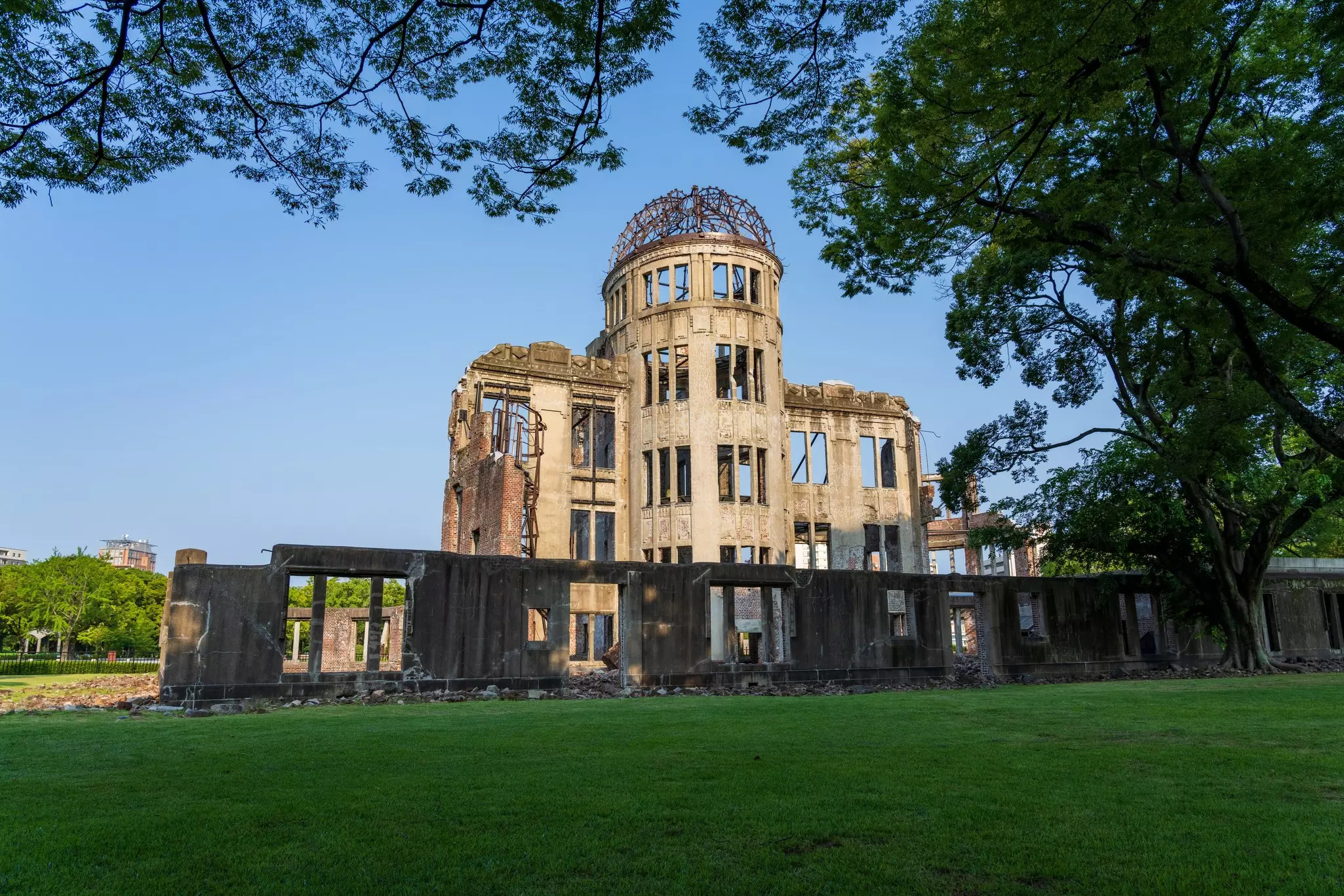
The Genbaku Dome in Hiroshima. Hit1912/Shutterstock
Hiroshima today is a forward-thinking city with attractive, leafy boulevards. It’s not until you visit the Peace Memorial Museum that the true extent of human tragedy wreaked by the atomic bomb becomes vividly clear. But the city’s spirit of determination – as well as its food – will ensure that you’ll have good memories to take with you when you leave.
Don’t miss:
- A heartbreaking but important history lessons at the Peace Memorial Museum
- Taking a moment of reflection in the park around the museum, much of which was designed by Japan’s great modernist architect Tange Kenzō
- Eating the local version of the batter pancake okonomiyaki, known as Hiroshima-yaki.
LP recommends: Take a short detour by train and ferry ride to Ōkunoshima (Rabbit Island), a small island that’s home to hundreds of friendly, free-roaming rabbits.
Lonely Planet’s full destination guide to Japan
Naoshima
Region: Shikoku
Best for: Art and architecture
How long to spend: Allow 2 days to see the major sites, but a day trip is possible.
Best time to visit: Anytime.
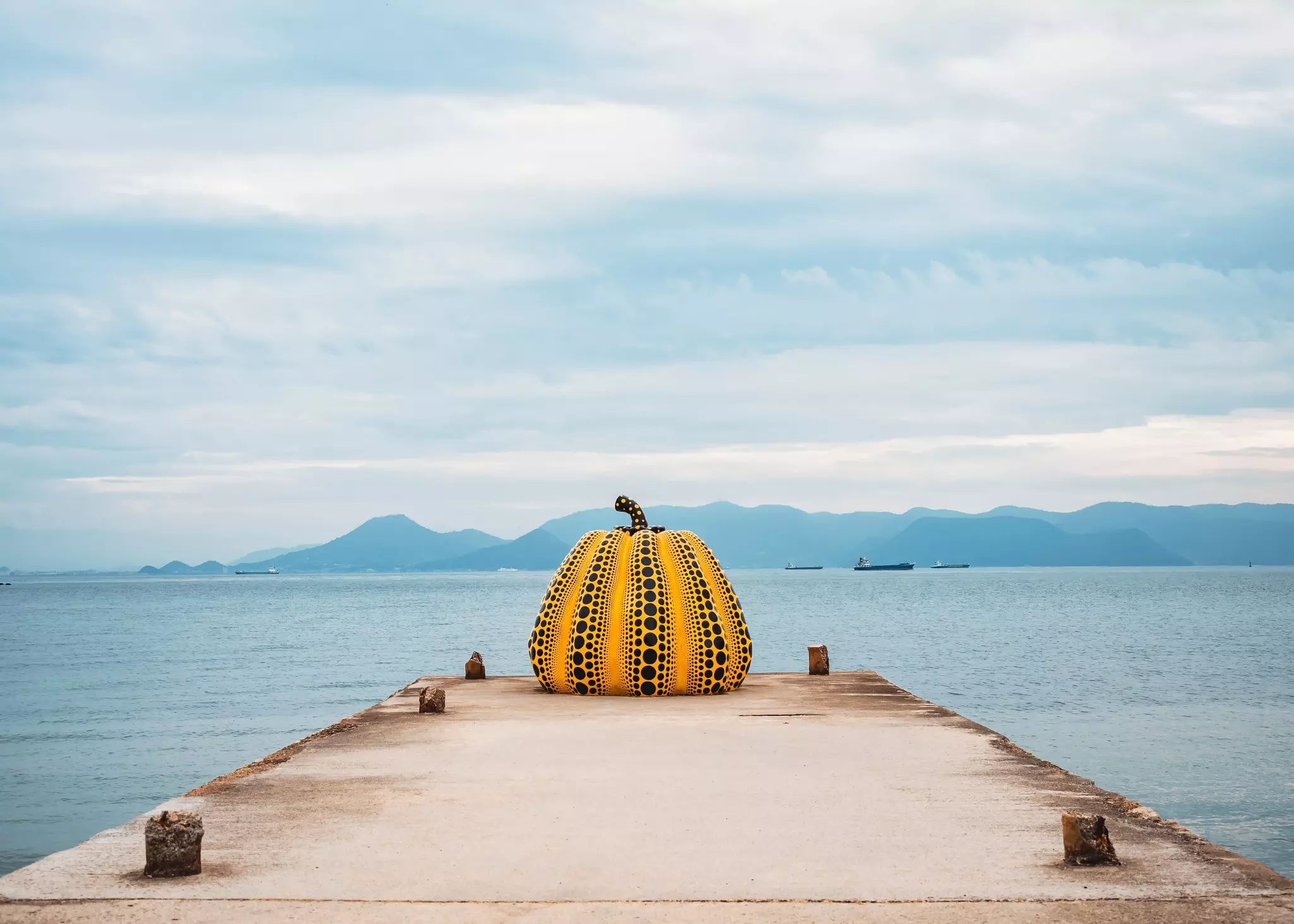
Yayoi Kusama’s iconic pumpkin sculpture in Naoshima. VTT Studio/Shutterstock
Naoshima is one of Japan’s great success stories: once a rural island on the verge of becoming a ghost town, it’s now a world-class center for contemporary art.
Many of Japan’s most lauded architects have contributed structures, including museums, a boutique hotel and even a bathhouse – all designed to enhance the island’s natural beauty and complement its existing settlements.
The resulting blend of avant-garde and rural Japan is captivating. It has also inspired some locals to relocate here to pursue a slower life outside the big cities.
Don’t miss:
- Chichū Art Museum, a subterranean marvel cleverly concealed within the landscape
- Benesse House Museum, where artworks coexist with nature
- Yayoi Kusama’s iconic polka-dotted Yellow Pumpkin.
LP recommends: Plan ahead and book your tickets in advance online. Not only will you get a small discount (which adds up over multiple venues), but tickets are limited each day, and can and do sell out.
Lonely Planet’s full destination guide to Japan
Yakushima
Region: Kyūshū
Best for: Forest bathing
How long to spend: You could drive around Yakushima in 1 day, but hikers will want to stay much longer.
Best time to visit: Even in high season, July and August, Yakushima remains fairly quiet.
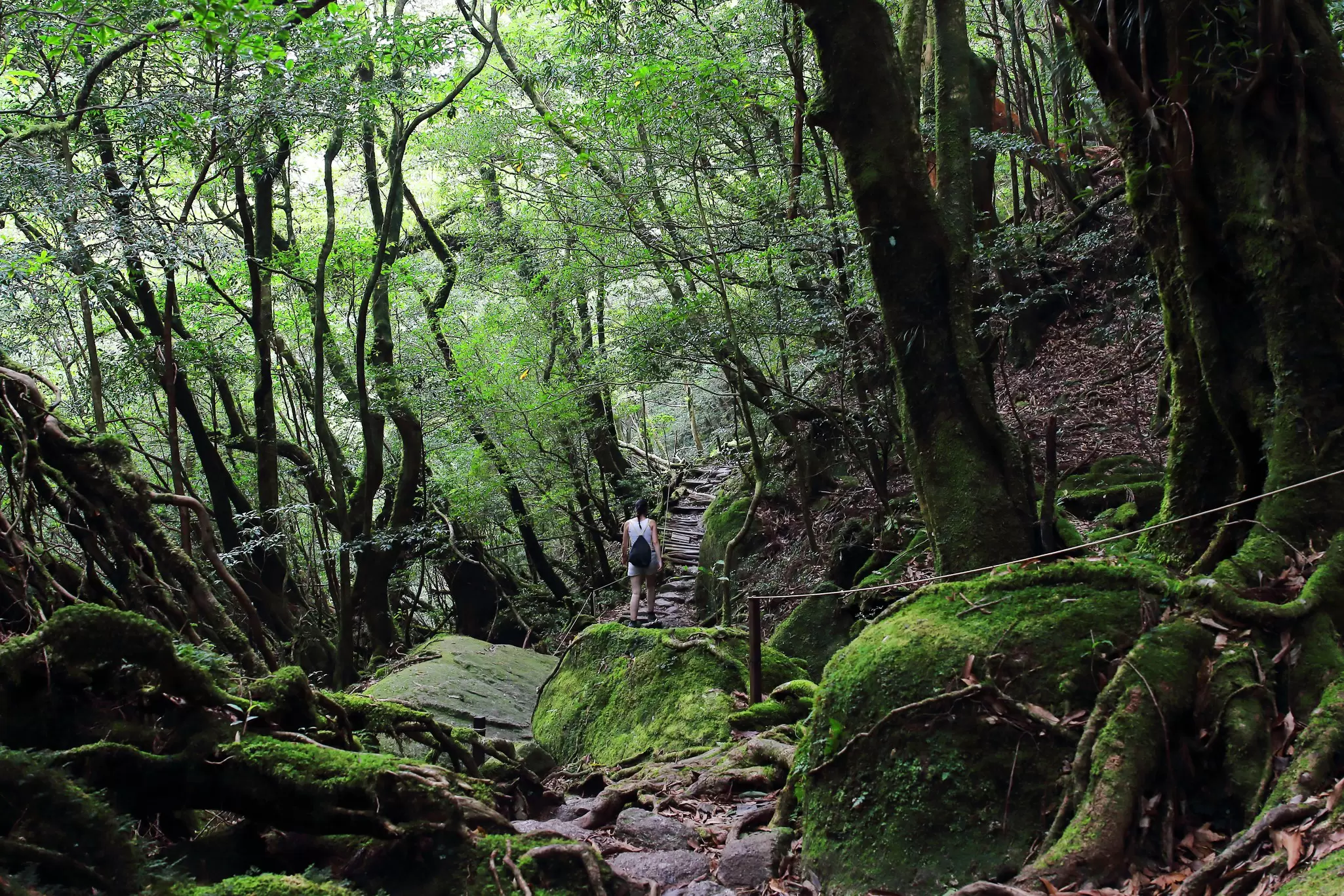
Hiking in Yakushima’s primeval forest. Nachosuch/Getty Images
Yakushima, a small island off the coast of southern Kyūshū, is often described as magical and enchanting – otherworldly even. It’s a place where words fail and clichés step in. Home to some of Japan’s last primeval forests, you’ll find the yakusugi, an ancient Japanese cedar native to the island whose giant roots seem to form alien tentacles. Hiking trails underneath them cover craggy terrain, often fuzzy with moss.
Don’t miss:
- Hiking through ancient woodland to the prehistoric Jōmon Sugi, a tree somewhere between 2000 and 7000 years old
- The awe-inspiring 88m cascade of Ōko Waterfall
- Hiking at Shiratani-unsuikyō, where the landscape is believed to have inspired the iconic Studio Ghibli animated film, Princess Mononoke.
LP recommends: Keep your plans flexible. If a big hike is your main objective, build in an extra day or two on Yakushima in case of bad weather.
Lonely Planet’s full destination guide to Japan
Fukuoka
Region: Kyūshū
Best for: Top nightlife, and an alternative to Tokyo
How long to spend: 2 to 3 days.
Best time to visit: Spring for cherry blossoms, autumn for fall foliage, but expect to be sharing the pretty scenes with lots of other people.
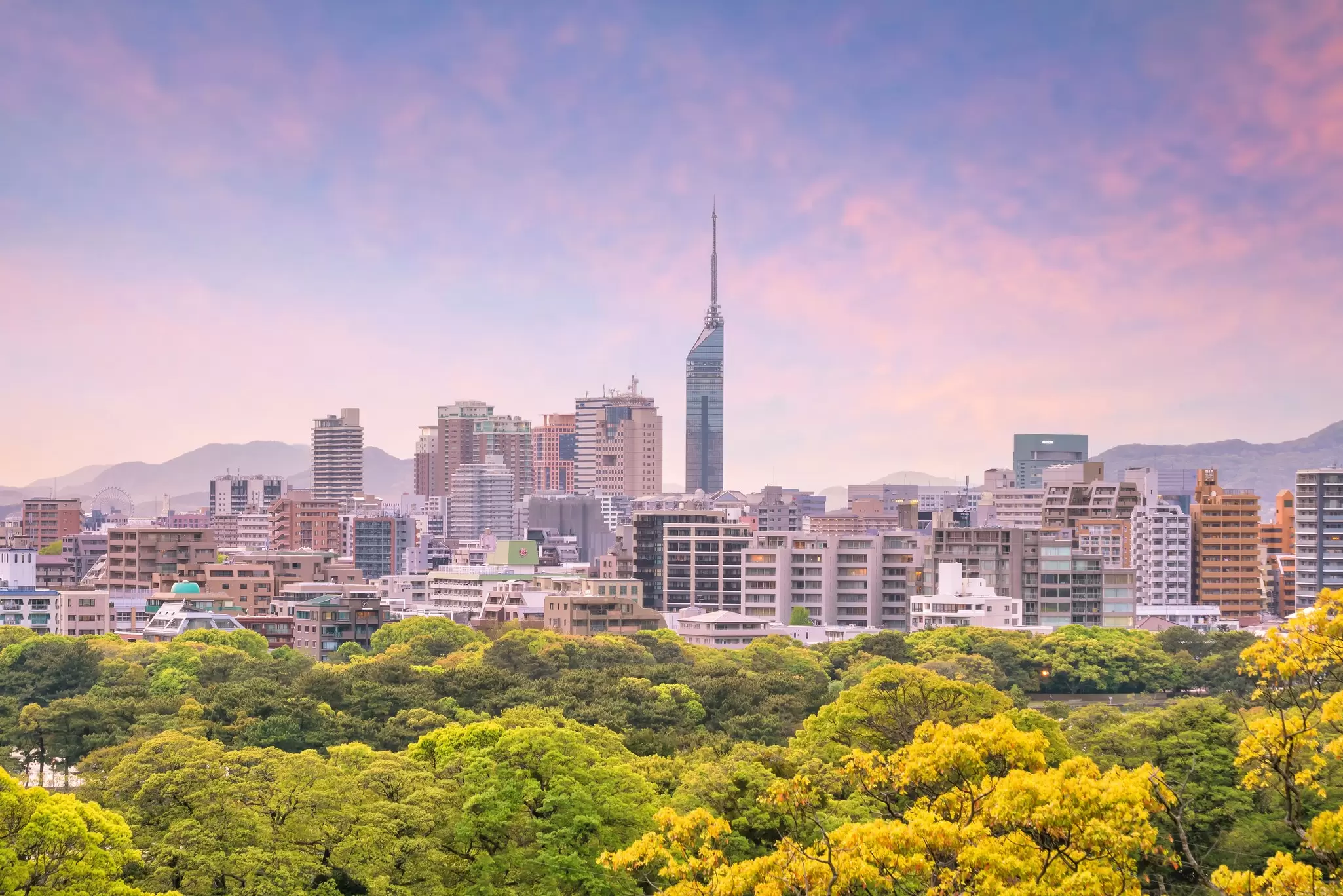
Fukuoka city skyline. f11photo/Getty Images
Fukuoka city is in many ways the Tokyo of Kyūshū, even replete with a smaller version of Tokyo Tower (creatively named Fukuoka Tower). There are great museums, a university, delicious high-end restaurants and excellent jazz, but it’s smaller, more intimate and less hoity-toity than its larger Kantō lookalike.
Don’t miss:
- Trying Fukuoka’s signature dish – ramen – at one of the megachains, Ippūdō, Ichiran or Ikkōsha, and
- Partying until late in the bars of Tenjin then having a late-night snack at a yatai (street-food cart)
- City views from Fukuoka Tower. Go early morning or weeknights to avoid the crowds.
LP recommends: Visitors will be well-served by getting one of the several transport cards the city offers. Hakakaken, Pasmo, SUGOCA, Nimoca and others all make getting on and off buses, subways, trams and trains a breeze.
Lonely Planet’s full destination guide to Fukuoka
Beppu
Region: Kyūshū
Best for: Seafood and bathing
How long to spend: 1 to 2 days.
Best time to visit: Come in winter to look down from a nearby summit and see all of the vent plumes rising up, turning cumulus-cloud-white as the hot steam hits the cold.
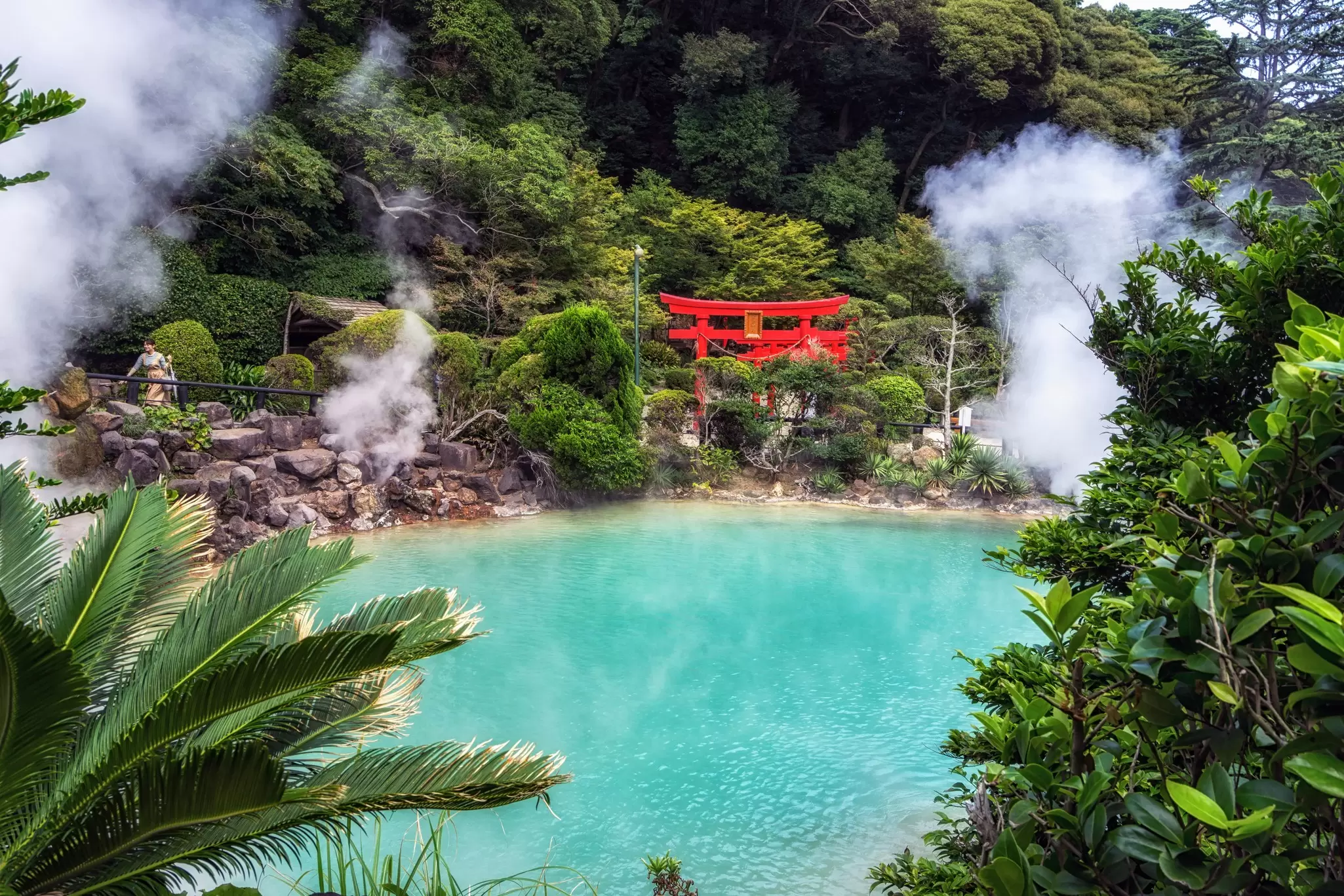
One of the “hells” at Beppu Jigoku. aaron choi/Shutterstock
Beppu is one of the country’s top onsen towns, with hundreds of places to bathe and a famous, ancient bathhouse, Takegawara, that is something of a pilgrimage site for true hot-spring otaku (nerds). The town itself is small, offers excellent seafood and, thanks to the university nearby, has a youthful vibe that’s not found in many other spots in Kyūshū.
Don’t miss:
- A trip to Takegawara Onsen, where the bathing experience has changed little over the centuries
- Riding the Beppu Ropeway for fantastic views of the town, the bay and the mountains
- A fun afternoon in “hell” at Beppu Jigoku, a tourist attraction of seven not-for-bathing onsen, where monster statues overlook the bubbling waters.
LP recommends: Save some money by bringing your own towels to the onsen.
Lonely Planet’s full destination guide to Japan
Okinawa and the Southwest Islands
Region: Kyūshū
Best for: Beaches
How long to spend: 2 days minimum.
Best time to visit: May and June are rainy but can be more budget-friendly; autumn is less crowded than summer.
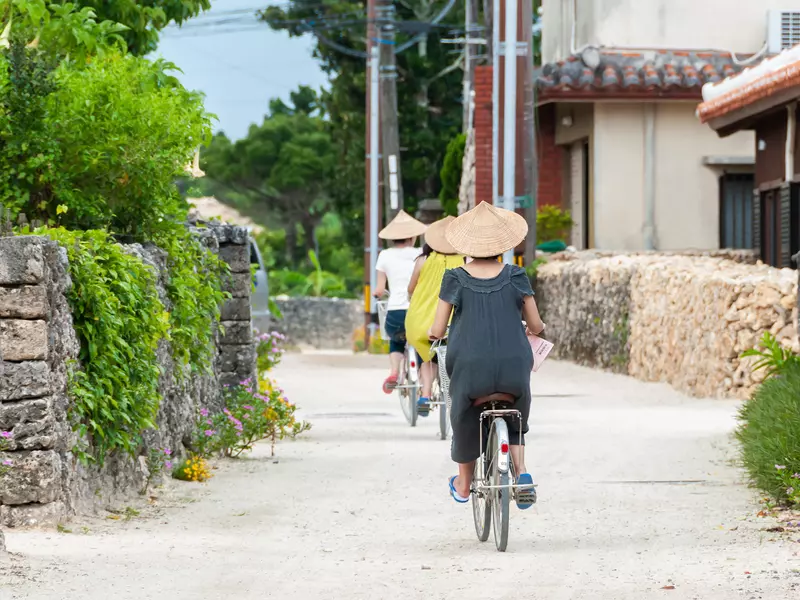
Left: Cyclists in the village of Taketomi. Renata Barbarino/Shutterstock Right: Mangroves on Iriomote island. Ippei Naoi/Getty Images
Okinawa and the Southwest Islands offer a totally different experience from the rest of Japan. This semi-tropical archipelago forms an arch between Kyūshū and Taiwan. Until the islands were annexed by Japan in the 19th century, they formed their own kingdom – the Ryūkyū Empire – and the cultural differences are apparent in everything from the architecture to the food.
Don’t miss:
- Japan’s best beaches, like those on the Yaeyama Islands, with sugar-white sand fringed with palms and turquoise waters
- Snorkeling off the shores of Kerama Island, with coral, tropical fish and sea turtles
- War memorial sites, such as Okinawa Prefectural Peace Memorial Museum and Himeyuri Peace Museum.
LP recommends: Traveling these far-flung islands takes planning, especially if you’re relying on limited public transport. During the typhoon season, typically June through November, weather can disrupt travel plans, so build in extra time if you can.
Lonely Planet’s full destination guide to Okinawa

Guide Best in Travel 2026
This news has been rearranged and published with the https://www.lonelyplanet.com/
press release subscription.
We Told You That We Will Make You Dream Great Dreams With Our Media Group.
We Set Out For The Best İn The World And Have Been Offering You A Journey Beyond Dreams For Exactly 20 Years.
Thanks With To LONELY PLANET
DEAR MANAGEMENT / PRESS & PR TEAM
Kind Regards,