October’s Trending Topics / A Very Special Weekend / Brian De Carvalho: Unpicking fashion / By Eleanor Taylor-Roberts
October’s Trending Topics / Brian De Carvalho: Unpicking fashion / By Eleanor Taylor-Roberts / Publisher luxurylifestylemag
Editing Press Releases wmwnewsglobal.com

To Witness These Miracles Click Here https://www.luxurylifestylemag.co.uk/
Brian De Carvalho: Unpicking fashion
The London designer talks John Galliano, the hidden cost of ambition and why fashion must finally confront the realities behind its immaculate façade.

Brian De Carvalho has never been interested in quiet luxury.
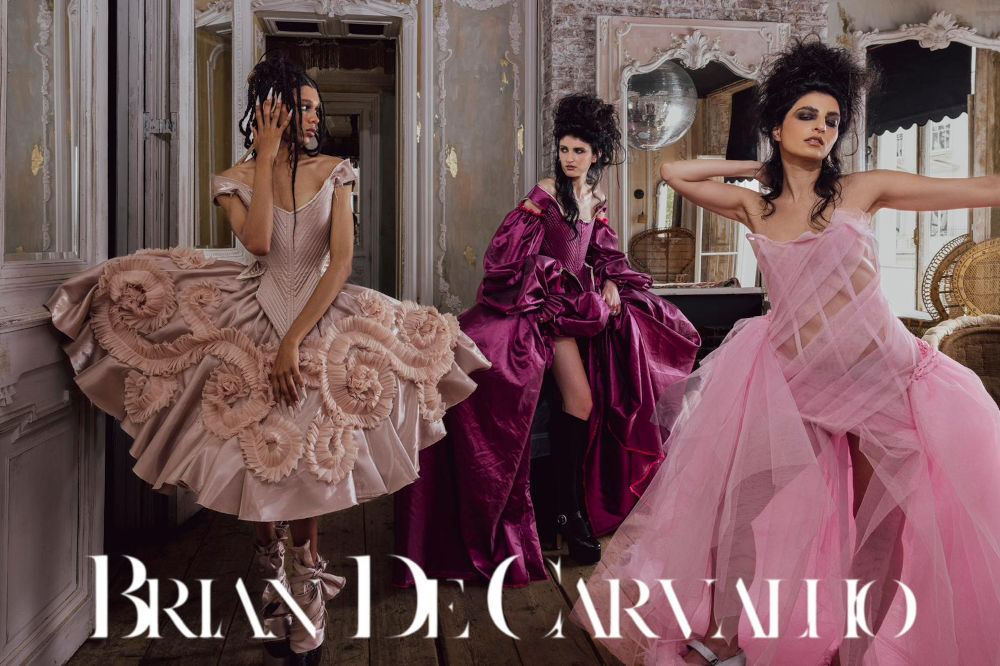
The London-based designer creates clothes with unapologetic theatricality; pieces designed not merely to be worn, but to embolden, transform and command attention. His instinctive approach has taken his work from lockdown experimentation to the cover of VOGUE, earning the attention of fashion luminaries including John Galliano, Philip Treacy and Robert Fairer.
Yet behind the red carpets, celebrity placements and editorial acclaim lies a far more complicated story: one of financial sacrifice, creative resilience and an industry whose immaculate façade can conceal an uncomfortable reality.
Now, De Carvalho is turning conversation into his next creative medium. His forthcoming podcast, Unpicked, brings together figures from across the creative industries to examine the struggles, power structures and unspoken truths that fashion too often leaves untouched.
Here, he discusses the emotional force behind his designs, the true meaning of luxury and why success should never require silence.

‘Perhaps that is what Galliano saw: someone making things instinctively, wearing them proudly and refusing to be inhibited by perfectionism or the fear of being perceived’
John Galliano personally encouraged you to pursue fashion. What do you think he recognised in you before you had fully recognised it in yourself?
It is difficult to know exactly what Galliano recognised in me, because there is no way of knowing what he was thinking or feeling at the time. This was only a month or two before his now-iconic Margiela show, so he must have been immersed in references, colour, texture and material.
I arrived wearing an 18th-century-inspired piece I had made at home during lockdown: raw-edged, jewel-toned taffeta, created with no formal knowledge, money or resources. It was imperfect, but it had feeling.
The only comparison I can draw comes from working with other extraordinary creatives of that generation, including Philip Treacy and Robert Fairer.
Perhaps I remind them of a particular moment in fashion, or even of themselves at my age, when you simply did what you could with what you had. It did not need to be perfect or even conventionally beautiful; it needed emotion.
You threw everything into it. Perhaps that is what Galliano saw: someone making things instinctively, wearing them proudly and refusing to be inhibited by perfectionism or the fear of being perceived.
What makes a Brian De Carvalho design unmistakably yours?
What makes a design unmistakably ours is its unapologetic energy. We are a deeply theatrical brand. We do not shy away, and we are certainly not quiet luxury. When you wear a BDC piece, it is because you want to be seen, acknowledged and noticed. I spent so much of my younger life hiding and feeling afraid, so I love watching someone put on one of my designs and physically come alive. They become a little more boisterous, a little more confident. That is who we design for.

His forthcoming podcast, Unpicked, brings together figures from across the creative industries to examine the struggles, power structures and unspoken truths that fashion too often leaves untouched
Fashion is an industry built on image. How much of your own identity do you reveal through your clothes, and how much do you deliberately keep hidden?
Perhaps I keep certain things hidden subconsciously, but I try to be as open and direct as possible – sometimes more than I should be.
It gets me into trouble, but the brand and I are ultimately one and the same. When I began designing, I was creating entirely for myself. I was the sample size, the mannequin and the client.
Every piece was something I wanted to wear, something I wished existed or an idea I wanted to explore. The brand is therefore intensely personal to me. In turn, it becomes personal to the people who support us, wear our clothes and form part of our team. It has grown into one enormous labour of love.
Is there a particular kind of person you design for, or are you more interested in the figure a garment allows them to become?
Designing for a particular person is interesting because it becomes a question of what comes first: the person or the garment. For me, it is usually the garment.
I am led by an idea, a texture I want to achieve, a colour I am drawn to, a silhouette I cannot get out of my head or a material I am determined to make work. Even so, I always want my designs to feel flattering and strong. I want someone to put on one of my pieces and immediately feel more confident.
I am instinctively drawn to unapologetic people, so perhaps that is who I am always designing for – whether they are a woman, a man or anyone else. Ultimately, I want people to feel confident, seen and powerful in my clothes.

Luxury lies in pieces that require time and care, and that carry a story and an emotional charge
Luxury is being radically redefined. What feels genuinely luxurious to you now, and what has begun to feel performative?
This is probably where I get myself into trouble, because I always have an opinion. My understanding of luxury harks back to fashion’s golden age. There is a reason I continually reference McQueen, Galliano and Westwood: to me, fashion is an art form.
I come from a fine art background and have studied painters, sculptors and performance artists. Fashion is an extraordinary amalgamation of all those disciplines, yet luxury has somehow been diluted into little more than expensive fabrics and an enormous price tag.
True fashion has to make you feel something; it should bring you alive in some way.
To me, luxury lies in pieces that require time and care, and that carry a story and an emotional charge. That emotion does not necessarily have to be pretty, happy or joyful, but whether it is a dress, jacket or corset, you should look at it and feel something.
You should be able to sense the emotion and intention of the person who created it, rather than simply seeing something designed because it will be easy to sell or mass-produce.
Social media and the industry at large has made everything extraordinarily fast-paced. There is a constant demand for ‘next, next, next’. You post a dress on Instagram and are immediately expected to produce another the following week. But fashion is an art form. It is a craft and a skill, and it takes time.
I admire brands that create one collection a year, or designers who might produce a single piece every six months, because you can see the attention and care within those garments.
That is ultimately what breathes life into them, not producing another T-shirt that can be sold easily for maximum profit. To me, luxury is time. Time is the one luxury we can never recover, so to wear a piece and feel, against your skin, the hours that went into creating it – that is true luxury.
You are entering a new creative chapter with your upcoming podcast, Unpicked. Why did conversation feel like the natural next medium for you?
This is definitely where I get myself into trouble. I have always been a talker – my mouth is my strongest muscle because it is the one I exercise most. I have never been afraid to say what perhaps should not be said, challenge what others leave unchallenged or call out behaviour I believe is wrong.
Fashion can be an incredibly difficult industry. People are mistreated and exploited, and creatives are often expected to achieve extraordinary things with no money. I was speaking about these realities so frequently that a friend eventually said, “Why don’t you start a podcast? Interview people, have these conversations properly and create a platform for them”. That was the beginning of Unpicked. I soon realised how many people across the creative industries feel the same way. Designers, stylists, musicians and influencers may work in different worlds, but each has experienced struggles that are rarely discussed openly.
When I started my brand, nobody told me how difficult or expensive it would be, or that I would need another job and significant financial support to sustain it.
Everyone presented fashion as this beautiful, effortless world. I hope Unpicked can offer a more honest perspective – one that might help others or, at the very least, give them genuine insight. I have already learnt an extraordinary amount simply by sitting with my guests and hearing what they have endured. Understanding the reality behind their success has only made their achievements feel even greater to me.

The podcast ventures into subjects the creative industries often avoid. What do you believe fashion is still too afraid – or too polished – to talk about honestly?
Fashion avoids a great deal because it is an industry built on appearances. That does not make fashion itself shallow – I still believe it is an extraordinary art form – but I see fashion and the fashion industry as two very different things.
In an ideal world, I would live somewhere in the mountains, creating beautiful gowns without having to consider anything else. The reality of the industry is rather different. Nobody wants to discuss failure, financial difficulty, a collection that did not perform or a challenging client.
Perhaps the greatest unspoken truth is that fashion often does not pay. From the outside, it appears glamorous, extravagant and enormously wealthy, yet countless stylists work for free, while designers risk financial ruin creating custom gowns for celebrities who may never pay them.
Fashion does not like to hold a mirror up to itself. I have never shied away from calling out behaviour I believe is wrong, because situations routinely accepted within fashion would be considered unacceptable in almost any other industry.
People may tell me, “Brian, you shouldn’t have said that”, or, “You shouldn’t challenge such a powerful publication”. But if nobody speaks, identifies the failures or demands accountability, nothing changes.
Creative industries celebrate success, but rarely expose its cost. What has ambition demanded from you personally?
My ambition has cost me a great deal, financially, emotionally and personally. For the first two or three years of the brand, we made no money at all.
We had orders and press coverage, but the pieces often cost more to produce than we were selling them for. I went a year without paying rent, struggled at times to afford food or even water, and borrowed money to feed my cats. It was horrific. The contradiction was extraordinary.
We were appearing on red carpets, at premieres and across major publications; my inbox was so inundated that I could barely keep up. Yet I was the poorest I had ever been. Everyone wanted to wear the clothes and everyone wanted me in the room, but very few people were willing to support the business behind them.
At Fashion Week, everybody wanted a ticket, but had I charged even £10, many would not have paid it. Meanwhile, staging a show can cost £20,000 or £30,000.
Fashion has cost me money, stress, friendships and team members. It is a relentless, high-stakes industry, and managing that pressure in a healthy way is incredibly difficult. That experience forced me to change how I run the brand. We may not appear as big or as busy as we once did, but the business – and my relationship with it – is far more sustainable.

If Unpicked could dismantle one myth about fashion and its creative elite, which would you choose, and why?
My goal with Unpicked is to make the creative industries feel more human. For a long time, I faced so many difficulties in isolation, only to discover that everyone around me was experiencing many of the same things.
Those seemingly enormous moments – the celebrity placement, prestigious project or major campaign – often conceal a very different reality. Someone may have worked for free, fallen into debt or be struggling to keep their home, yet nobody says, “Actually, things aren’t so good right now.
I may be everywhere, but I’m not making money”.
At the height of the brand’s visibility, people assumed I was a millionaire because I was dressing everyone and appearing in every magazine. In reality, I was at my lowest point financially. I want students and fellow creatives to hear these conversations and realise, “I’m not alone; it isn’t only me”. Fashion has a tendency to avoid examining itself. We pretend everything is perfect, which isolates us and creates competition rather than community. It establishes a false narrative: He is doing brilliantly while I am struggling – why?
For years, all I wanted was a friend in fashion, a group of peers and a genuine sense of belonging, but the industry rarely fosters that. I try to create it wherever I can.
I encourage my team and the people I meet to support one another, because there is more than enough space for us all. One person’s success does not diminish the possibility of your own.
McQueen, Galliano and Westwood – my three favourite designers – emerged from London at the same time and became icons in their own right.
Galliano’s success at Dior did not prevent McQueen from receiving his flowers, nor did either diminish Westwood. Fashion perpetuates the myth that only one designer can succeed at a time. I simply do not believe that, and I hope Unpicked can help dismantle it.
All imagery credit: Robert Fairer
This news has been rearranged and published with the https://www.luxurylifestylemag.co.uk/
press release subscription.
DEAR MANAGEMENT / PRESS & PR TEAM
Kind Regards,