
















Fantastic October 2026 Suggestions With ANN DOUGLAS LOTT/ Best Fall Road Trips in The USA And Canada: Routes, Foliage Timing And Top Stops / By Taryn Shorr-McKee

Fantastic October 2026 Suggestions With ANN DOUGLAS LOTT/ Best Fall Road Trips in The USA And Canada: Routes, Foliage Timing And Top Stops / By Taryn Shorr-McKee / https://www.lonelyplanet.com/
Editing Press Releases wmwnewsglobal.com

To Witness These Miracles Click Here https://www.lonelyplanet.com/
Best Fall Road Trips in the USA and Canada: Routes, Foliage Timing and Top Stop
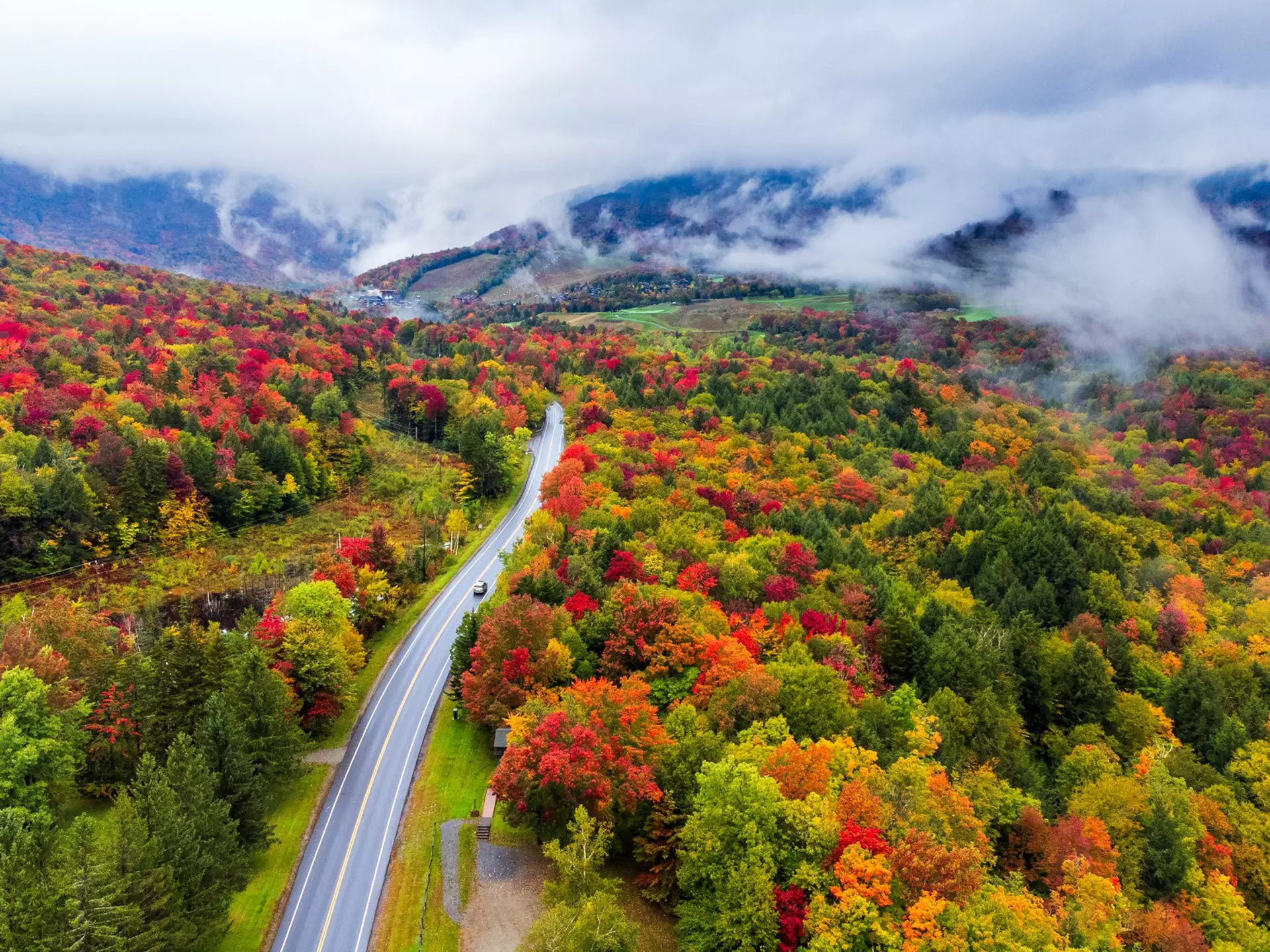
Driving through Vermont in fall. Chun Chen/500px/Getty Images
Lonely Planet may earn a commission from affiliate links on our site. All recommendations and reviews reflect our own independent opinions.
Fall road trips are especially freeing when your plans don’t extend beyond stopping at every overlook to appreciate the world’s best foliage displays, detouring to quirky towns and lingering in forests that dazzle with reds and golds. And often, the roads themselves are part of the experience – snaking through mountains, tracing rugged coastlines, rolling under covered bridges before ending at postcard-worthy cabins.
Whether you are planning to visit the Blue Ridge Mountains on the USA’s East Coast or the Pacific Ranges in British Columbia, Canada, use this route guide to map out your fall road trip.
To continue making fall travel plans, download the Lonely Planet app.
How to Track Peak Foliage
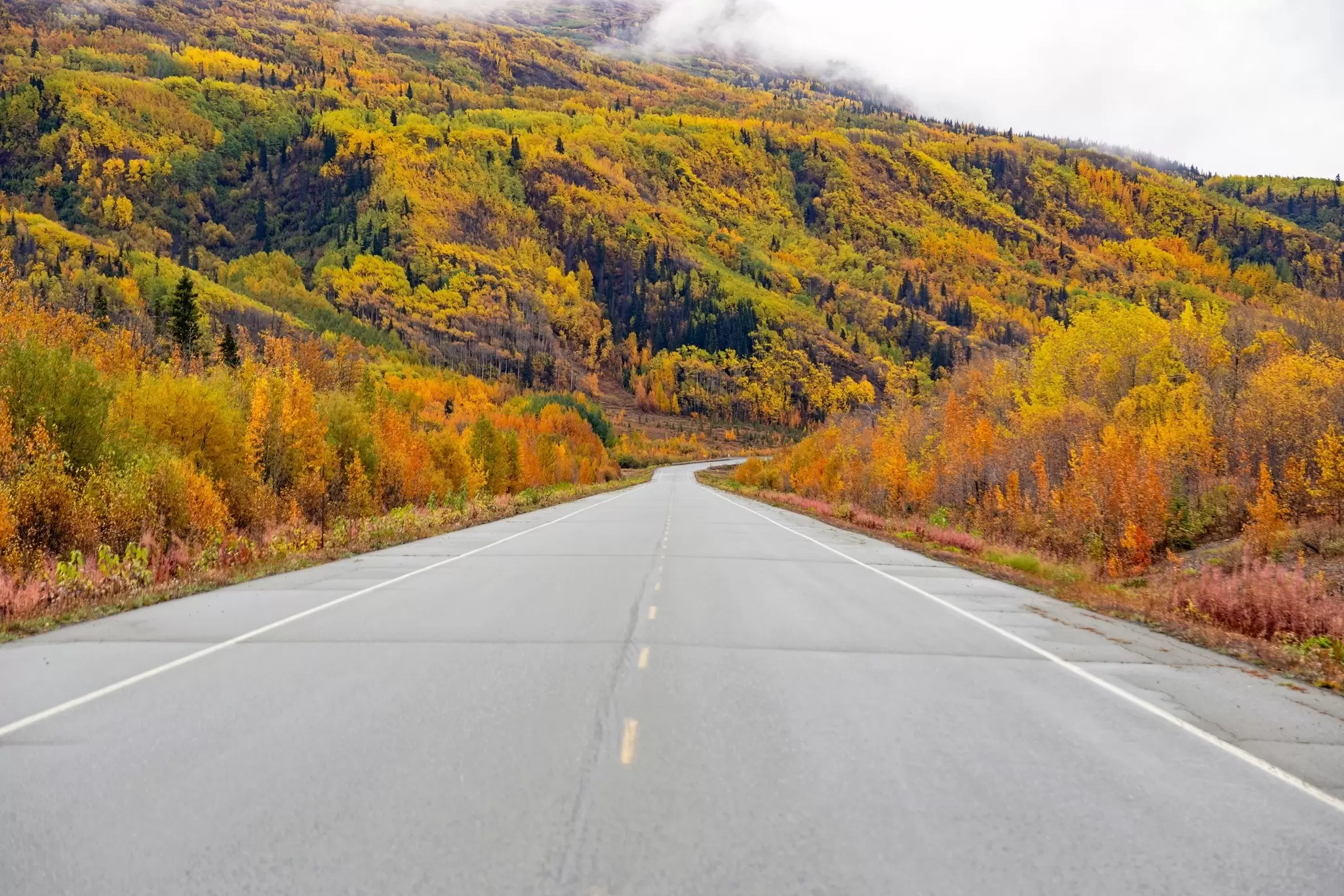
Alaska Highway in Yukon, Canada. A. Michael Brown/Shutterstock
Elevation and latitude are the twin catalysts for fall color. Foliage is typically at its best 2–3 weeks earlier at higher elevations. Many state and tourism agencies track foliage in their areas, so search for peak color maps and check them in the days and weeks leading up to your road trip.
1. North Shore Scenic Drive – Minnesota
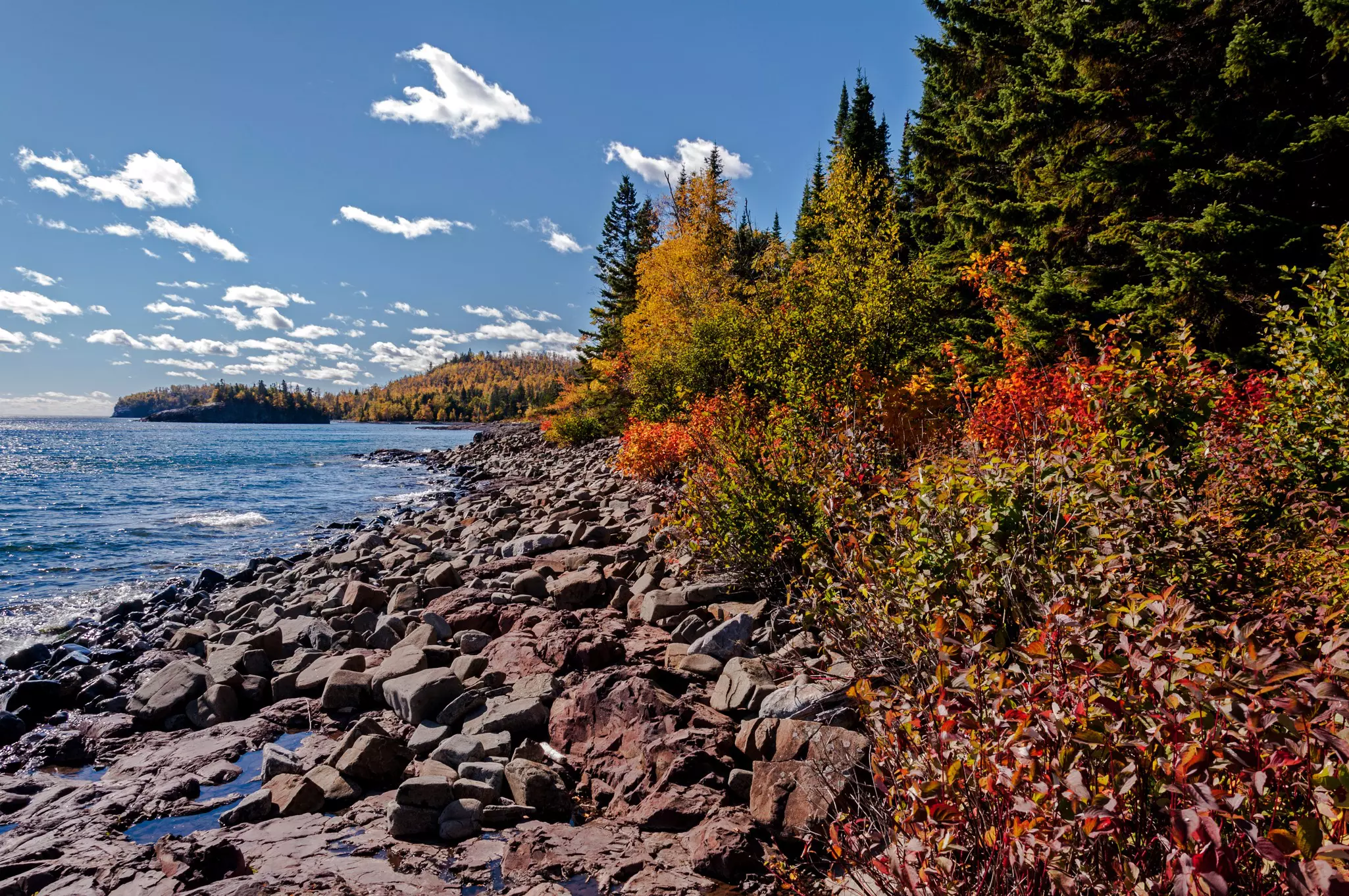
North Shore Scenic Drive in Minnesota. Lonnie Paulson/Shutterstock
Drive: Duluth → Grand Portage
Distance: ~150 miles / 3–4 hours driving
Peak foliage window: Mid-September and mid-October
Best for: Foodies
Few road trips capture fall like Minnesota’s North Shore Scenic Drive, stretching 154 miles along Lake Superior’s wild shoreline from Duluth to Grand Portage. Stops abound along the way: waterfalls, beaches, lighthouses, fishing towns and eight state parks. Thanks to the lake’s insulating effects, two foliage seasons unfold: inland maples blaze scarlet, then birch and aspen turn gold along the shore.
Top stops: Try Russ Kendall’s Smokehouse for its famous sugar-cured trout just outside Duluth, then stop in Two Harbors, Lutsen and Grand Marais, ideally staying overnight in each. Grab a slice at Betty’s Pies, tour Split Rock Lighthouse, and take in views from Palisade Head. Near Lutsen, hike Oberg Mountain Loop, and go leaf-peeping from above on Lutsen Mountains’ gondola. Artsy Grand Marais charms with galleries, a folk school and a surprisingly robust food scene.
Don’t miss: Keep an eye out for agates on North Shore beaches. Although popular spots get picked over, the shoreline glitters with new finds after a storm. Agate Bay Beach, Paradise Beach near Grand Marais, and Horseshoe Bay are all worth a slow stroll.
2. Blue Ridge Parkway – Virginia and North Carolina
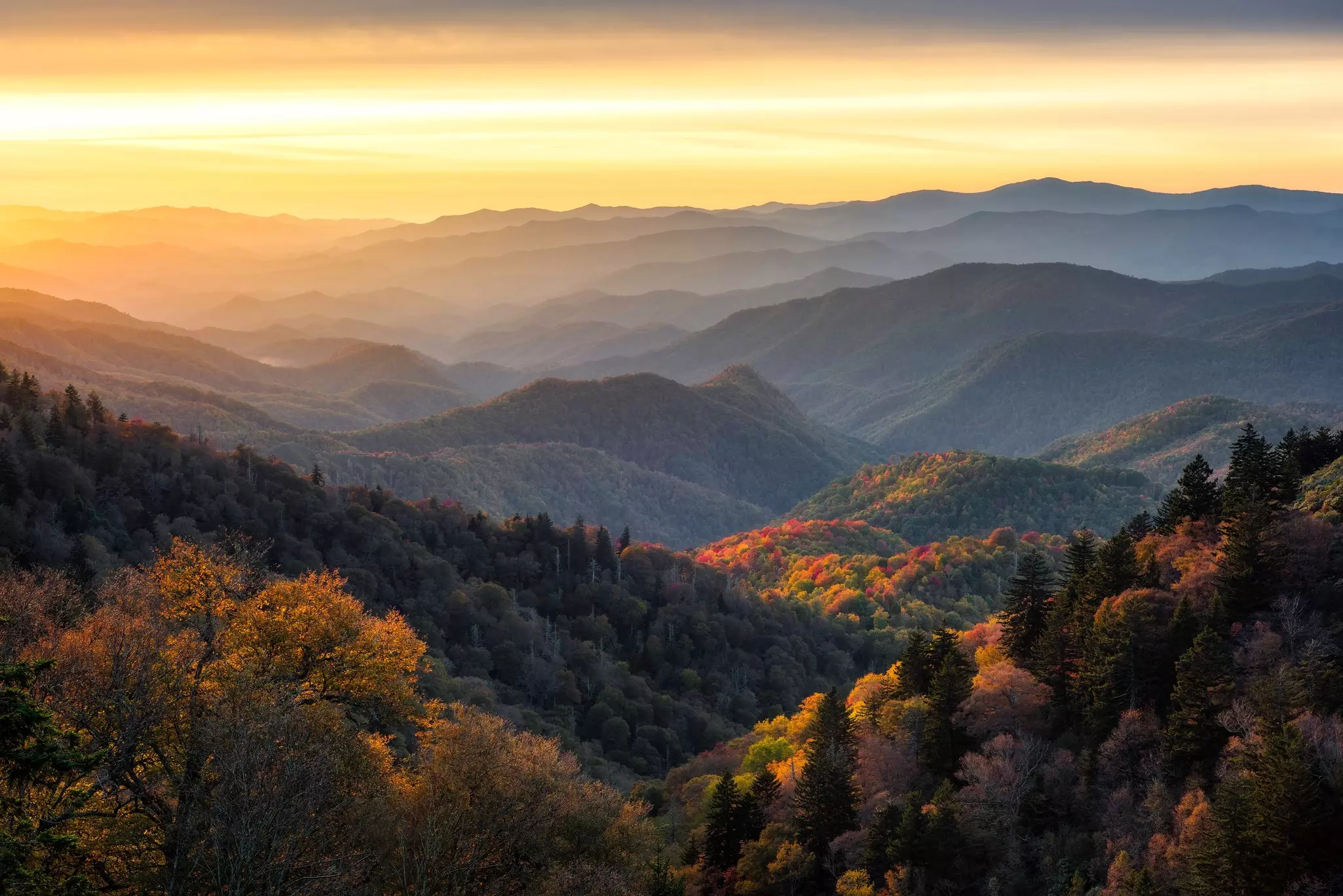
Blue Ridge Parkway in North Carolina. anthony heflin/Shutterstock
Drive: Rockfish Gap, VA → Cherokee, NC
Distance: ~470 miles / 10–12 hours driving
Peak foliage window: Mid-October to early November
Best for: First-time road-trippers
“America’s favorite drive,” the Blue Ridge Parkway links Virginia’s Shenandoah National Park and Great Smoky Mountains National Park in North Carolina. Nearly 300 overlooks, not a single stoplight or stop sign, and hardwood forests enveloping the landscape in a colorful mosaic through October – it’s practically designed for a fall road trip.
Top stops: Virginia’s 200-some-mile stretch starts where Shenandoah’s famed Skyline Drive ends, rolling by bucolic farmland and country stores. The North Carolina portion is more mountainous, with hikes like Looking Glass Falls, Grandfather Mountain’s Mile High Swinging Bridge and Mt Mitchell, the tallest peak east of the Mississippi.
Don’t miss: Roanoke and Asheville make ideal pit stops, while smaller Boone and Waynesville offer hip food and craft beer scenes, easy access to nature and fewer crowds.
3. New England – Massachusetts, New Hampshire and Vermont
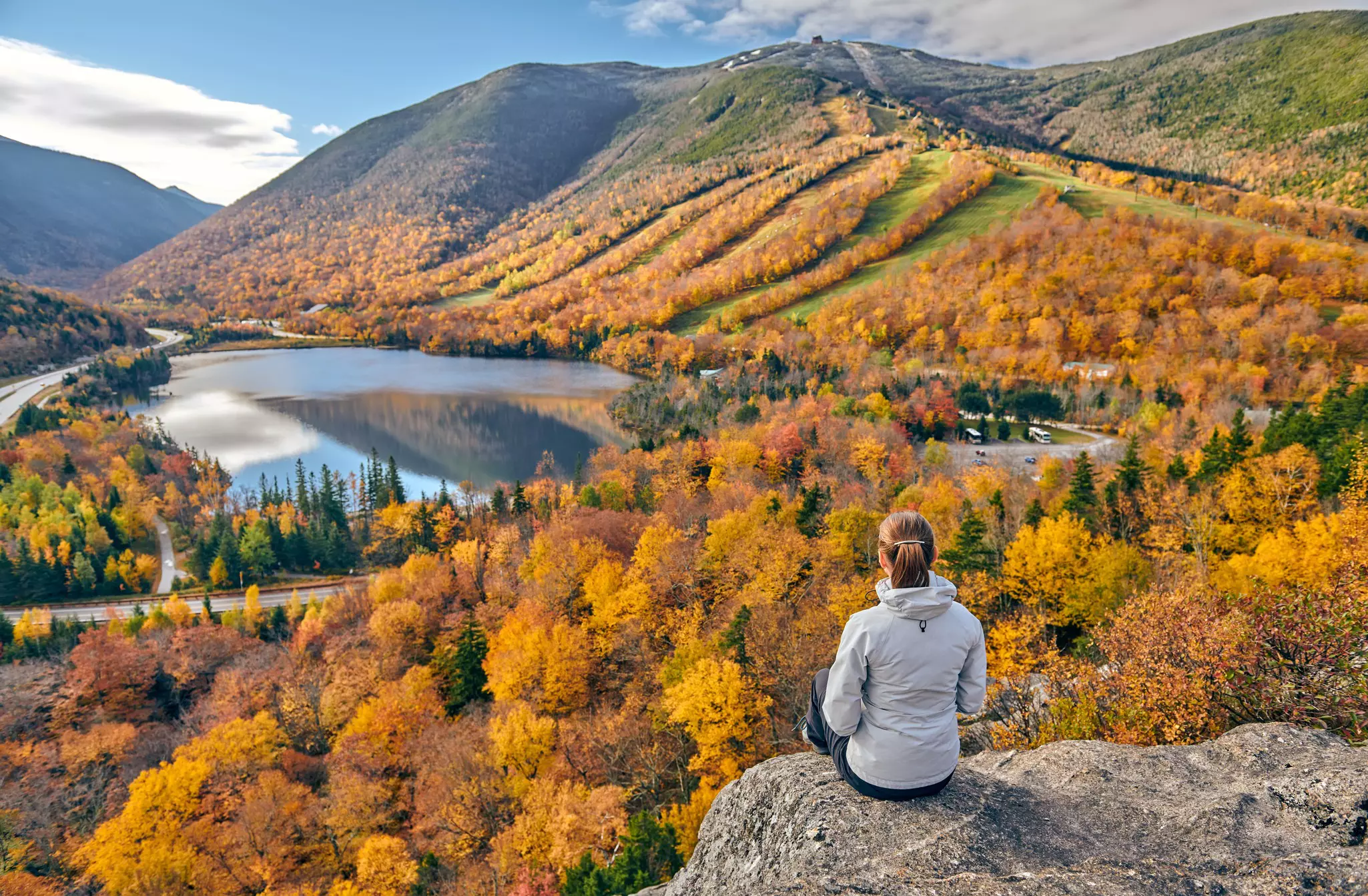
Franconia Notch State Park, New Hampshire. haveseen/Shutterstock
Drive: Boston, MA → Stowe, VT
Distance: ~300 miles / 6–7 hours driving
Peak foliage window: Early to mid-October
Best for: Families
This classic New England drive feels straight out of Gilmore Girls, with covered bridges, church steeples peeking through canopies of orange and yellow, and cozy coffee shops and bakeries.
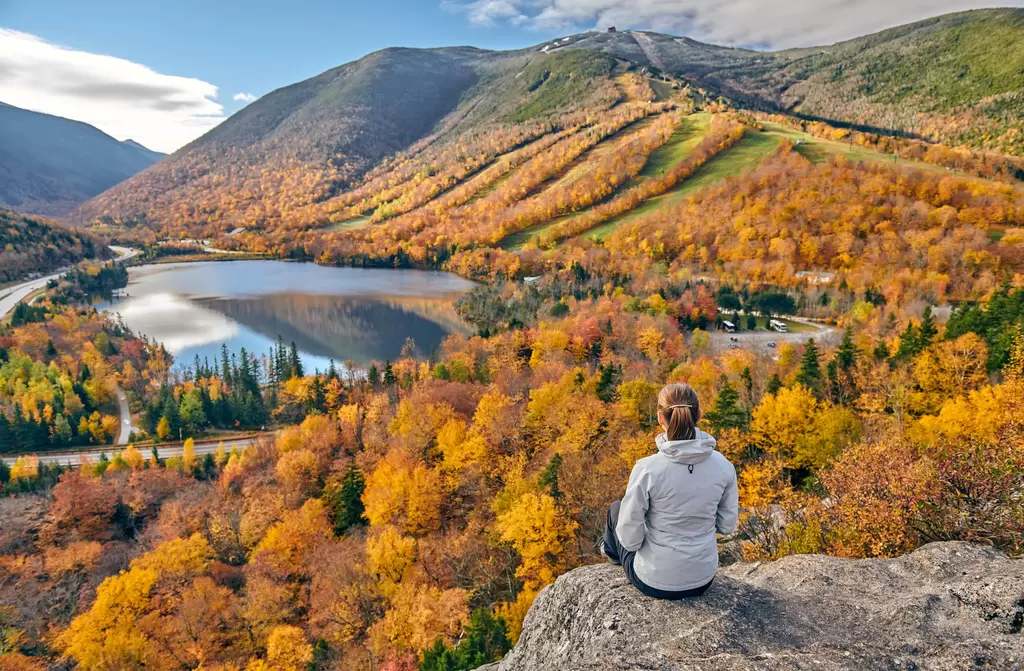
Top stops: Hit spooky Salem, Massachusetts, or hip Portsmouth, New Hampshire, before heading into the White Mountains on the famous Kancamagus Highway, affectionately called “the Kanc.” Stop at the historic Albany Covered Bridge, hike Artists Point in Franconia Notch State Park, or detour to ride the Conway Scenic Railroad. Cross into Vermont, where you’ll connect with the Green Mountain Byway, circling Mt Mansfield and twisting through Smugglers’ Notch.
Roadside farm stands, cider mills and rural towns hosting art festivals and farmers markets greet you along the way.
Don’t miss: In Stowe, the ultimate fall New England town, cap things off with a scoop and tour at the Ben & Jerry’s factory.
4. Peter Norbeck Scenic Byway – South Dakota
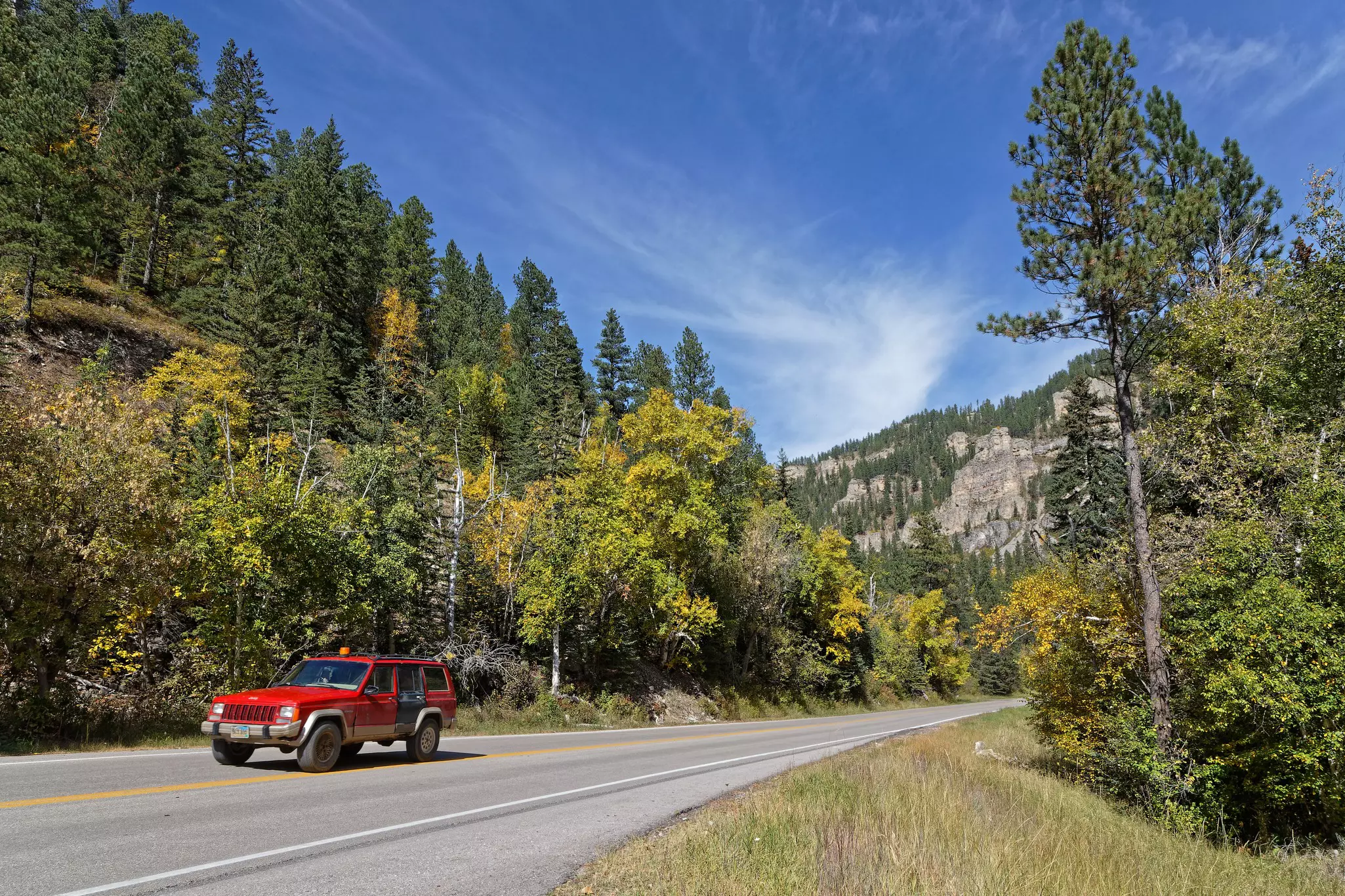
Spearfish Canyon, South Dakota. Pierre Jean Durieu/Shutterstock
Drive: Custer State Park visitors center (loop)
Distance: ~70 miles / 3–4 hours driving
Peak foliage window: Late September to early October
Best for: Photographers
At times this byway feels more like a nature-themed amusement park ride than a drive, winding 70 miles through one-lane tunnels and over pigtail bridges in the Black Hills. Wildlife is part of the show, too, with bison, antelope, elk and mountain goats often grazing along the road. In autumn, golden aspens and maroon oaks fringe the granite, catching the sunlight and illuminating the rock faces.
Top stops: The infamous Iron Mountain Road corkscrews around 314 curves in just 17 miles, its tunnels perfectly framing Mt Rushmore. On Needles Highway, granite formations like Needle’s Eye and Cathedral Spires tower overhead.
Don’t miss: Just off the route, you can visit the Crazy Horse Memorial, historic Deadwood, aspens lighting up Spearfish Canyon, the stark beauty of the Badlands and Wind Cave National Park, and Rapid City’s cultural attractions.
5. The Ozarks – Arkansas
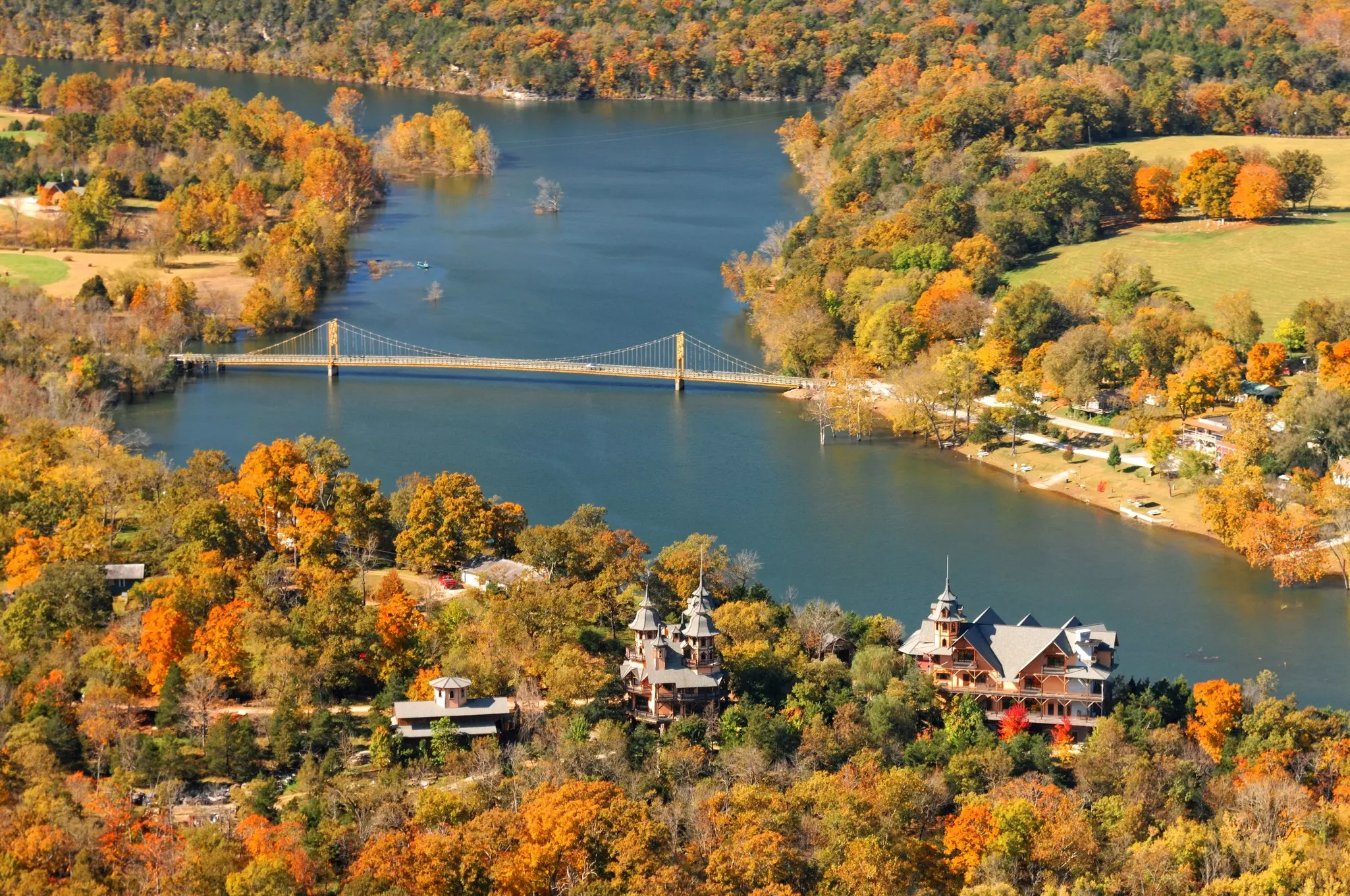
Eureka Springs, Arkansas. Jeremy Mason McGraw/Getty Images
Drive: Bentonville → Eureka Springs → Fayetteville
Distance: ~175 miles / 4 hours driving
Peak foliage window: Late October to early November
Best for: Frequent foliage stops
Northwest Arkansas comes alive in fall, when the Ozarks flame red and gold and elk bugle across river valleys.
Top stops: Bentonville‘s mountain biking trails weave past the (free) Crystal Bridges Museum of American Art. On Hwy 62 heading toward Eureka Springs, the hillsides are blanketed in foliage, and the quirky town’s rainbow staircases, glass Thorncrown Chapel and famously haunted Crescent Hotel are even more atmospheric around Halloween. The University of Arkansas campus in Fayetteville is arguably one of the prettiest in the country.
Don’t miss: Near Jasper, waterfalls and towering bluffs frame the Buffalo National River. Approximately 30 minutes south of Ponca, hike 1.5 miles to Whitaker Point (aka Hawksbill Crag), one of the Ozarks’ most photographed spots.
6. Million Dollar Highway – Colorado
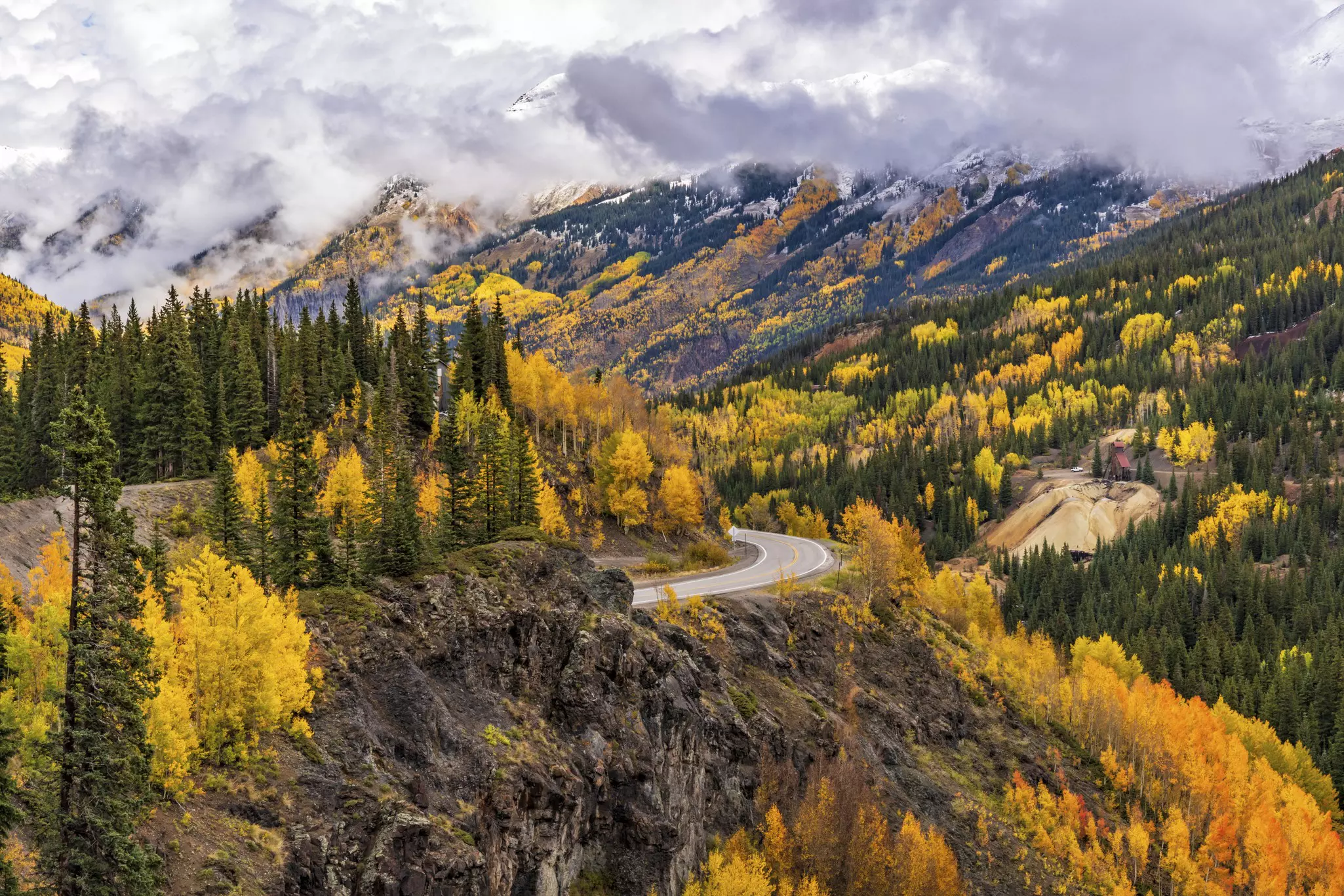
Million Dollar Highway, north of Silverton, Colorado. lightphoto/Getty Images
Drive: Ouray → Silverton
Distance: ~25 miles / 45–60 minutes driving
Peak foliage window: Late September to early October
Best for: A shorter route
Sheer cliffs, nerve-racking drop-offs and the rugged San Juans towering overhead make this one of the most dramatic drives in the US. The road clings to canyon walls with no guardrails, and driving this route is an exhilarating experience that’s even more spectacular in autumn, when aspens set entire mountainsides on fire with their golden glow.
Top stops: Hairpin turns and tight S-bends cut through the Uncompahgre Gorge, whose steep mountainsides loom large and close, rising into lofty, mist-shrouded peaks, while the valley floor lies far below, dotted with fir trees and wildflowers.
Don’t miss: An hour from Silverton, Durango is worth a full day or overnight. Its historic downtown brims with breweries and restaurants, and fall is the best season to ride the Durango & Silverton Narrow Gauge Railroad through Animas Canyon. Round-trip tickets include 2 hours to explore Silverton.
7. Route 6 Heritage Corridor – Pennsylvania
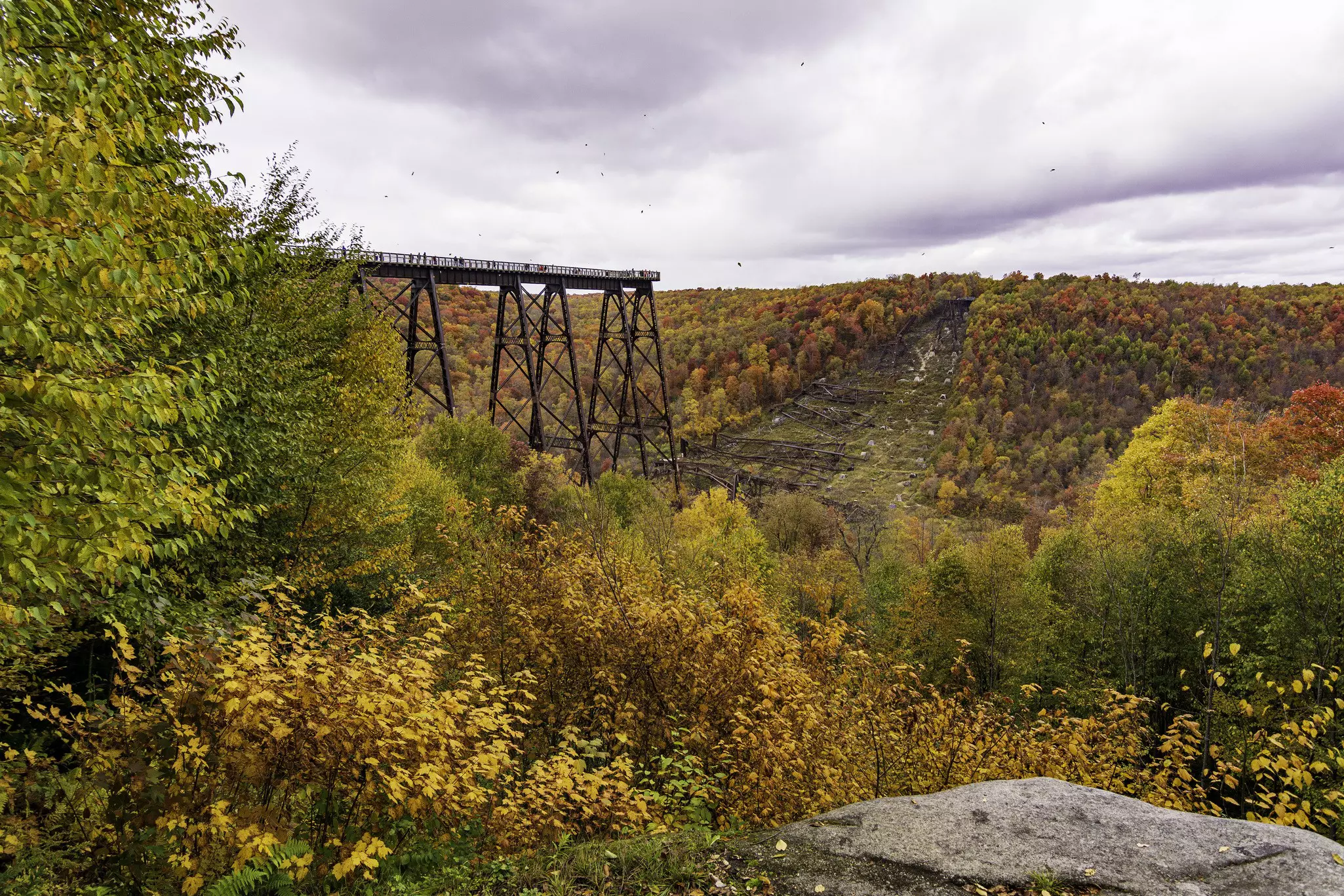
Kinzua Skywalk, on Route 6 in Pennsylvania. Vinay_Bavdekar/Getty Images
Drive: Erie → Milford
Distance: ~425 miles / 7–9 hours driving
Peak foliage window: Late September to late October
Best for: Rural roads
Pennsylvania has one of the longest, most vibrant foliage seasons anywhere, often stretching from late September into late October, and Route 6 is the ultimate way to see it. Traversing the state’s northern tier, this historic highway travels through four distinct regions and 11 counties, from Lake Erie to the Poconos.
Rural two-lane roads with little traffic make up most of the route, so it is especially appealing for motorcycle touring. The Route 6 Alliance put together several themed itineraries for road-trippers who prefer to tackle the drive in sections.
Top stops: Highlights include the Kinzua Skywalk, perched 225ft above a valley of fiery color; the rail-to-trail paths; overlooks of Pine Creek Gorge; and stargazing at Cherry Springs State Park, a certified Dark Sky park. Historic inns and cozy B&Bs in small towns like Kane, Wellsboro and Honesdale make perfect overnight stops.
Don’t miss: You can enjoy peaceful Lake Erie shoreline hikes in Presque Isle, and you may spot the East Coast’s largest wild elk herd near Benezette.
8. Sea to Sky Highway – British Columbia
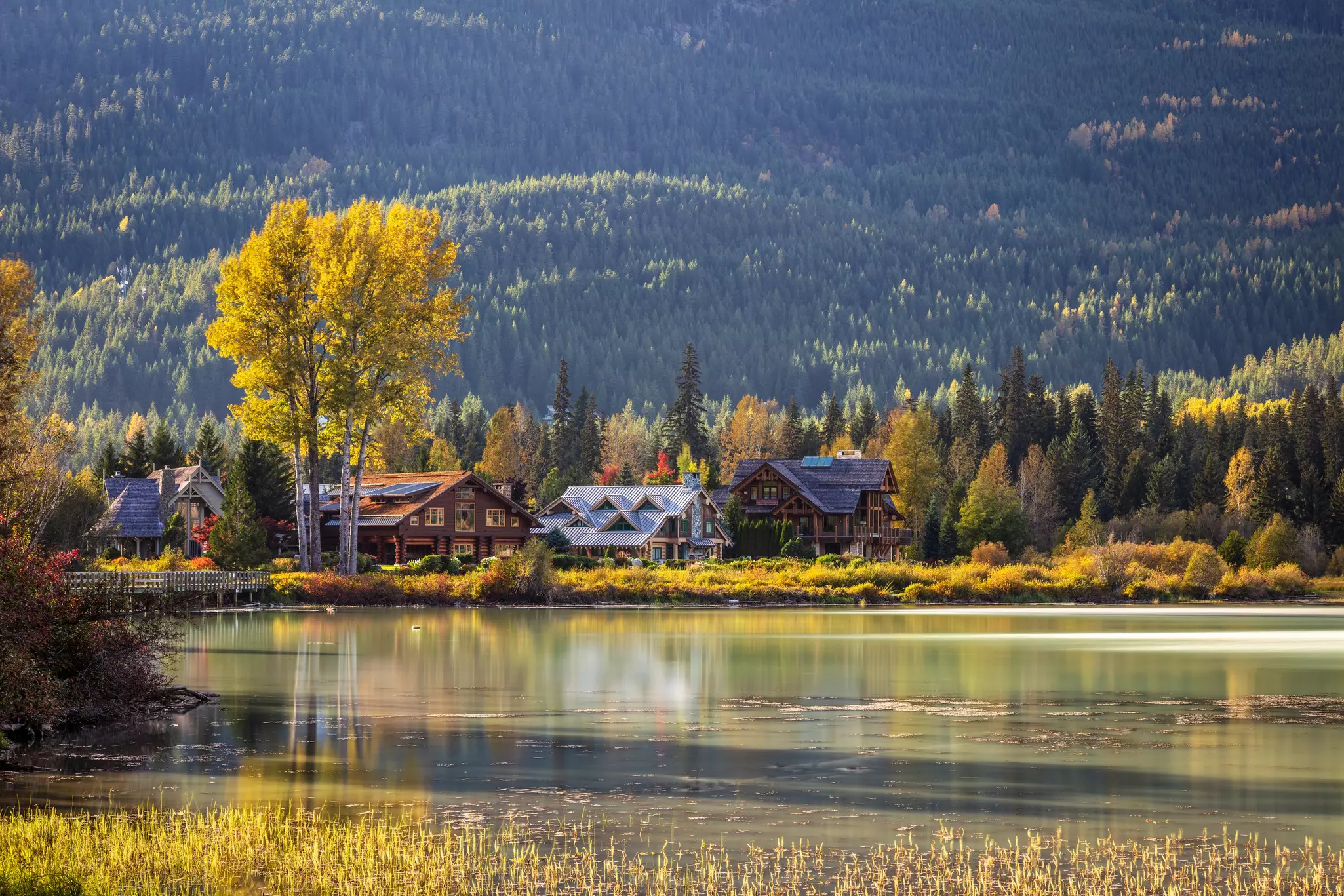
Green Lake, near Whistler, British Columbia. Pierre Leclerc/Shutterstock
Drive: Vancouver → Whistler
Distance: ~120km / 2 hours driving
Peak foliage window: Late September to mid-October
Best for: Changes in topography
One of Canada’s most scenic road trips, the Sea to Sky Highway spans from posh West Vancouver alongside Howe Sound before climbing into Whistler’s Coast Mountains. Craggy peaks, thundering waterfalls, shimmering coastline and dense forest, shining bright yellow in fall, make this drive a visual feast, but plan plenty of stops for the full experience.
Top stops: Ferry hub Horseshoe Bay is a perfect jumping-off point for a hike up rocky Eagle Bluff. Refuel in Squamish – services beyond here are limited. Then choose your own adventure: visit Shannon Falls, go mountain biking or climbing, or take the ultra-scenic Sea to Sky Gondola to easy summit trails and the Sky Pilot Suspension Bridge. In Whistler, embrace shoulder season with village strolls, sale rack shopping and cozy bites.
Don’t miss: Take the steep but worthwhile detour to Britannia Beach’s former mining town and museum.
9. Cades Cove Loop – Tennessee
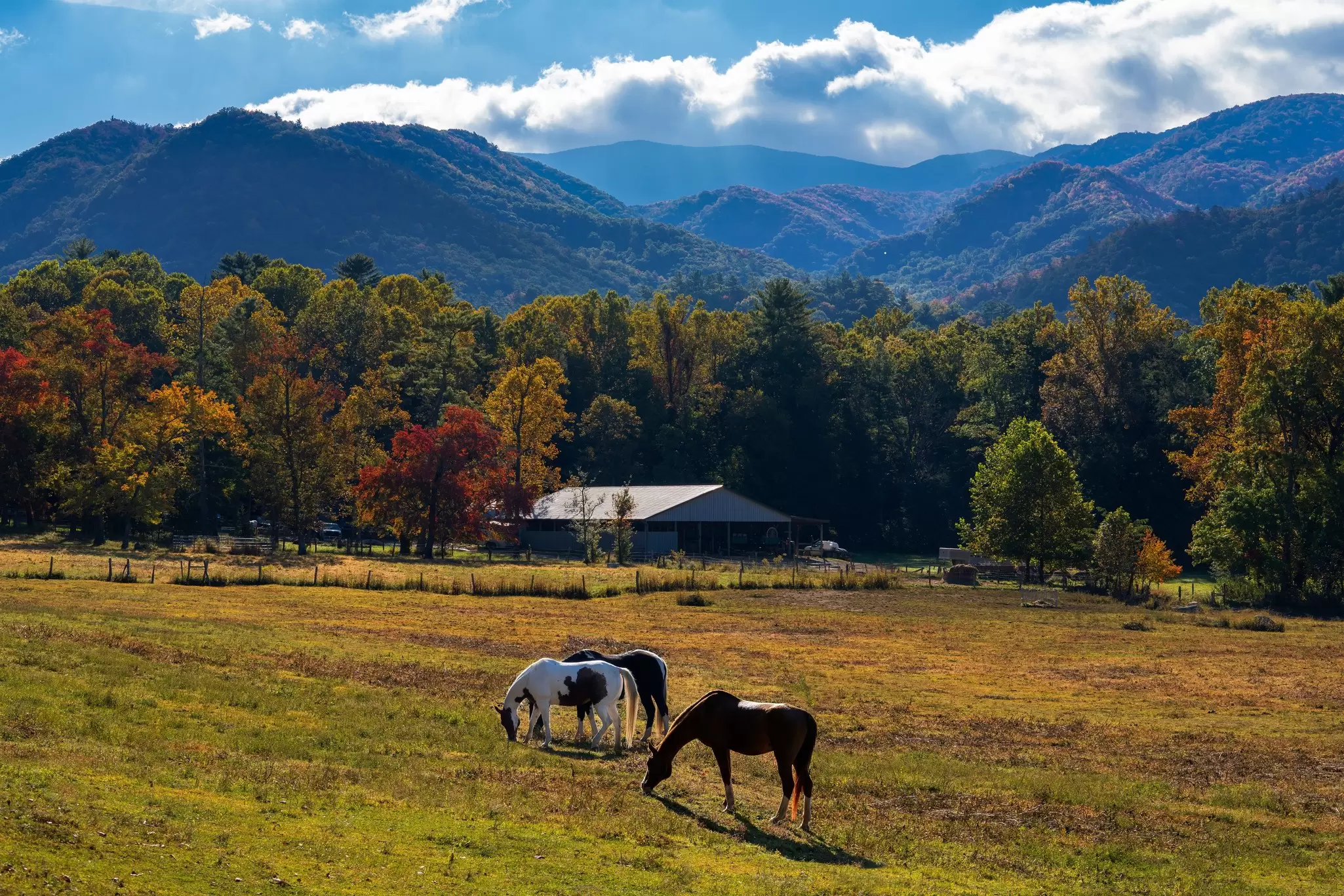
Cades Cove in Great Smoky Mountains National Park, Tennessee. Margaret.Wiktor/Shutterstock
Drive: Cades Cove (loop)
Distance: ~11 miles / 2–4 hours driving
Peak foliage window: Mid- to late October
Best for: Wildlife
Among the build-your-own route possibilities within Great Smoky Mountains National Park, this oval loop is perhaps the most popular. This is largely due to its wildlife, which includes white-tailed deer, periodic turkeys, groundhogs and black bears.
Top stops: There are plenty of historic structures to gawk at within Cades Cove, including barns, churches and even a working gristmill dating back to the early 1800s.
Don’t miss: At the visitors center mid-loop, several trails branch off, including the 5-mile Abrams Falls trek.
10. Columbia River Scenic Byway – Oregon
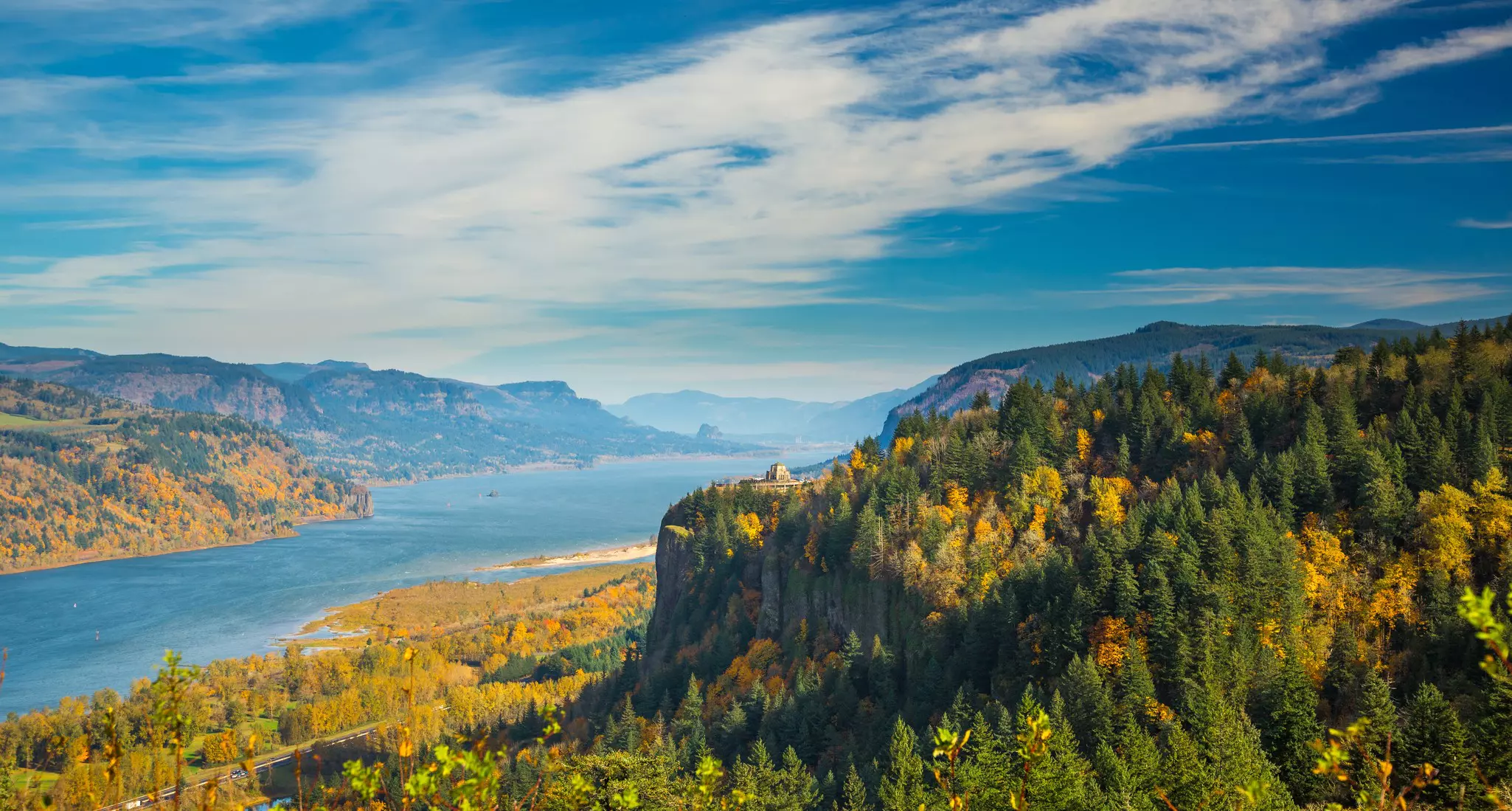
Columbia River Gorge, Oregon. Bob Pool/Shutterstock
Drive: Troutdale → The Dalles
Distance: ~70 miles / 1–2 hours driving
Peak foliage window: Mid- to late October
Best for: Waterfalls
The Historic Columbia River Highway was constructed over 100 years ago to provide access to the breathtaking scenery of the Columbia River Gorge, today Oregon’s largest national scenic area.
Top stops: In Troutdale, the 100-year-old Crown Point Vista House provides magnificent views of tall bluffs plunging into the Columbia River. The tallest waterfall, Multnomah Falls, crashes 620ft to the ground in a glorious display of beauty and power. At the trip’s end, the Columbia Gorge Discovery Center and Museum in the Dalles highlights the geological and human history of the area, including the Lewis and Clark exhibition, the travelers on the Oregon Trail and the Indigenous people who lived on this land for thousands of years.
Don’t miss: Drive to Hood River for lunch at Riverside, located inside a Best Western, which has spectacular views of the gorge. Afterward, explore downtown Hood River’s collection of antique shops, boutiques and art galleries.
11. Upper Peninsula – Michigan
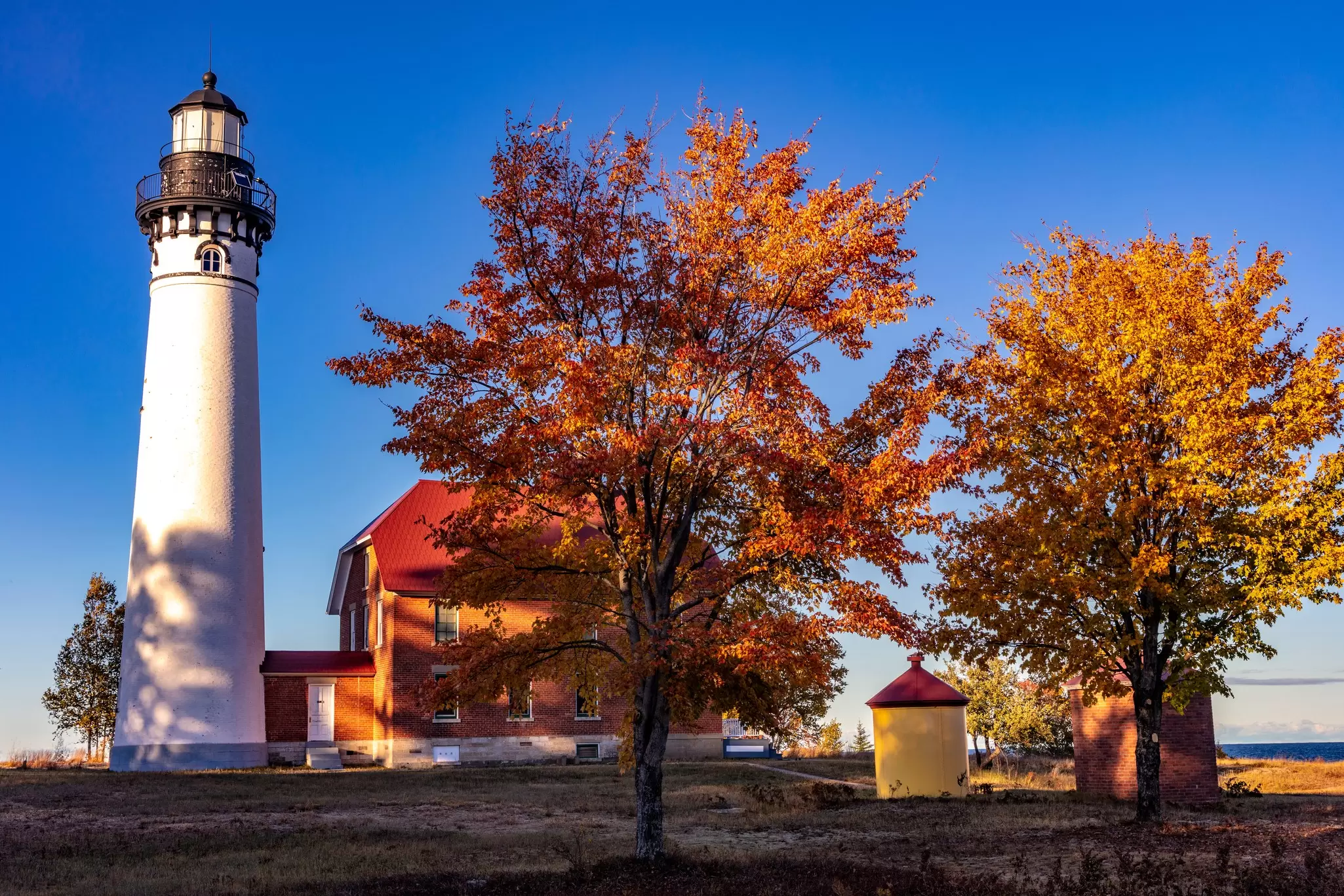
Au Sable Light Station at Pictured Rocks National Lakeshore, Michigan. Danita Delimont/Shutterstock
Drive: Munising → Escanaba
Distance: ~500 miles / 8–10 hours
Peak foliage window: Late September to mid-October
Best for: Hidden gems
Few items feature prettier on a postcard than a well-preserved lighthouse, and no state boasts more of these maritime icons than Michigan, at 129, with 40 or so of these towers on the state’s Upper Peninsula.
Top stops: This counterclockwise adventure begins with the Munising Range Lighthouses at Pictured Rocks National Lakeshore and follows the peninsula’s edge east, south and back west to Escanaba, where both the Peninsula Point Lighthouse (1866) and Sand Point Lighthouse (1867) are open for tours and tower climbs.
Don’t miss: Seek out preserved gems such as the Au Sable Light Station (also in Pictured Rocks), Crisp Point Lighthouse in Paradise (which has sat beautifully on Lake Superior’s ominously named Shipwreck Alley since 1904), the Great Lakes Shipwreck Museum at Whitefish Point Lighthouse, and the views on offer atop the Point Iroquois Lighthouse in Brimley.
12. The Adirondacks – New York
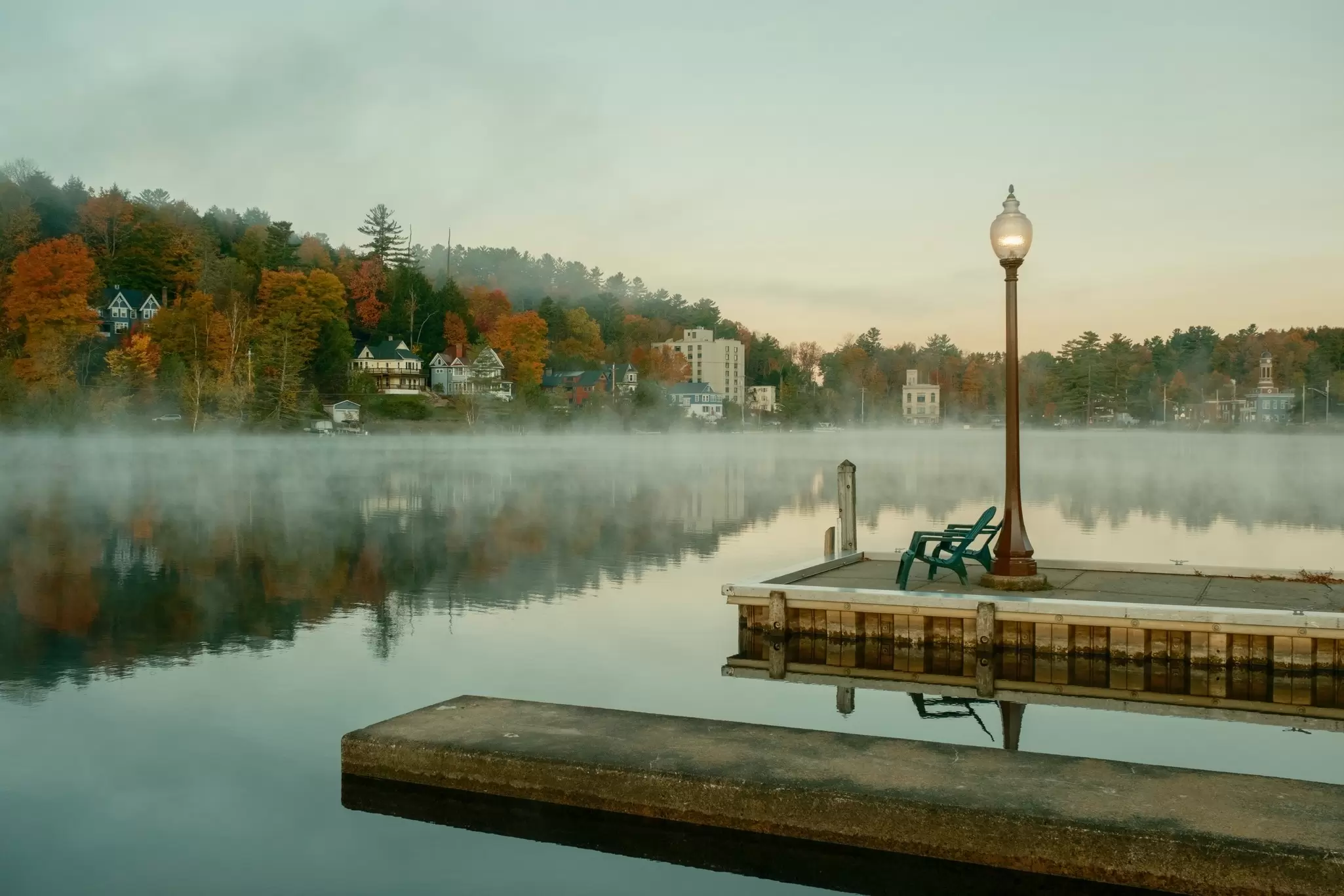
Saranac Lake, New York. Jon Bilous/Shutterstock
Drive: Lake George → Lake Champlain
Distance: ~160 miles / 3–4 hours driving
Peak foliage window: Early to mid-October
Best for: A variety of activities
The Adirondacks‘ 9375 sq miles of protected parkland and forest preserves sprawl from central New York to the Canadian border, and while the area is named after its 46 peaks, the lakes make waves in their own way and guide the way for an idyllic road trip.
Top stops: In Lake George, thrills by day (such as the roller coasters at Six Flags Great Escape) are balanced with chill time at night at waterfront restaurants, many of which are known for craft beverages. Tupper Lake brings the natural world into full view at the Wild Center outdoor museum and the astronomy-focused Adirondacks Sky Center. Chase those Olympic dreams at the Lake Placid Olympic Museum and Olympic Jumping Complex, where you can take a gondola and elevator up to the 128m ski jump.
Don’t miss: Between Tupper Lake and Lake Placid, stop off at Saranac Lake, a lesser-known stop that sees fewer tourists. Connect with the outdoors by hiking, biking, kayaking, birding or golfing, or get to know the area’s history as a tuberculosis cure center at the Saranac Laboratory Museum.
13. Schoodic National Scenic Byway – Maine
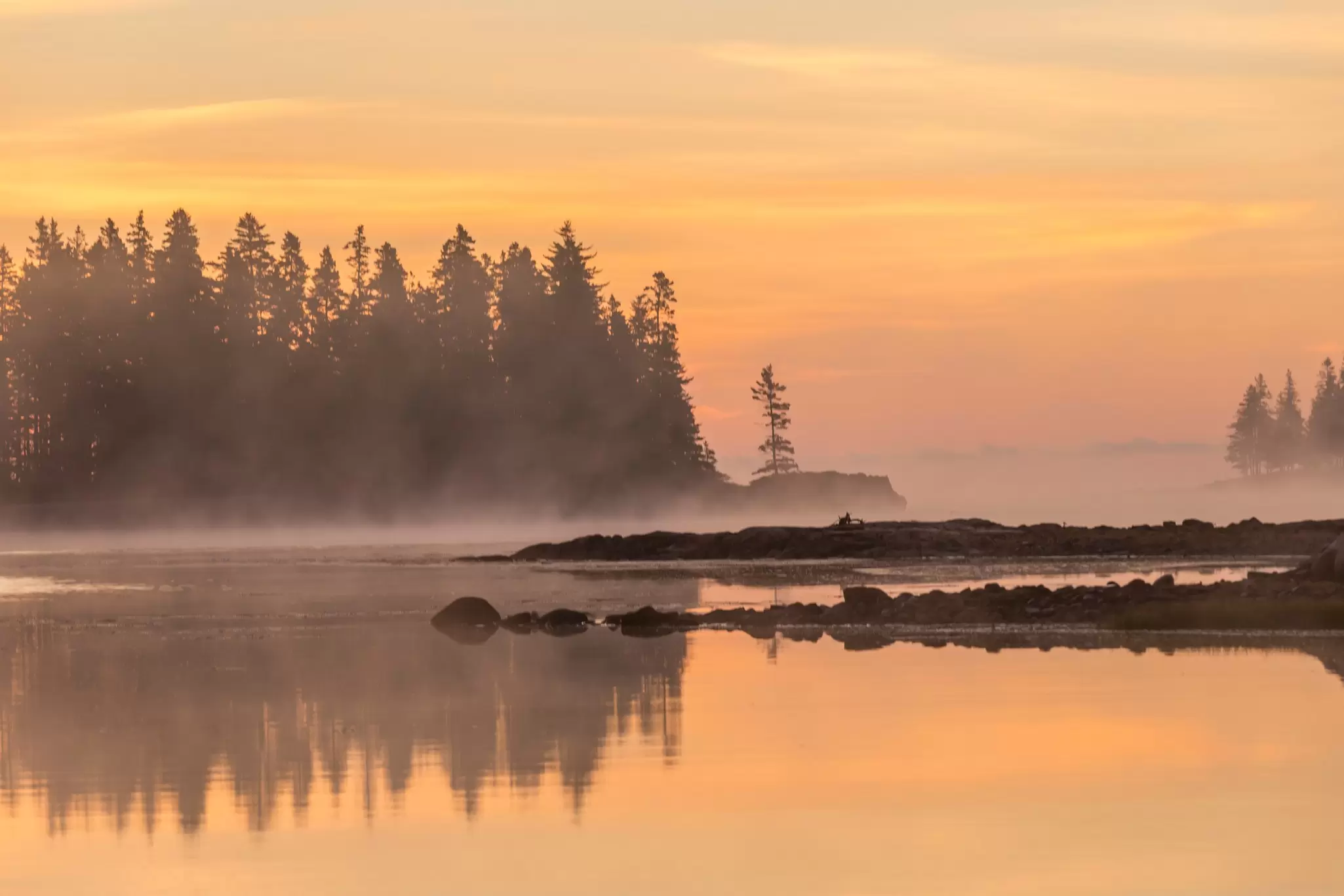
Schoodic Peninsula, Maine. vidiuhrubaru/Getty Images/iStock
Drive: Hancock → Birch Harbor
Distance: ~30 miles / 1 hour driving
Peak foliage window: Early October
Best for: A remote location
Most people don’t realize that Acadia National Park is more than just Mount Desert Island. A small portion of the park is located on the Schoodic Peninsula, on the Maine mainland. The remote peninsula offers acres of unspoiled and uncrowded nature.
Top stops: The Schoodic National Scenic Byway runs along Rte 1 from Hancock to Gouldsboro, where you’ll take a right-hand turn onto Rte 186, proceed along the Schoodic Peninsula and then through the small fishing villages of Winter Harbor and Birch Harbor.
Don’t miss: The Schoodic District has 7 miles of hiking trails, including the popular Schoodic Head Trail, which summits the highest peak along the peninsula.
14. Cabot Trail – Nova Scotia
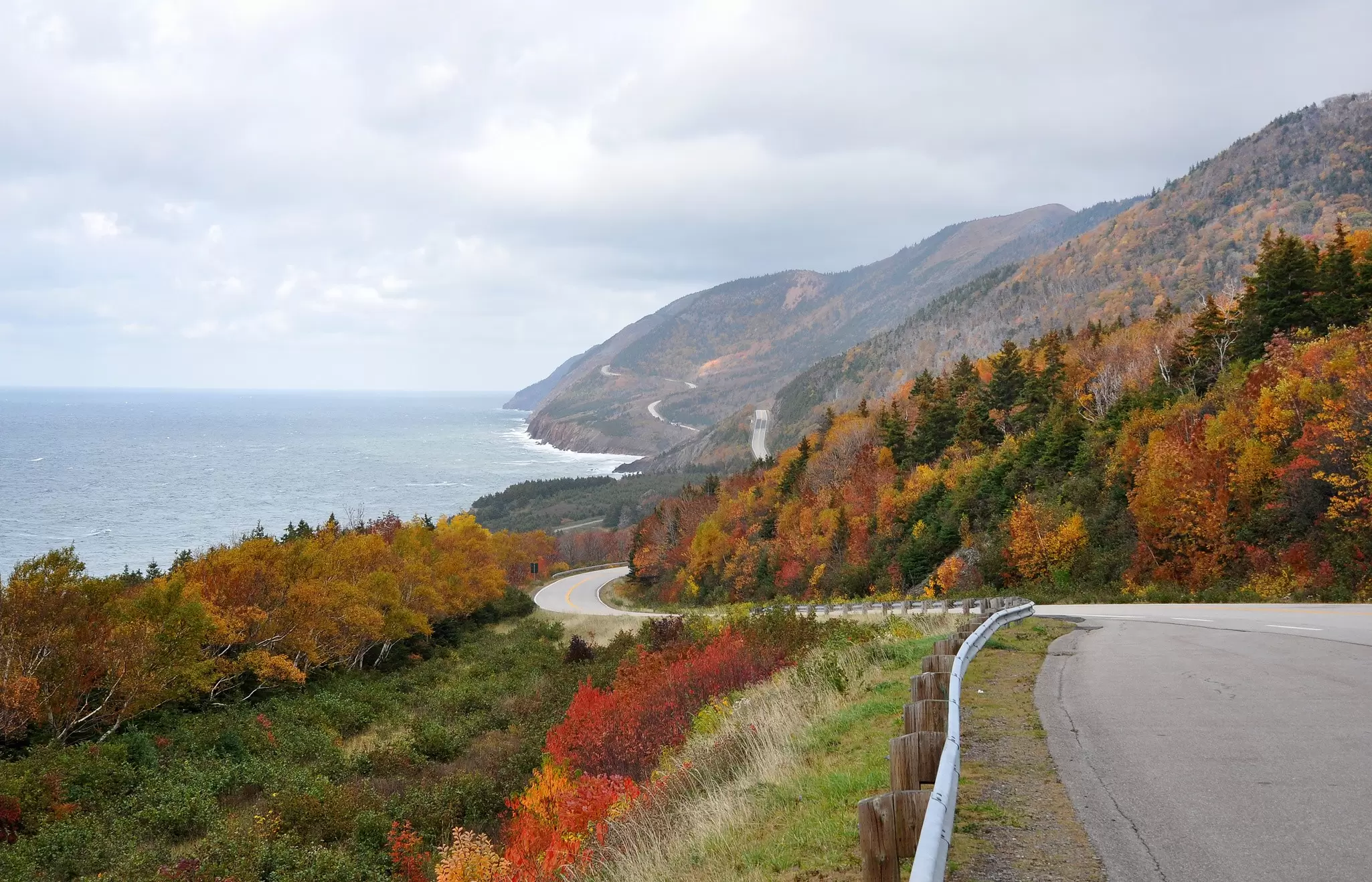
Cabot Trail, Nova Scotia. Cindy Creighton/Shutterstock
Drive: St Ann’s Bay (loop)
Distance: ~300km / 4–5 hours driving
Peak foliage window: Mid-October
Best for: Curves
The Cabot Trail is a looping, dipping roller coaster of a road that snakes its way around the northern tip of Cape Breton Island, offering views of rolling seas, thick forests and – if you’re lucky – a moose, an eagle or even a whale.
Top stops: Ingonish Beach is a long, wide ribbon of sand sheltered in a bay cocooned by gentle hills and Pleasant Bay, Nova Scotia’s premier whale-watching hub. Other favorite stops include Cheticamp, Nova Scotia’s most vibrant and thriving Acadian community; and Baddeck, home to a museum dedicated to former resident Alexander Graham Bell, pioneer of the very handy device known as the telephone.
Don’t miss: The Skyline Trail, the Cabot’s hiking highlight, meanders through evergreen forests and along windy cliff tops to a spectacular ridge.
15. Trail Ridge Road – Colorado
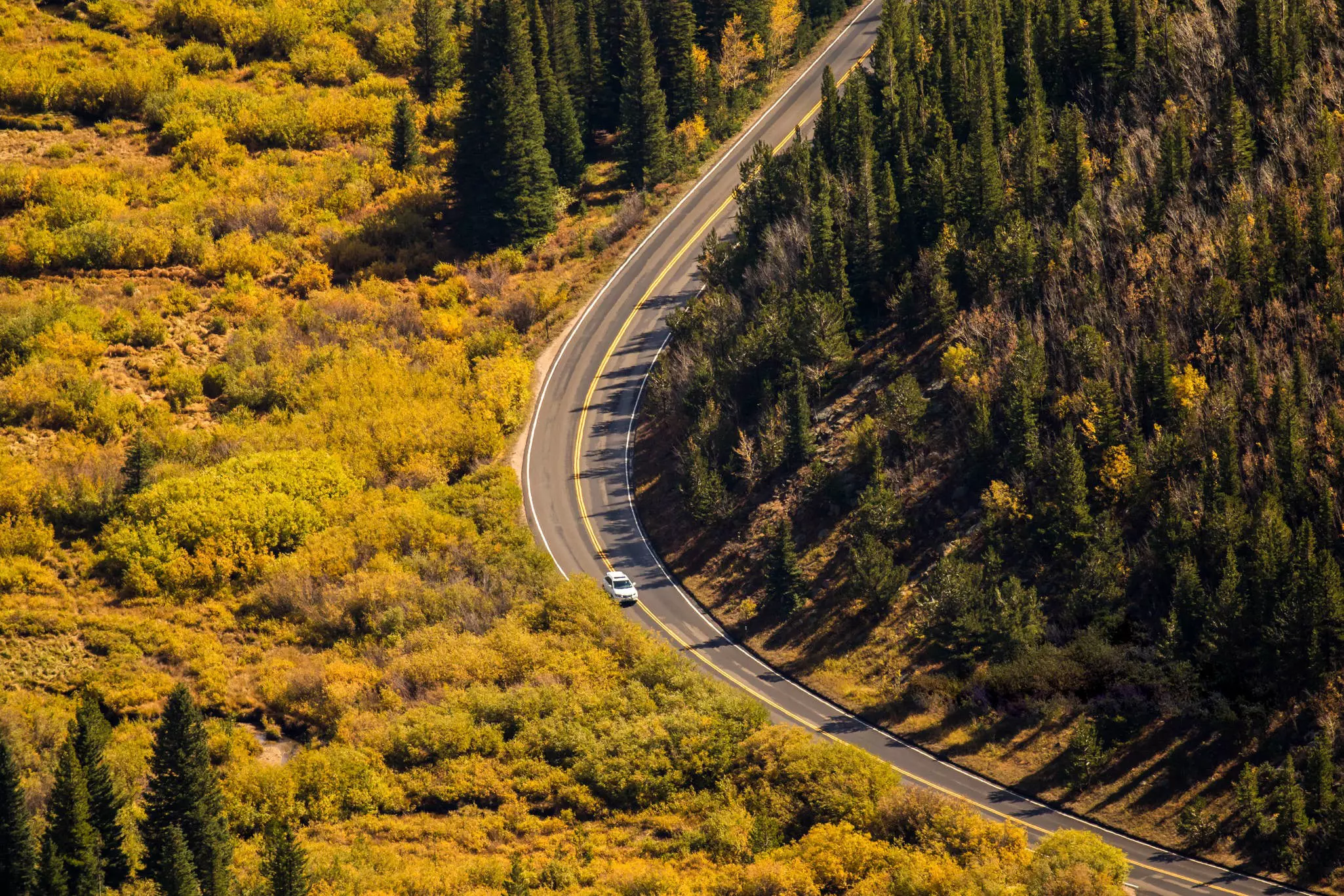
Trail Ridge Road, Colorado. Bob Pool/Shutterstock
Drive: Estes Park → Grand Lake
Distance: ~30 miles / 1–2 hours driving
Peak foliage window: Late September
Best for: Tundra
Rocky Mountain National Park’s signature drive, Trail Ridge Road is the highest continuously paved through road in North America, climbing to 12,183ft. It follows the same path that generations of Ute, Arapaho and Apache people used as a trade route to traverse Milner Pass and cross the Continental Divide.
Top stops: Expect outrageous views of snow-capped peaks, meandering streams, tight switchbacks, high-country meadows, wildflowers galore and (with luck) some Rocky Mountain wildlife. Be sure to stop at some of the countless turnoffs to explore tundra trails or, at the very least, take selfies from the top of the world.
Planning tip: For a short but steep leg stretch, walk the mile-long Alpine Ridge Trail – and enjoy giddying views of the Never Summer Mountains.
Planning Tips
- Book accommodation 6–8 weeks ahead, especially in New England in October, when demand is highest.
- Locals love leaves too, so routes are more crowded on weekends; midweek can see 30–40% fewer cars on popular routes.
- It is autumn, so temps are cooling fast and can quickly change. Pack layers, including a waterproof outer.
- At some point on a rural route, your signal is sure to drop. Download offline maps for your day’s drive before you head out, while you still have access to the wi-fi at your accommodations.

Guide Best in Travel 2026
This news has been rearranged and published with the https://www.lonelyplanet.com/
press release subscription.
We Told You That We Will Make You Dream Great Dreams With Our Media Group.
We Set Out For The Best İn The World And Have Been Offering You A Journey Beyond Dreams For Exactly 20 Years.
Thanks With To LONELY PLANET
DEAR MANAGEMENT / PRESS & PR TEAM
Kind Regards,